Short answer
Before any cleanup begins, think through ten risks. These are germs carried in blood, hidden sharp objects, fluid soaked into soft materials, and dust or fine spray from dried material. There are also disinfectant fumes, mess carried into clean rooms, electrical and structural hazards, heat stress in protective gear, careless waste handling, and the emotional toll on you and others. Each one shapes the gear, the methods and the order of work a crew should use.
Why assess safety risks before anyone starts cleaning?
After any blood or body fluid event, the urge is to make it go away fast. That urge makes sense. But it is also where many injuries and exposures happen. People start scrubbing before they know what they are dealing with. Then the cleanup itself creates new hazards.
A short, careful look first changes that. It finds what could hurt the people doing the work. It finds what could spread the mess to clean areas and what could damage your property. It also sets the order of the work, so the riskiest tasks are done with the right protection.
You may be a homeowner, a property manager or a business owner. Either way, knowing these ten risks helps you understand what a professional crew is checking. It also explains why they may not start work the moment they arrive.
This first look is also the time to confirm the site is really free for cleanup. If police, a medical examiner or an employer's safety officer still controls the area, the work has to wait. Starting too early can disturb evidence or get in the way of an investigation. That creates problems for everyone involved.
Risk 1: Bloodborne pathogens
The first risk is exposure to bloodborne pathogens, the germs carried in blood. Hepatitis B, hepatitis C and HIV can be present in blood and some other body fluids. You usually cannot tell by looking. Some of these viruses last a long time, so a spill that has sat for a while still calls for full precautions. For that reason, professionals treat all blood and body fluids as if they could spread infection, whatever the source.
Risk 2: Hidden sharps
The second risk is sharp objects, often called sharps. Needles, broken glass, razor blades and sharp debris can hide under fabric, in carpet, inside trash bags or under furniture. A puncture from a contaminated sharp object is one of the most direct ways you can get an infection.
The check for both of these risks starts before anyone touches anything. Crews look for sharp objects they can see. When it fits, they ask you about medical conditions or drug use at the site. They plan to use puncture-resistant gloves, tongs and sharps containers. No one should reach blindly into a pile, a bag or a gap.
Risk 3: Contamination that has spread out of sight
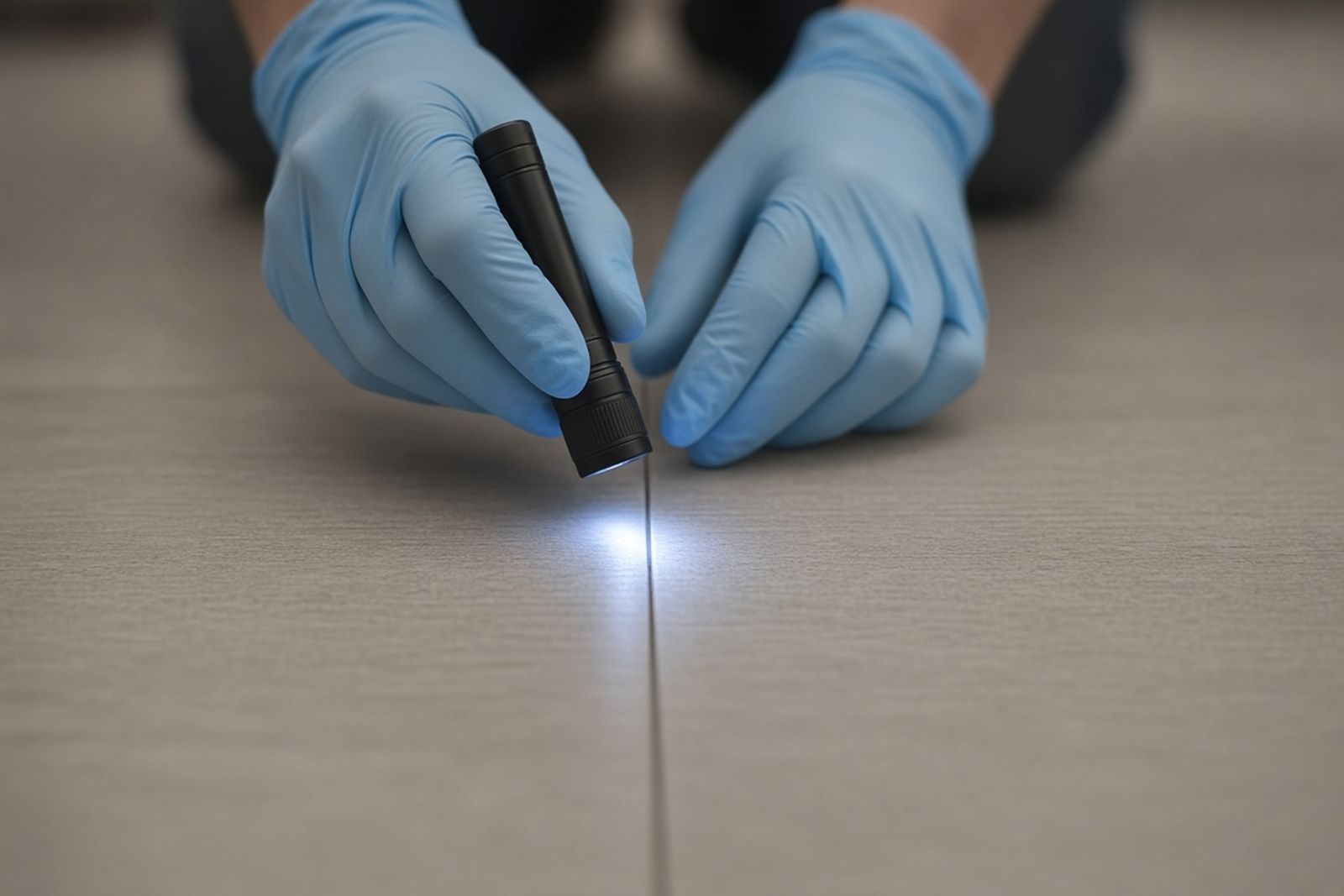
The third risk is spread you cannot see. Blood and body fluids seep into carpet pad, floor base, drywall, padded furniture and mattresses. They travel through seams in flooring and under baseboards. What looks to you like a small stain can be the top of a much larger soaked area. Guessing too low leads to a cleanup that is not complete, odor that lingers, and exposure that goes on.
Risk 4: Dust and droplets in the air
The fourth risk is material getting into the air. Dried material can break into tiny bits when it is scraped, swept or vacuumed with ordinary equipment. Spraying liquid hard onto fresh fluid can make droplets. Both can carry contamination into the air of your home and onto the person doing the work.
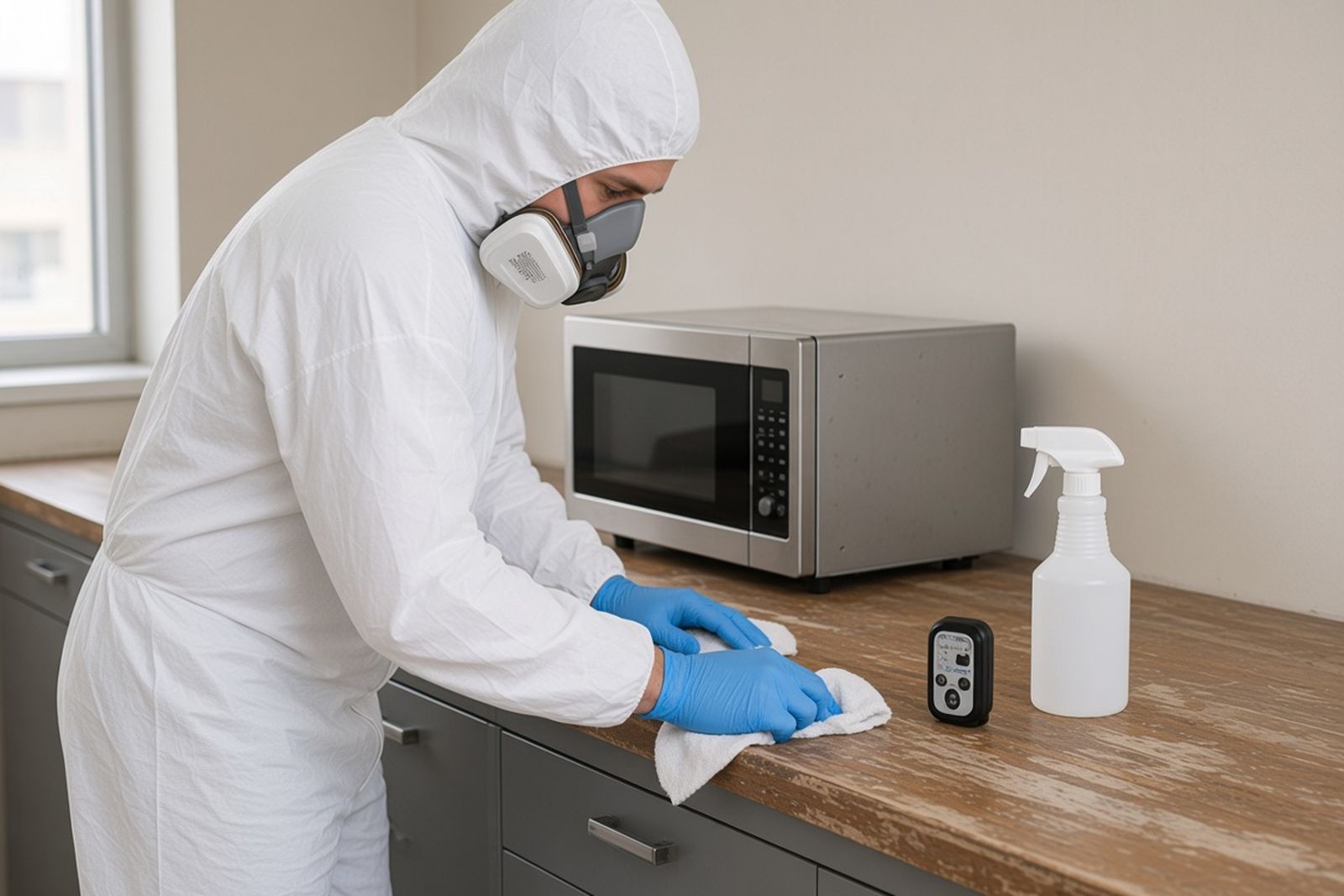
Here the check means looking at the materials, lifting edges where possible, and planning methods that keep material wet and contained. Crews may wet dried residue again before they remove it. They avoid high-pressure sprays. They use HEPA filters, which are very fine air filters, when they remove dry, contaminated materials.
Risks 5 and 6: Chemicals and carrying the mess to clean rooms
The fifth risk is chemical exposure. Disinfectants and cleaners can irritate your skin, eyes and lungs, most of all in small rooms with little fresh air. Mixing products can be dangerous. For example, bleach mixed with ammonia or acids can release harmful gases.
The sixth risk is carrying contamination into clean spaces. It can ride from the work area on gloves, shoes, tools and equipment. It can also spread when soiled materials are moved through clean rooms. And it can go the other way if you, your family or your pets wander into the work area.
For chemical risk, the check includes reading labels, planning for fresh air, choosing products that suit each surface, and picking breathing protection. To keep the mess from spreading, crews mark out clean and dirty zones. They plan a path for carrying materials outside. They set up a place to take off protective gear and bag it.
Risks 7 and 8: Physical hazards and heat stress
The seventh risk is physical and structural. Wet floors are slippery. Removing your flooring or drywall can expose electrical wiring. A soaked floor base may be weakened. Fluid near outlets, appliances or electrical panels can create a shock hazard. Heavy furniture and mattresses can cause strains when moved.
The eighth risk is heat stress. Suits that resist fluid, breathing masks and double gloves trap heat. In a warm building, workers can overheat fast. This is most likely in summer or in a space without working air conditioning. Heat stress causes tiredness and poor judgment. That in turn raises the chance of a mistake.
The check includes looking for electrical hazards and shutting off power to affected circuits when that is called for. It includes inspecting floors, planning how to lift heavy items, and setting breaks for rest and water outside the work area. If your crew plans breaks, it is not slow. It is safer.
Lighting belongs in this part of the check too. Dim rooms hide sharp objects, spatter on dark surfaces and things to trip on. Bringing portable work lights into your space is a simple step. It makes nearly every other risk easier to manage.
Risks 9 and 10: Waste handling and emotional impact
The ninth risk is careless waste handling. Soaked materials, used protective gear and sharp objects must be packed so they do not leak, tear or puncture on the way out. Overfilled bags, containers left alone, and regulated waste mixed with regular trash can expose trash workers and others. Your state's medical waste program defines which materials count as regulated medical waste. It also says how they must be stored and hauled.
The tenth risk is emotional. Many biohazard scenes follow an injury, a death or a traumatic event. Family members, coworkers and even property managers may be deeply affected. Asking someone who is grieving or in shock to help with cleanup can cause lasting distress.
Here the check means planning for proper waste containers and pickup from your property. It also means thinking about who should be present during the work. A caring crew will offer to handle personal items gently. It will not expect you or other loved ones to take part in the physical cleanup. If anyone is in crisis or thinking about suicide, the 988 Suicide and Crisis Lifeline is available by call or text.
One scene, assessed before the first wipe
Here is how that looks on one example job, with made-up details. A property manager calls about blood in a first-floor apartment. The tenant was hurt and taken to the hospital. The manager wants the unit cleaned before the tenant comes back.
The worker begins by looking in from the doorway. She notes blood on the vinyl kitchen floor, a trail across the living room carpet, and smears on a door frame. A small sharps container has tipped over near the couch, and one needle lies on the carpet. The apartment is hot because the air conditioner is broken. A power strip on the kitchen floor sits near the edge of the spill.
Before cleaning, the crew unplugs the power strip and turns off that circuit. They pick up the needle with tongs and drop it into a sharps container. They set up a clean zone in the hallway with a place to take off gear, and they bring a portable fan there for breaks. They plan to lift a section of carpet to check the pad, and to use a disinfectant that is safe for the vinyl. Each risk is dealt with before the first wipe.
This kind of step-by-step check is how professional crews stay safe. It is what you should expect to see at your property.
A checklist before any crew, or you, begin
Use this quick checklist to walk through the ten risks before work starts in your space.
- Assume all blood and body fluids could spread infection.
- Look for needles, glass and other sharp objects, and plan how to pick them up safely.
- Check whether fluids reached soft materials, seams or lower floors.
- Plan methods that do not make dust or droplets from dried material.
- Read product labels, do not mix chemicals, and plan for fresh air.
- Set up clean and dirty zones and a path for carrying materials outside.
- Check for electrical hazards, slippery floors and weakened structures.
- Plan for heat stress with breaks, water and cooling.
- Arrange proper waste containers and pickup.
- Think about who should and should not be present, and offer support to those affected.
How can you tell whether a crew takes these risks seriously?
Ask the company to walk you through its safety check. A good crew will explain which risks they see at your site and how they plan to control each one. They will say what they will do if they find something unexpected. They will not rush into the work before the check is done.
Watch for signs that they came prepared. Look for sharps containers, protective suits, marked work zones, product labels on hand and a plan for waste. These details show a habit of safety. That habit protects the crew, you, and anyone who uses your space afterward.