Free biohazard decontamination tool
Biohazard Decontamination DIY or Call a Pro? Risk Check
Eight yes-or-no questions that produce a risk level and explain when professional help is the safer choice.
Not every body-fluid mess needs a pro, and it would not be honest to pretend otherwise. Say there is a small amount of blood on a sealed countertop. Someone cleans it right away, wearing gloves and using a labeled disinfectant for its full wet time. Many people can handle that. The trouble is that the same instinct that handles a small spill well can lead someone into a job that is beyond them. They may spread the mess, expose themselves, and destroy the proof an insurer needs. This risk check asks a short set of yes or no questions. They cover amount, surface type, sharps, unknown fluids, people at risk, whether it is a workplace, and whether the scene has been released.
Your answers produce a risk level and an explanation of why pro help is the safer choice at that level. The check is not a diagnosis, and it cannot see your property. It works from basic ideas. Soft materials hide germs. Sharps and unknown fluids raise the risk of exposure. Vulnerable people in the home leave less room for error. Workplace events bring legal duties that a well-meaning worker cannot meet alone. When the result suggests calling a provider, you can take the reasoning into that call. When it says careful DIY cleanup may be possible, it still expects proper gloves, a registered product, and correct waste handling. Run the check again if you learn something new, such as finding fluid under a baseboard.
How to use it
- 1Answer each question based on what you can really see and know, not on what you hope is true.
- 2Pay close attention to the questions about soft surfaces and sharps, since they weigh heavily in the result.
- 3Read the risk level and the note on which factors drove it.
- 4If the result points to pro help, use the planner and vetting checklist next; if it allows DIY, follow the safety notes exactly.
Prefer to ask a person?
Your request is sent to the follow-up inbox. A coordinator can reply by email. Not for emergencies; call 911 first if anyone is in danger.
Check whether DIY is safe
Biohazard Decontamination: DIY or call a pro?
Eight yes-or-no questions. The result is an educational risk level, not a safety clearance.
1. Is there blood, body fluid, or anything that could carry a bloodborne pathogen?
2. Has the material soaked into carpet, padding, a mattress, drywall or a subfloor?
3. Is there a strong or lingering odor?
4. Could needles, broken glass, drug residue or unknown chemicals be present?
5. Does the affected area cover more than a small spot, or more than one room?
6. Will children, older adults, pregnant people or anyone immunocompromised use the space afterward?
7. Do you need documentation for insurance, a landlord, a sale, or an estate?
8. Would you be doing this while grieving, exhausted or under time pressure?
8 questions left to answer.
A worked example
Take a made-up homeowner whose elderly parent fell in the bathroom and was treated at the hospital for a cut. There is blood on the tile floor, a little on the bath mat, and a smear on the vanity. The homeowner runs the risk check. She answers no to unknown fluids, no to sharps, and no to a workplace. She answers yes to scene released, because no investigation is involved. She answers yes to soft materials because of the bath mat. She also answers yes to vulnerable people, because her parent will return home. The tool returns a moderate risk level. It explains that the tile and vanity are hard surfaces. A careful person with gloves and a labeled product could clean and disinfect them. But the bath mat should be thrown out, not tossed in the wash. And the parent's return makes thorough disinfecting and checking more important. The tool says that if she is uneasy with any of those steps, a provider visit makes sense. It also notes that a workplace or a larger amount would have pushed the answer firmly toward pro help.
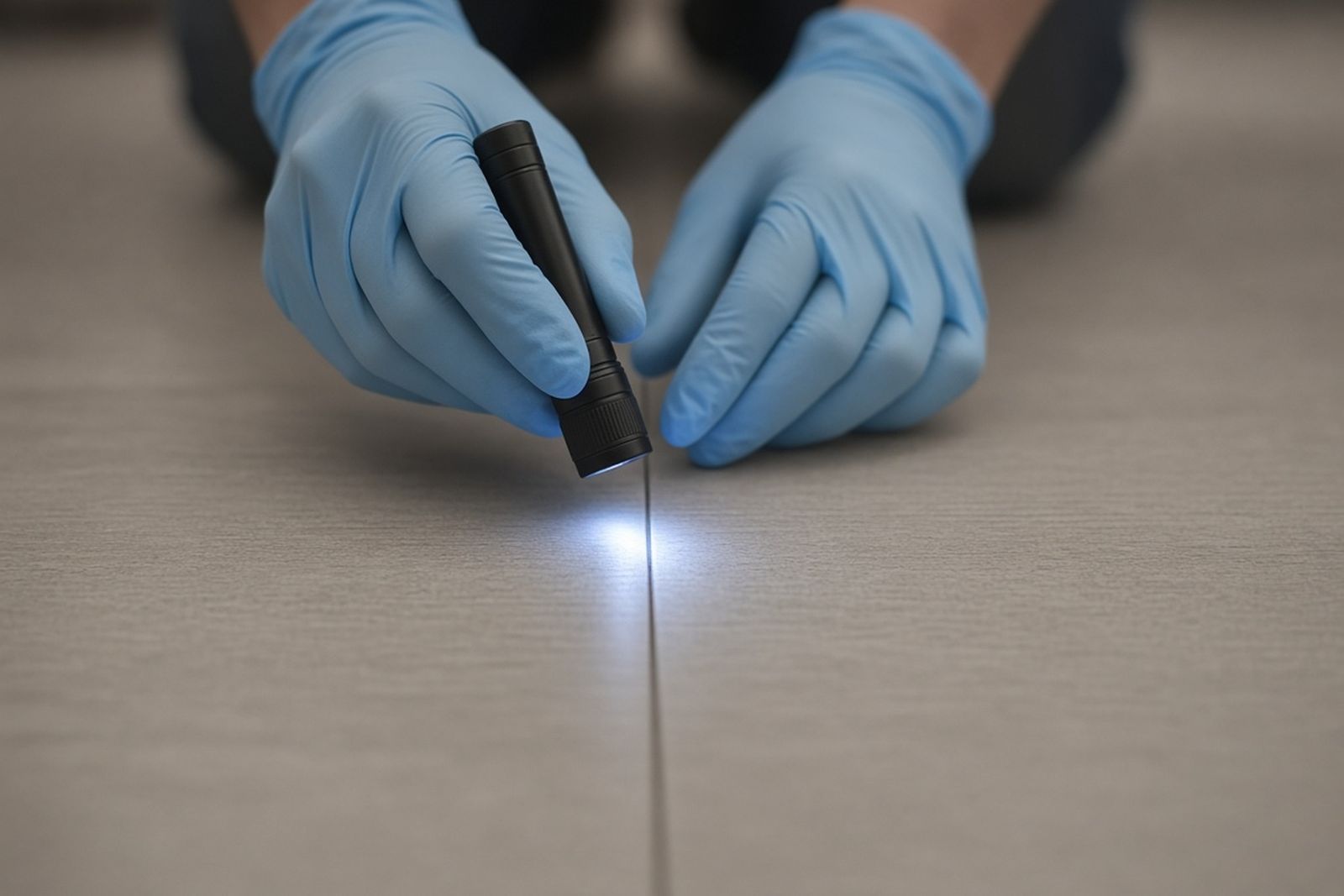
Numbers behind diy risk check decisions
- 18 million
OSHA counts approximately 18 million workers in the U.S. health care industry, many of whom are at risk of occupational exposure to bloodborne pathogens.
Read with care: Not all 18 million have occupational exposure.
Source: OSHA (2024)United States, health care industry workforce
- 240 million
WHO estimates 240 million people were living with chronic hepatitis B in 2024, and the infection caused about 1.1 million deaths that year.
Read with care: Global figures; U.S. prevalence is far lower.
Source: World Health Organization (2024)Global, 2024 estimates
- 69,000
In 2023, 4,966 acute hepatitis C cases were reported in the United States, while CDC estimates about 69,000 infections occurred.
Read with care: Modeled estimate.
Source: CDC (2023)United States, 2023 surveillance with underreporting adjustment
- 14,400
In 2023, 2,214 acute hepatitis B cases were reported in the United States, but CDC estimates about 14,400 infections actually occurred.
Read with care: Estimated infections are modeled from reported cases.
Source: CDC (2023)United States, 2023 surveillance with underreporting adjustment
These figures are public research and agency data, not this network's own job records. Keep each number with its population, year and limits; none of them predicts cost, timing or outcome at a specific property.
DIY or Call a Pro? Risk Check questions for biohazard decontamination
Why does a workplace setting change the result so sharply?
Because an employer has legal duties under the OSHA blood safety rule that do not apply in a private home. Workers who clean up blood must be covered by a written exposure plan. They must be trained and given safety gear and a way to get rid of waste. An untrained worker who offers to mop up creates exposure and legal problems for everyone. The check treats any workplace event as a reason to involve the safety lead and, in most cases, a provider.
What counts as a small amount for DIY purposes?
The check does not use a set measure, because the amount matters less than what the fluid touched. A few drops on a sealed surface are manageable. The same drops on carpet, grout, or bare wood are not, because they soak in. Ask yourself whether you could wipe the surface fully clean and then disinfect every part the fluid reached. If the honest answer is no, the mess is beyond a wipe-down.
If I do handle a small spill myself, what does proper handling look like?
Wear throwaway gloves. Blot instead of scrub so you do not splash. Clean the surface with detergent. Then apply an EPA-registered disinfectant labeled for bloodborne germs, and keep it wet for the time on the label. Bag the used materials and tie the bag. Check your local rules for disposal, which vary by state and county. Wash your hands well afterward. Do not mix products, and never use a household vacuum on any body fluid or tissue.
What if I have already started cleaning and now realize it was too much?
Stop, leave the area, and keep others out. Do not try to finish or undo what you did. Photograph how things look now so the provider and your insurer understand what happened. When you call a provider, be open about what products you used and where you moved things. That affects their plan and the chemicals they choose. Stopping partway is far better than pushing through a job that is spreading the mess.
Does the check consider unknown or mixed fluids?
Yes, and it treats them with care. If you cannot tell what a fluid is, you cannot choose the right product or safety steps. There is also a chance that chemicals or drug residue are mixed in with the body fluids. The check raises the risk level for unknown substances and suggests a pro look at it. This is one of the few times when curiosity is dangerous. Do not sniff, touch, or test the material yourself to figure it out.
Should I run the check again if the situation changes?
Yes. Run it again with the new details if you find more of the mess than you first saw. Do the same if you find a sharp, notice fluid under the flooring, or learn the source is unknown. The result may change from a cleanup you can manage at home to advice to call a provider. Stop cleaning while you rethink it, so you do not spread material while you decide.
What if people in my household disagree with the result?
Talk through the specific factors the check flagged, not the overall result. Those might be soft materials, vulnerable family members, or unknown fluids. If anyone is still uneasy, calling a provider for advice costs little and can settle the question. When in doubt, the more careful choice protects everyone in the home. That includes the person who would otherwise do the cleaning.
Related community polls
Every count is a real visitor vote; nothing is seeded or padded. One vote per poll per device, and you can change your answer.
When you found a biohazard mess, what was your first instinct?
What would most likely make you hire a provider instead of cleaning up yourself?
Other biohazard decontamination tools
Cost Range Estimator
Set the affected area, surface types, severity and extras to see an educational cost range and the factors that move it.
OpenProvider Vetting Checklist
Fifteen questions to ask any remediation provider, a readiness score, and a copyable list of what is still unanswered.
OpenInsurance Claim Organizer
A guided checklist from finding the policy to tracking the carrier decision, with a printable summary of where the claim stands.
OpenFirst 24 Hours Planner
Tell the planner a few facts about the situation and get an ordered list of who to call, what not to touch, and what to photograph.
OpenWaste & Disposal Classifier
Five questions about the material point to the likely waste category and which authority to confirm the rules with.
OpenMore on biohazard decontamination
Biohazard Decontamination services
Learn how pro cleanup handles blood, body fluids, and germs in homes, workplaces, and schools. See each step, from the first visit to checked disinfecting and recorded waste removal.
Costs explained
What drives the price, published cost ranges, and how to read a written quote line by line.
Insurance and payment
Which policies may respond, how to document a claim, and what to do if coverage is denied.
Community polls
See how other owners and managers made choices about body-fluid messes. Compare their instincts with the sourced advice elsewhere on the site.
Knowledge quiz
Test what you know about spotting hazards, scene release, containing a mess, disinfecting, waste, and records. A short quiz and study guide explain each idea.
Articles and resources
Read articles on new disinfectant advice, workplace exposure planning, and lessons from real cleanup cases in homes and businesses.