Free biohazard decontamination tool
Biohazard Decontamination Provider Vetting Checklist
Fifteen questions to ask any remediation provider, a readiness score, and a copyable list of what is still unanswered.
Hiring someone to clean up a biohazard is different from hiring a cleaning service. The questions you ask before work starts decide what you can hold them to later. This checklist gives you a set of questions. They cover training under the OSHA blood safety rule, safety gear, choice of disinfectant, keeping the mess contained, checking the work, hauling waste, insurance, and records. As you confirm each item in writing or on a call, tick it off. The tool keeps a readiness score. It also makes a list of open items you can copy and send to the provider before you sign. Working through it slows the talk down enough that you notice when an answer sounded sure but said nothing specific.
The checklist does not check providers for you, and this network does not certify anyone. It gives you the words and the order to do your own checking. That is the only kind that protects you. A confident tone on the phone is not a credential. These are: an insurance certificate you can read, a named disinfectant with an EPA number, a clear account of how waste leaves the site, and a sample of the final records. Providers who welcome these questions tend to be the ones who have answered them for risk managers and adjusters before. Keep the finished checklist in your project file. It becomes part of the record of how you chose.
How to use it
- 1Read all the questions once so you know what to listen for before any call.
- 2Ask each question, and tick it only when the answer was specific and, where you can, shown in writing.
- 3Review your readiness score and note which areas, such as waste or checking the work, are still weakest.
- 4Copy the open questions and send them to the provider, and keep their written replies in your project file.
Prefer to ask a person?
Your request is sent to the follow-up inbox. A coordinator can reply by email. Not for emergencies; call 911 first if anyone is in danger.
Vet a provider before you sign
Biohazard Decontamination provider vetting checklist
Start with the questions specific to this kind of job. Tick each one once the provider has answered it in writing or shown you the document. Your progress stays on this device only.
Readiness: 0 of 21 confirmed (0%)
21 questions still need a written answer. Copy the list and send it to the provider before you sign anything.
A worked example
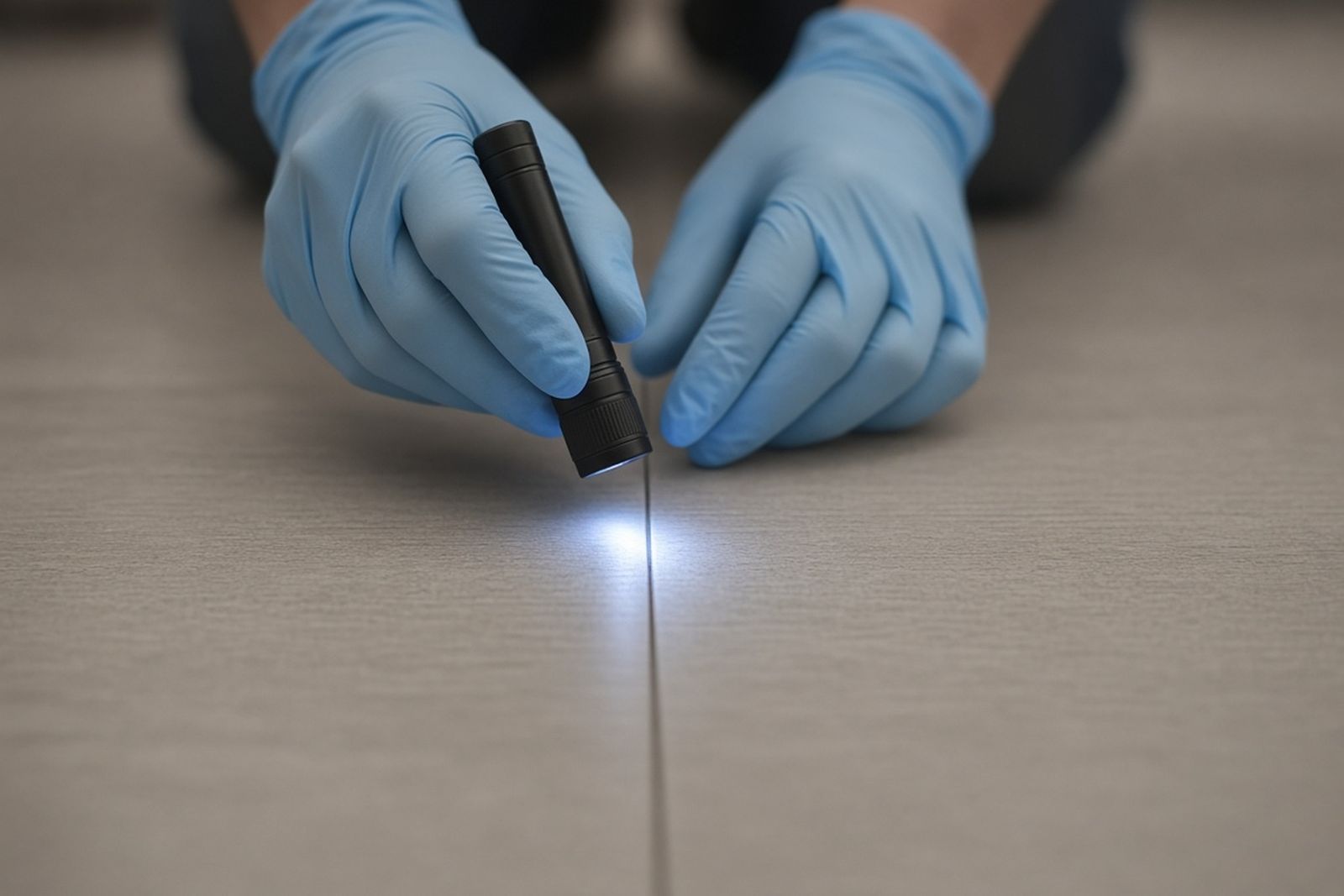
Picture a made-up landlord whose tenant went to the hospital after a medical emergency in a rental unit. It left a mess on a bedroom floor and in a shared hallway. Two providers call her back. She opens the checklist during the first call. The provider is quick to describe their blood safety training. They name the disinfectant they use and how long it stays wet, and they offer to email proof of insurance. Then she asks how waste will be hauled and whether she will get a waste shipping record. The answer turns vague, so she leaves that item unticked. She asks how they will check that the hallway tile is clean. The provider mentions only a visual walk-through, so she leaves that open too. Her readiness score lands in the middle. The second provider answers the waste and checking questions in detail. They describe labeled containers, a licensed hauler, and a quick swab test for leftover residue with written readings. But they cannot show insurance yet. She copies the open questions for each and emails them. The provider who replies with documents instead of reassurance becomes the clear choice. The checklist record explains that choice to her insurer.
Numbers behind vetting checklist decisions
- 4,000
More than 4,000 antimicrobial products containing about 275 different active ingredients are registered with EPA.
Read with care: Count includes sanitizers and sterilants beyond hospital disinfectants.
Source: U.S. Environmental Protection Agency (2024)United States, EPA-registered antimicrobial pesticide products
- 2%
BLS projects employment of hazardous materials removal workers to grow 2% from 2025 to 2035, slower than average, with a high school diploma as typical entry education.
Read with care: Projection for the broad occupation, not biohazard cleanup specifically.
Source: U.S. Bureau of Labor Statistics (2025)United States, 2025-2035 projection
- 30 years
Employers must keep bloodborne-pathogen medical records for the duration of employment plus 30 years, and training records for 3 years.
Read with care: Records rules reference 29 CFR 1910.1020.
Source: OSHA (2001)United States, recordkeeping under 29 CFR 1910.1030
- 1:10 bleach
In the same study, a 1:10 bleach dilution eliminated infectious HCV from dried blood spots after one minute, whereas 70% ethanol left 13% of spots infectious.
Read with care: Laboratory study using cell-culture-derived HCV dried in blood spots; real-world infectivity depends on volume, surface and conditions.
Source: Journal of Infectious Diseases (Paintsil et al.) (2014)Laboratory disinfection test, 1-minute contact time
These figures are public research and agency data, not this network's own job records. Keep each number with its population, year and limits; none of them predicts cost, timing or outcome at a specific property.
Provider Vetting Checklist questions for biohazard decontamination
What does a readiness score actually measure?
It counts how many checklist items you have marked as confirmed. It gives more weight to the questions that matter most for safety and accountability, such as training, insurance, waste handling, and checking the work. It measures how careful you have been, not how good the provider is in any absolute sense. A high score means you have gathered specific answers. A low score means key questions are still open, and the job should not start yet.
Should I expect a provider to show training records?
A good provider should be able to describe their blood safety training program. When asked, they should give proof, such as training certificates or a summary of their written exposure plan. Some may also hold 40-hour HAZWOPER hazardous waste training or have finished industry courses. You are not asking for private employee files. You only want confirmation that the people entering your property are ready for the hazard. A provider who will not discuss training at all is telling you something.
Why does the checklist ask about the disinfectant by name?
Because the product label is the legal and scientific basis for any claim that germs were killed. A named product lets you look up its EPA registration. You can see which germs it is registered to kill and how long it must stay wet. A provider who cannot name their product, or who only calls it hospital grade, is asking you to trust instead of check. The same goes for the wet time, which the label should state in minutes.
What insurance should I ask a provider to show?
Ask for a current insurance certificate. It should list general liability and, for biohazard work, pollution liability. It should also show workers compensation for their staff. Read the dates the policy is in force and the name of the insured company. If the work is in a commercial building, your property manager may require set limits. They may also require to be named as an additional insured. Rules and needs vary, so ask your own insurer or manager what they require.
Is it rude to ask a provider these questions during an emergency?
No. Providers who do this work well expect these questions from building managers and adjusters. They usually value a client who knows what to ask. You can be brief and direct. If the situation is urgent, ask first about training, insurance, product, and waste handling. Follow up on records once the immediate risk is under control. A provider who reacts badly to fair questions has told you something useful.
Can I still use the checklist after I have hired someone?
Yes. Use it as a guide to what you should see during the job and at the end. Check that the crew matches the training you were told about. Check that the named disinfectant is the one being used. Check that waste leaves the way it was described. If an item on the checklist is not met, raise it with the crew lead while the team is still on site.
What should I do if two providers score about the same?
Look at where each one fell short, not at the total. A gap in waste handling or disinfectant knowledge usually matters more than a gap in scheduling. Then think about practical factors. Who can start when you need? Who explained things most clearly? Whose written work plan was easiest to follow? A short follow-up call with each can also break the tie.
Related community polls
Every count is a real visitor vote; nothing is seeded or padded. One vote per poll per device, and you can change your answer.
When you found a biohazard mess, what was your first instinct?
What would most likely make you hire a provider instead of cleaning up yourself?
Other biohazard decontamination tools
Cost Range Estimator
Set the affected area, surface types, severity and extras to see an educational cost range and the factors that move it.
OpenInsurance Claim Organizer
A guided checklist from finding the policy to tracking the carrier decision, with a printable summary of where the claim stands.
OpenFirst 24 Hours Planner
Tell the planner a few facts about the situation and get an ordered list of who to call, what not to touch, and what to photograph.
OpenWaste & Disposal Classifier
Five questions about the material point to the likely waste category and which authority to confirm the rules with.
OpenDIY or Call a Pro? Risk Check
Eight yes-or-no questions that produce a risk level and explain when professional help is the safer choice.
OpenMore on biohazard decontamination
Biohazard Decontamination services
Learn how pro cleanup handles blood, body fluids, and germs in homes, workplaces, and schools. See each step, from the first visit to checked disinfecting and recorded waste removal.
Costs explained
What drives the price, published cost ranges, and how to read a written quote line by line.
Insurance and payment
Which policies may respond, how to document a claim, and what to do if coverage is denied.
Community polls
See how other owners and managers made choices about body-fluid messes. Compare their instincts with the sourced advice elsewhere on the site.
Knowledge quiz
Test what you know about spotting hazards, scene release, containing a mess, disinfecting, waste, and records. A short quiz and study guide explain each idea.
Articles and resources
Read articles on new disinfectant advice, workplace exposure planning, and lessons from real cleanup cases in homes and businesses.