Free biohazard decontamination tool
Biohazard Decontamination First 24 Hours Planner
Tell the planner a few facts about the situation and get an ordered list of who to call, what not to touch, and what to photograph.
The first day after you find blood or body fluids is when most avoidable mistakes happen. People usually act on instinct before anyone has a plan. This planner swaps instinct for an ordered list. You answer a few questions. Has the scene been released by the authorities? Are people still living or working there? Is there an odor? Could needles or other sharps be involved? Are there pets in the home? Is the property rented? The planner then gives you steps that fit those facts. It tells you who to call and in what order, and which areas and objects to leave alone. It also tells you what to photograph and what to write down while details are fresh. Because the list adapts to your answers, a released scene in an empty house gets different steps than an unreleased scene in a busy apartment.
The list is cautious on purpose. It will tell you to keep people out and not to run fans or the heating and cooling system into the space. It will tell you not to move soiled items. It will also tell you to wait on cleaning until the right authority and a checked provider have weighed in. If there is an investigation, it will remind you that release must come first. If someone may have been exposed, it will point you to a medical check, not a cleaning product. Nothing in the planner replaces emergency services, a health department, or a provider's on-site visit. It just makes sure you do not skip a step. Print or save the list once it is made, so you can hand it to whoever arrives next.
How to use it
- 1Answer each question honestly, and choose unsure when you do not know instead of guessing.
- 2Read the list from the top, and make the calls before you take any physical steps.
- 3Follow the do-not-touch items exactly, even if the space looks easy to handle.
- 4Take the photos and notes the list asks for, then save or print it for your provider and insurer.
Prefer to ask a person?
Your request is sent to the follow-up inbox. A coordinator can reply by email. Not for emergencies; call 911 first if anyone is in danger.
Plan the first 24 hours
Biohazard Decontamination: first 24 hours planner
Answer a few questions and the planner orders the next steps. It does not dispatch help and cannot replace emergency services.
Your ordered plan (6 steps)
- 1
Keep people and pets out of the affected area
Close the door and keep the area sealed until a qualified provider assesses it.
- 2
Photograph from the doorway before anything moves
Take wide shots first, then closer shots of stains, damage and belongings. Do not step into the area to do it. These photos support insurance and estate records.
- 3
Report the loss to your insurer and get a claim number
Ask the adjuster whether they need to inspect before materials are removed, and whether they have a list of approved remediation providers. Coverage depends on the policy and the cause of loss.
- 4
Call a qualified remediation provider for an assessment
Describe what happened, the rooms involved, and any odor, fluids or sharps. Ask which OSHA standards apply to biohazard decontamination and for proof of training and insurance before work starts.
- 5
Start a written log
Record who you spoke to, when, and what they said. Keep receipts for lodging, boarding, locks and any emergency purchases.
- 6
Look after the people involved
If a death or violent event is involved, victim assistance programs, hospice bereavement teams and the 988 Suicide & Crisis Lifeline can help. You do not need to manage this alone.
A worked example
Suppose a made-up property manager gets a call from a tenant. The tenant says a neighbor's unit had a medical emergency overnight. The shared hallway carpet outside the door is stained. Emergency crews have already left. The manager opens the planner. He notes that the scene has been released and that other tenants are in the building. He notes a clear odor. He notes that sharps are possible because medical equipment was used. He also notes that a tenant on that floor has a dog and that the property is a rental. The planner lists steps in order. Close off that part of the hallway with signs. Ask tenants to use the other stairwell. Keep the dog and all residents away from the stain. Do not turn on the hallway fan. Photograph the hallway from both ends, and take close-ups without stepping on the stain. It reminds him to check the lease and management rules for who approves cleanup. It tells him to notify the building owner and insurer, and to call a checked provider with the facts he gathered. It also tells him not to let maintenance staff try a carpet machine. He prints the list, adds times to his notes, and hands both to the provider when they arrive.
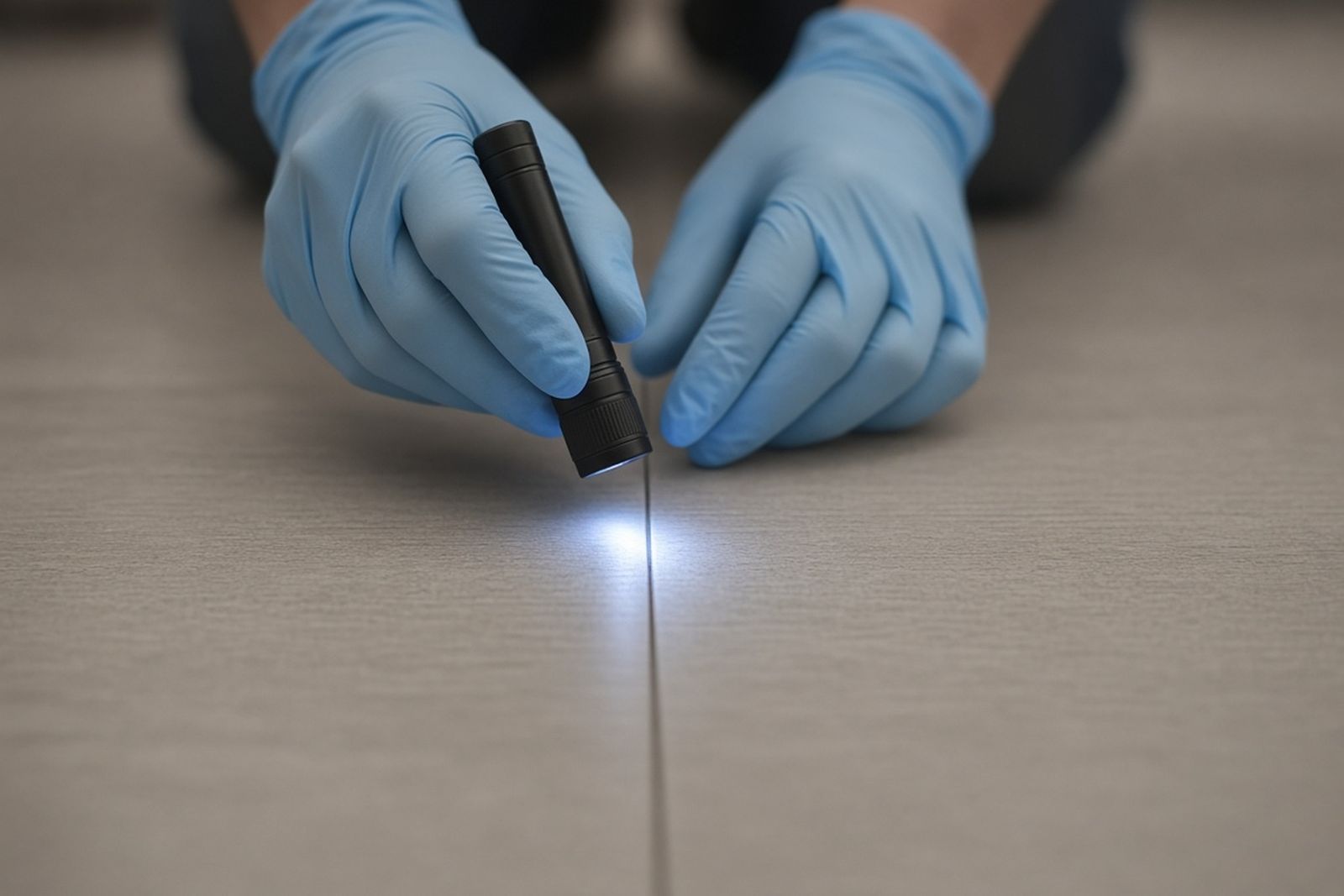
Numbers behind 24-hour planner decisions
- 2.4-4 million
An estimated 2.4 million to 4 million people in the United States had hepatitis C during 2017-2020.
Read with care: Range reflects survey undercount adjustments.
Source: CDC (2020)United States, 2017-2020 estimate
- 7 days
Hepatitis B virus remains infectious for at least 7 days on environmental surfaces, according to CDC.
Read with care: 'At least' 7 days; longer survival is possible under some conditions.
Source: CDC (2024)CDC clinical guidance, environmental persistence of HBV
- 6 weeks
Hepatitis C virus in dried blood remained infectious for up to 6 weeks at 4°C and 22°C (room temperature) in a laboratory study.
Read with care: Laboratory study using cell-culture-derived HCV dried in blood spots; real-world infectivity depends on volume, surface and conditions.
Source: Journal of Infectious Diseases (Paintsil et al.) (2014)Laboratory study, Yale School of Public Health, published 2014
- 60%
Dust nicotine loading fell about 60% immediately after cleaning.
Read with care: Nicotine markers, not odor scores or disease outcomes; continuing smoke intrusion possible.
Source: Matt et al. (2021)48 homes with strict indoor smoking bans assigned to cleaning sequences.
These figures are public research and agency data, not this network's own job records. Keep each number with its population, year and limits; none of them predicts cost, timing or outcome at a specific property.
First 24 Hours Planner questions for biohazard decontamination
What does it mean for a scene to be released?
Release means the authority in charge, usually the police or a medical examiner, has finished its work. It no longer needs the space kept as it is. Until then, cleaning, moving items, or even walking in can get in the way of an investigation. If you are unsure whether the scene was released, the planner will tell you to confirm with the agency first. Ask for the name of the person who released it, and note the time.
Why does the planner ask about pets?
Animals walk through the mess, lick their paws, and carry material into other rooms. That exposes them and spreads the problem. You also cannot tell them to stay out. If pets are present, the planner adds steps. It tells you to shut them away from the area and check their paws and fur if they may have walked through it. It also tells you to mention any exposure to a vet. Keeping pets out is easier than cleaning up after them.
Should I open windows to reduce the smell while I wait?
Fresh air feels helpful. But it can push particles in the air into other spaces, and in a shared building, into neighbors' units. The planner usually advises keeping doors shut. It also says not to use fans or the heating and cooling system until a provider checks the space. If the odor is so bad that people cannot stay nearby, move the people instead of pushing air around. A provider will air out the space under a plan once the source is contained.
What should I photograph, and is it safe to do so?
Take photos from the doorway or a clean spot without going in or stepping on anything. Get wide views of each affected room and closer views of stains and their edges. Include any items that look soiled and the path between rooms if material was tracked. Photos show your insurer how big the problem is and help the provider plan. Do not move objects to get a better angle. Do not photograph anything that would be wrong to share.
Who should I call first if someone may have been exposed?
Possible contact with blood or body fluids is a medical matter before it is a cleaning matter. Contact a doctor or other health provider. At work, follow the exposure steps in your employer's plan, which may include a prompt medical check. The planner puts this ahead of provider calls whenever you say people were present. Cleanup can wait a short while. The window for some care after exposure cannot.
What if I find the contamination days after it happened?
The planner still applies, though some steps shift. An older mess may have dried, soaked into materials, or begun to smell. So avoid disturbing it and keep the area closed. Tell providers roughly how long ago it happened when you call, since that affects their approach and the safety gear they bring. Photograph what you can from a distance. Note when you found it, which may matter to your insurer.
Can I use the planner for a property that belongs to someone else?
Yes. Many people use it for a relative's home, a rental unit, or a workplace. Focus on the steps you can take safely, such as keeping people away and gathering facts. Contact the owner or the person in charge before you arrange any work. Write down what you did and when. That way the owner or their insurer has a clear picture of the first hours.
Related community polls
Every count is a real visitor vote; nothing is seeded or padded. One vote per poll per device, and you can change your answer.
When you found a biohazard mess, what was your first instinct?
What would most likely make you hire a provider instead of cleaning up yourself?
Other biohazard decontamination tools
Cost Range Estimator
Set the affected area, surface types, severity and extras to see an educational cost range and the factors that move it.
OpenProvider Vetting Checklist
Fifteen questions to ask any remediation provider, a readiness score, and a copyable list of what is still unanswered.
OpenInsurance Claim Organizer
A guided checklist from finding the policy to tracking the carrier decision, with a printable summary of where the claim stands.
OpenWaste & Disposal Classifier
Five questions about the material point to the likely waste category and which authority to confirm the rules with.
OpenDIY or Call a Pro? Risk Check
Eight yes-or-no questions that produce a risk level and explain when professional help is the safer choice.
OpenMore on biohazard decontamination
Biohazard Decontamination services
Learn how pro cleanup handles blood, body fluids, and germs in homes, workplaces, and schools. See each step, from the first visit to checked disinfecting and recorded waste removal.
Costs explained
What drives the price, published cost ranges, and how to read a written quote line by line.
Insurance and payment
Which policies may respond, how to document a claim, and what to do if coverage is denied.
Community polls
See how other owners and managers made choices about body-fluid messes. Compare their instincts with the sourced advice elsewhere on the site.
Knowledge quiz
Test what you know about spotting hazards, scene release, containing a mess, disinfecting, waste, and records. A short quiz and study guide explain each idea.
Articles and resources
Read articles on new disinfectant advice, workplace exposure planning, and lessons from real cleanup cases in homes and businesses.