Biohazard Decontamination: Regulations
How to identify the worker-safety, waste, transport, environmental, and local rules that may apply to biohazard decontamination. Confirm jurisdiction-specific requirements with the issuing authority.
Posts on rules explain which laws shape biohazard cleanup and how to find the ones that apply to your property. They cover the OSHA blood safety rule and what it requires of employers. They explain how EPA registration controls what disinfectant labels can claim and how products must be used. They also show how federal, state, and local rules split the duties. Other articles help you look up waste rules for biohazard materials. The rules for sorting and hauling waste differ between homes, businesses, and licensed facilities. Posts also discuss how licensed facilities, food businesses, and landlords may have extra duties that a single-family homeowner does not.
Get an email reply about biohazard decontamination
Send a short message to the follow-up inbox. A coordinator can reply by email. This form does not send emergency help; call 911 first if anyone is in danger.
Knowing this framework helps you ask the right agency the right question. A school administrator may need to review a written exposure plan. A homeowner facing a sewage loss may care more about local trash rules and insurance terms. Rules vary by state and county. So these posts focus on where to look and what to ask. That way you can check a provider's claims against the real rule, not a sales pitch. The posts also explain the difference between a rule that binds the provider and one that binds you as the owner. That matters when a company says a step is required by law. You then need to decide whether to check that claim before you pay for it.
OSHA Regulations and Biohazard Decontamination
Which OSHA standards shape biohazard decontamination work, what a compliant crew should show you, and why worker rules still matter to property owners.
OSHA rules protect the workers doing biohazard decontamination, not the property itself. The Bloodborne Pathogens Standard is the core rule for blood and other potentially infectious materials, supported by standards on respirators, personal protective equipment and chemical hazard communication. As a property owner, you benefit by asking a contractor to show its exposure control plan, training records and respirator program before work starts.
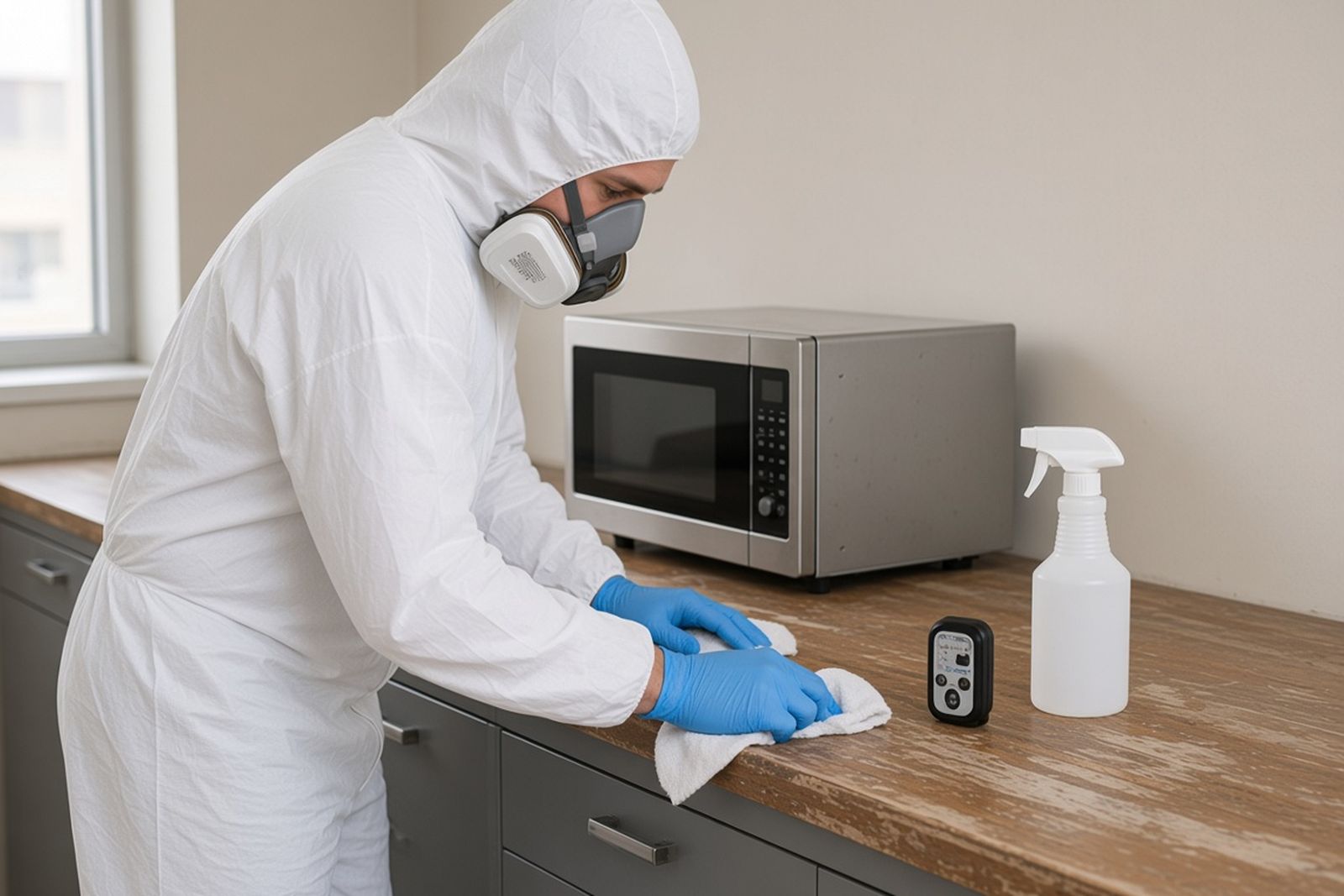
Which Federal, State, and Local Rules Apply to Biohazard Decontamination?
A step-by-step guide to the federal, state and local rules behind biohazard cleanup. It covers worker safety, disinfectants, medical waste and licenses.
Biohazard cleanup falls under several layers of rules. At the federal level, OSHA protects workers. EPA registers the disinfectants. DOT sets rules for how regulated waste is shipped. States often run medical waste programs. Some run their own OSHA plans, and some license cleanup companies. Local health offices, code offices and waste haulers add their own rules. The right answer for your property depends on where it is.
How to Research Waste Rules for Biohazard Decontamination
A step-by-step way to research the waste rules behind biohazard decontamination: federal context, state medical waste programs, transporters and paperwork.
Start with the material, not the agency. Identify what waste the job will produce, such as blood-saturated materials, sharps, used PPE and ordinary debris. Then check your state's medical or biomedical waste program for definitions, packaging and transport rules, confirm DOT shipping requirements through the transporter, ask the local landfill what it accepts and keep the paperwork that shows where each waste stream went.
Sourced figures on regulations
- 53%
53% reported changes in application type, such as fogging, spraying or wiping.
Read with care: Small voluntary sample; no causal inference; survey item nonresponse substantial.
Source: Wilson et al. (2023)59 Arizona survey respondents and 11 interviewees from maid services and a school district.
- 8
Products above pH 8 accounted for 74% of failures in the experiment.
Read with care: Accelerated test conditions; not a failure rate for installed equipment.
Source: Jennings et al. (2024)Eight wipe formulations tested on healthcare plastics under fixed strain for seven days.
- 98.1%
Manual wiping met the study's disinfection-success criterion on 98.1% of surfaces versus 75.5% for UV-C.
Read with care: Specific device, protocol and success criterion; no patient infection endpoint.
Source: Knobling et al. (2023)Naturally contaminated surfaces in a comparative field test.
These figures are public research and agency data, not this network's own job records. Keep each number with its population, year and limits; none of them predicts cost, timing or outcome at a specific property.
What research has found
Findings from published studies of people and properties in situations like this one. They describe what researchers observed in a specific group; they are not predictions for your case.
The cleaning protocols reduced surface nicotine by about half.
Air quality improved immediately after the smoking ban.
Regulations: common questions
Does the OSHA bloodborne standard apply to my home cleanup?
The rule covers employers and their workers. So it applies to the provider's crew, not to you as a homeowner. It still offers a useful yardstick. It covers training, safety gear, written exposure plans, and packing waste. Ask any company you hire how it meets those duties for its own crew. Its answer tells you a lot about how it works.
Why does a disinfectant label count as a legal document?
EPA-registered disinfectants must be used as their label directs. The label sets the surfaces, germs, mixing strength, and how long the product must stay wet. Using a product in a way the label does not allow can make it work less well. It can also raise questions about following the rules. Ask providers to share labels so you can confirm each product fits your surfaces and concerns.
Where do I look up waste rules for biological cleanup materials?
Start with your state environmental agency. It usually oversees hauling and treating medical waste. Then ask your county health department or trash office about local practice. Explain whether the waste comes from a home or a business, since the rules often differ. Keep notes on who you spoke with and what they said for your records.
Do the rules differ for a business and a homeowner cleaning up on their own?
Generally, yes. Businesses have employer duties to protect workers who may be exposed, including training and safety gear. Homeowners cleaning their own property are usually not bound by the same workplace rules, though waste rules may still apply. When a homeowner hires a provider, the provider takes on those employer duties for its own workers.
Who enforces the rules if a contractor disposes of waste improperly?
Improper waste handling is usually a matter for your state environmental or health agency, and sometimes for local officials. If you suspect a problem, gather what you have, such as photos or paperwork. Then contact the right agency. Keeping good records of who handled your waste makes it easier to show you acted responsibly.
Are there privacy concerns about sharing incident details with a provider?
It is fair to share what a provider needs to plan the work safely, such as the type of fluid and any known infection. You do not need to share personal or medical details beyond that. Ask the provider how they protect your information, including photos and records. Ask whether they share any of it with outside parties.
Why does a provider ask which state and county the property is in?
Waste handling, hauling, and sometimes contractor rules depend on location. Knowing the state and county helps the provider plan disposal. It also helps them check whether a local agency needs to be involved, and estimate travel. It is a routine question. A provider who asks it is showing that they take local rules into account.
Related community polls
Every count is a real visitor vote; nothing is seeded or padded. One vote per poll per device, and you can change your answer.
When you found a biohazard mess, what was your first instinct?
What would most likely make you hire a provider instead of cleaning up yourself?
More on biohazard decontamination
Biohazard Decontamination services
Learn how pro cleanup handles blood, body fluids, and germs in homes, workplaces, and schools. See each step, from the first visit to checked disinfecting and recorded waste removal.
Costs explained
What drives the price, published cost ranges, and how to read a written quote line by line.
Insurance and payment
Which policies may respond, how to document a claim, and what to do if coverage is denied.
Planning tools
Use checklists and planners that help you judge the hazard, plan the first day, sort waste types, and get ready to talk with providers and insurers.
Community polls
See how other owners and managers made choices about body-fluid messes. Compare their instincts with the sourced advice elsewhere on the site.
Knowledge quiz
Test what you know about spotting hazards, scene release, containing a mess, disinfecting, waste, and records. A short quiz and study guide explain each idea.