Short answer
Environmental responsibility in biohazard decontamination means removing only what truly cannot be decontaminated, choosing a disinfectant that fits both the pathogen and the surface, applying it precisely rather than flooding a room, keeping wash water out of storm drains and sending regulated waste through a proper disposal channel. None of it should come at the expense of killing pathogens or protecting workers.
Can biohazard cleanup be both safe and environmentally careful?
Yes, and the two goals overlap more than people expect. The most protective work is usually the most precise work: identifying exactly where contamination went, cleaning thoroughly, applying the right product in the right amount and packaging waste properly. Precision reduces chemical use and waste at the same time it improves safety.
Where the goals seem to pull apart, safety wins. A provider should never skip disinfection, shorten a contact time or keep a saturated mattress to reduce landfill volume. The environmental choices worth making are the ones that sit alongside a complete decontamination, not instead of it.
Thinking this way also changes how you judge a proposal. A scope that removes everything in sight is not automatically more careful than one that removes less. What matters is whether each decision is explained and tied to what was actually found.
Careful mapping reduces waste
Removal is often the biggest environmental cost of a job. Carpet, pad, drywall, furniture and mattresses go to disposal, and many of them are sent as regulated waste, which involves special packaging and treatment.
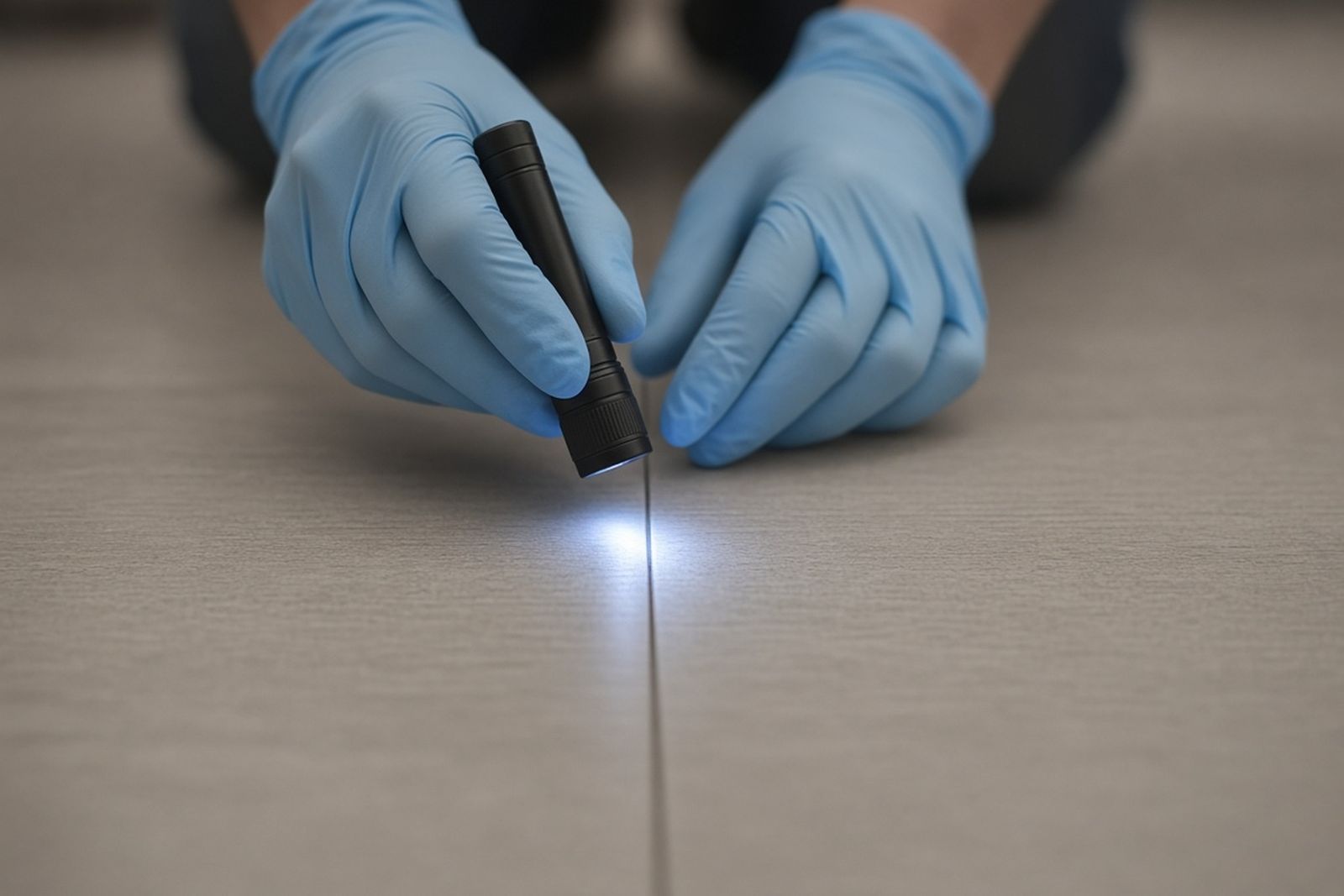
A thorough assessment keeps that volume in check. By lifting carpet edges to see how far fluid spread under the surface, checking drywall with moisture tools and examining seams in flooring, a technician can remove the affected zone with a sensible margin rather than an entire room.
Modular materials help too. Carpet tiles, removable baseboards and individual laminate planks can be replaced one at a time. When a provider explains why a specific section is being cut out, you get both a smaller waste stream and a clearer record for your insurer.
Salvage decisions also reduce waste. A solid wood dresser with a few drops on its sealed top can usually be cleaned and disinfected, while an upholstered chair soaked through its cushion usually cannot. Asking the provider to walk you through each item, rather than accepting a blanket removal, often saves furniture you would have hated to lose.
Choosing a disinfectant with the environment in mind
Start with the claim. The product must carry label claims relevant to the job, and for blood cleanup that usually means bloodborne pathogens.
Within that group, products vary widely in active ingredient, required dilution, contact time, surface compatibility and handling precautions. EPA notes in 2024 that more than 4,000 antimicrobial products containing about 275 different active ingredients are registered with the agency. With that many options, a provider can often choose one that meets the pathogen claim while being gentler on finishes, less irritating to occupants or easier to handle.
Surface compatibility is part of environmental responsibility, because a product that damages a finish turns a cleanable surface into a replacement. A provider who spot tests before broad application protects your materials and avoids unnecessary waste.
Ask your provider which product they plan to use and why. The answer should connect the choice to the pathogen concern, the surfaces and the people who will use the space afterward.
Is more disinfectant better?
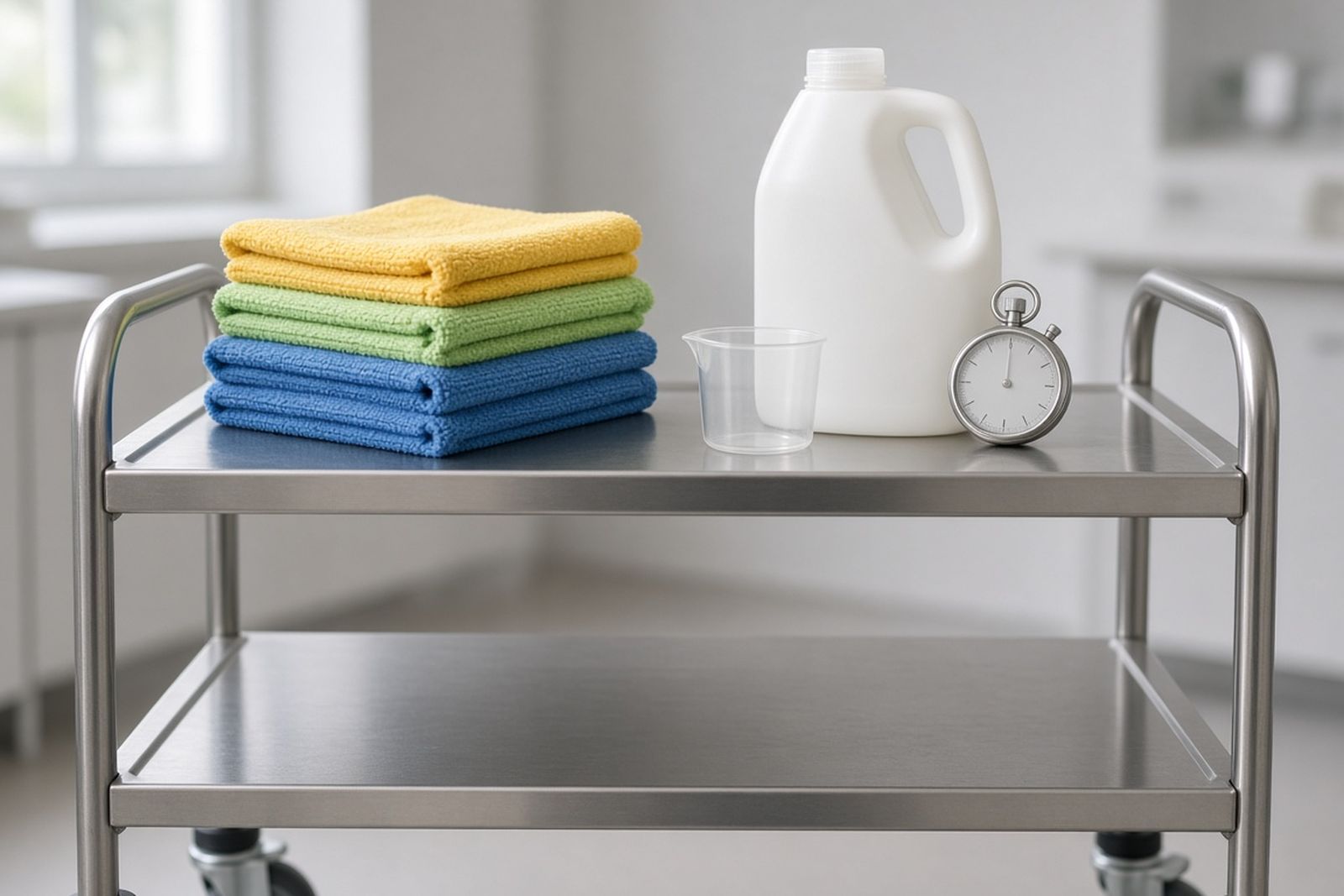
No. The label specifies the dilution and the contact time for a reason. Using a stronger mix than directed does not make the product work better, and it can leave residues, damage surfaces and increase exposure for workers and occupants. Using too little, or letting it dry before the contact time is up, undermines the disinfection.
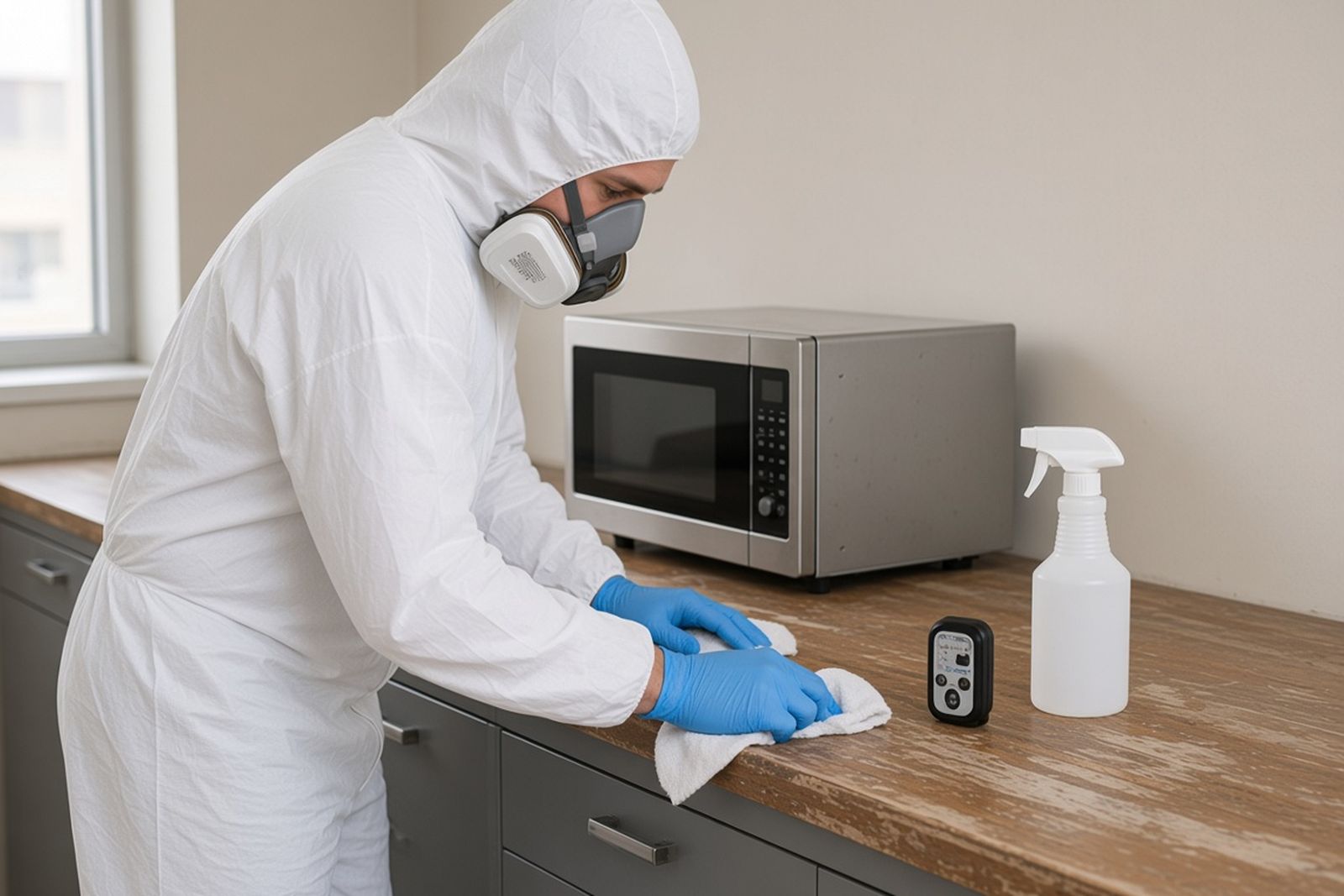
Precise application also matters. Wiping, targeted spraying and controlled mopping put product where it is needed. Broad fogging of an entire home after a localized blood event adds chemical load without adding much benefit, and it is not a substitute for cleaning surfaces first.
Worker health is part of this picture. When Wilson and colleagues interviewed cleaning services personnel for a 2023 study, six of 11 interviewees described concerns or problems from inhaling cleaning chemicals. Using the right amount of the right product protects the people doing the work as well as the building.
Wash water and rinse water
Cleaning generates liquid waste: soiled cleaning solution, rinse water and fluid absorbed from surfaces. Where that liquid goes is an environmental question with regulatory weight.
A careful provider collects contaminated liquids with absorbents or wet vacuums rather than washing them toward a floor drain, sidewalk or storm drain. Storm drains in many areas flow to streams or other waterways without treatment, so sending bloody water or disinfectant down one is a real concern.
How collected liquids are ultimately handled depends on local rules. Some may be solidified and managed as regulated waste, and some may be permitted to go to a sanitary sewer. Your local wastewater utility can tell you what it accepts, and your provider should be able to explain how they handle liquids where you are.
Handling regulated medical waste responsibly
Materials contaminated with blood or other potentially infectious materials often qualify as regulated medical waste. They must be packaged, labeled, transported and treated according to state and local rules, which is why a legitimate provider works with a permitted hauler and treatment facility.
Responsible handling here is less about choosing a green option and more about making sure the waste goes where it is supposed to. Improper disposal in a household trash bin or a dumpster can expose sanitation workers and the public.
Separating waste streams is where environmental judgment comes in. Only the contaminated material needs to go as regulated waste. Clean packaging, undamaged materials removed only for access and ordinary debris can often go to the regular waste stream or recycling. A provider who sorts carefully reduces the volume that requires specialized treatment.
Ask for the disposal documentation at the end of the job. It shows that the waste reached an appropriate facility and protects you if anyone later asks what happened to it.
Protective gear, reusable tools and vehicles
Personal protective equipment is a necessary source of waste on these jobs. Gloves, coveralls, shoe covers and respirator cartridges used in a contaminated zone must be handled as contaminated material. There is no responsible way to reduce that below what safety requires.
What a provider can control is planning. Setting up a clear clean zone and dirty zone, limiting how many people enter the contaminated area and grouping tasks so technicians do not change gear more often than needed all reduce the volume of used equipment without lowering protection.
Reusable tools deserve the same thought. Scrapers, buckets, sprayers and wet vacuums that can be cleaned and disinfected between jobs reduce disposable waste, as long as the provider has a documented process for decontaminating them. Vehicles matter too: a crew that carries waste in sealed, labeled containers and routes it directly to the approved hauler reduces both spill risk and unnecessary trips.
If you are comparing providers, ask how they decontaminate reusable equipment and how waste is stored in their vehicles. A confident, specific answer suggests a team that has thought through the whole life of the job, not just the hours on site.
Questions to judge a provider's environmental practices
You do not need to be an environmental expert to ask good questions. The answers tell you whether a provider thinks carefully about everything they bring into and take out of your property.
There are no universally right answers to these questions. What you are listening for is a provider who has thought about them and can explain the choice for your specific job.
- How will you decide how much material to remove, and can you show me the edge of the contamination?
- Which disinfectant will you use, and why that one for these surfaces?
- Do you spot test products before applying them widely?
- Will you fog the property, and if so, what problem does fogging solve here that surface cleaning does not?
- How will you collect wash water and rinse water, and where will it go?
- Which removed materials will be handled as regulated waste, and what will go to ordinary disposal or recycling?
- Will I receive disposal documentation?