Short answer
Biohazard decontamination works by first removing visible soil so a disinfectant can reach the surface, then applying a registered product for its full labeled contact time, then verifying the result. Pathogens differ in how long they survive outside the body, and organic matter such as dried blood shields them. Porous materials that cannot be cleaned are removed rather than treated.
What decontamination is, and why spraying a stain is not enough
Decontamination is not one action. It is a chain of three separate jobs: physically removing contaminated material, chemically inactivating whatever microorganisms remain, and confirming that the surface is safe to handle. If any link is weak, the whole chain fails.
Think of a countertop after a blood spill. Most of the risk sits in the visible residue, and most of the organisms can be lifted away with absorbent material and detergent. Disinfection then handles the thin, invisible layer left behind. Skipping the first step and spraying straight onto a stain asks the chemical to do a job it was never designed to do.
That order, clean first and disinfect second, is the core scientific idea behind every professional protocol. Everything else, from product selection to protective equipment, supports it.
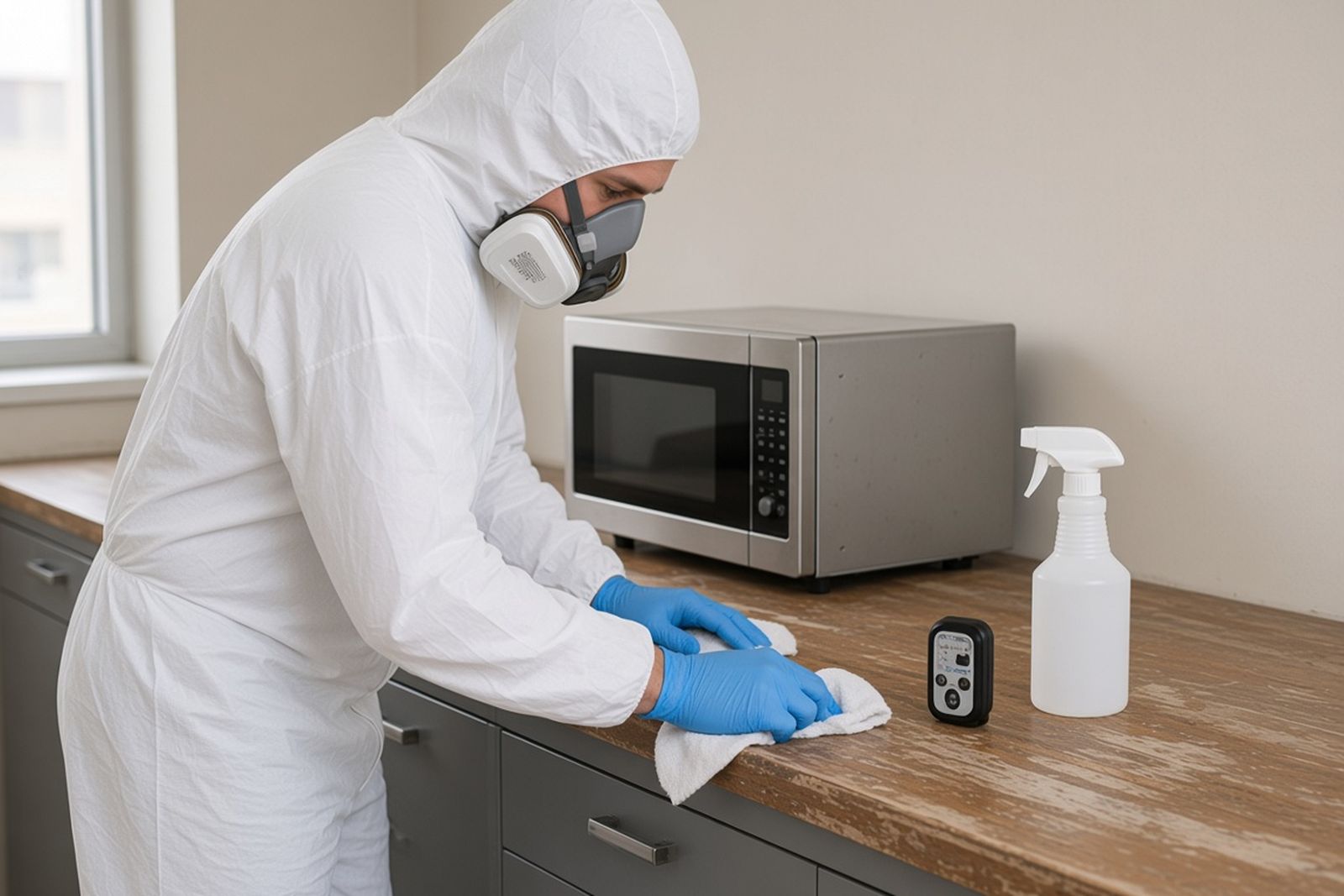
A fourth element sits around all three: protecting the people doing the work and preventing cross-contamination to clean areas. Gloves, eye protection, fluid-resistant suits and a defined path in and out of the work zone are not extras. They keep the job from creating new contaminated surfaces while the original ones are being treated.
Organic material such as blood, serum, vomit or tissue contains proteins and fats. Many disinfectant chemistries react with those compounds before they ever reach a virus or bacterium. The product gets used up on the soil, and organisms buried underneath are protected.
Dried material makes this worse. A crust of dried blood forms a physical barrier, and liquid disinfectant may bead on top of it or soak only into the outer layer. That is why technicians rehydrate and remove dried residue before disinfection instead of relying on a spray-and-walk-away approach.
Detergent matters here as much as disinfectant. A good detergent loosens fats and proteins, suspends them in water and lets them be wiped or rinsed away. Only after the surface looks clean does the disinfection step begin.
How long pathogens survive on household surfaces
Survival varies widely by organism, temperature, humidity and the material the organism is sitting on. Some viruses fall apart quickly once they dry. Others are far more durable, which is why a scene that looks old is not automatically a scene that is safe.
Research on hepatitis C illustrates the point. A laboratory study published in the Journal of Infectious Diseases in 2014 found that hepatitis C virus in dried blood remained infectious for up to 6 weeks at 4°C and 22°C (room temperature). A stain that has been sitting in a closed apartment for several weeks can therefore still deserve full precautions.
Not every pathogen behaves this way. Some envelope-coated viruses are fragile outside the body. But because a technician usually cannot know what a particular spill contains, professional practice treats all blood and other potentially infectious materials as if they carry bloodborne pathogens. That assumption is the foundation of universal precautions.
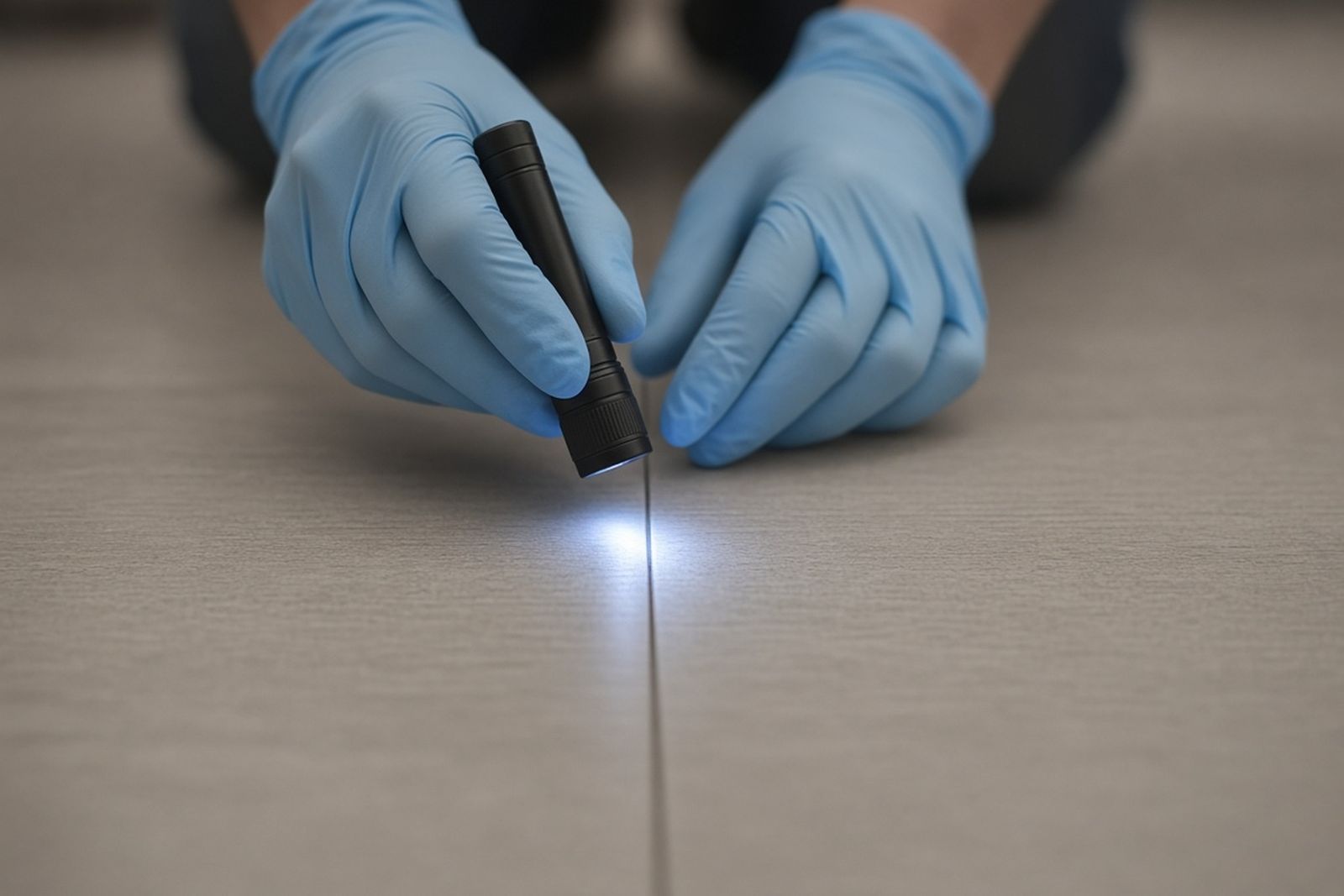
Environmental conditions shift the odds as well. Cool, dim, still rooms tend to be kinder to many microorganisms than warm, sunlit, ventilated ones, and a protected crevice under a baseboard can hold residue long after an open floor has dried. Technicians therefore pay closest attention to seams, grout lines, the underside of fixtures and anywhere fluid could pool out of sight.
Choosing a disinfectant, and keeping it wet long enough
In the United States, surface disinfectants are registered with the EPA, and each label lists the organisms the product has been tested against and the conditions under which it works. For blood and body fluid work, technicians look for products whose labels specifically include bloodborne pathogens.
Chemistry still matters. The same 2014 Journal of Infectious Diseases study reported that a 1:10 bleach dilution eliminated infectious HCV from dried blood spots after one minute, whereas 70% ethanol left 13% of spots infectious. The takeaway is not that one product is universally best, but that products differ, and choosing one because it is familiar or pleasant-smelling is not a scientific decision.
Surface compatibility also plays a role. Strong oxidizers can damage fabrics, finishes and some plastics, while milder products may need longer contact. A professional weighs efficacy against the material in front of them and follows the label for dilution, contact time and rinsing.
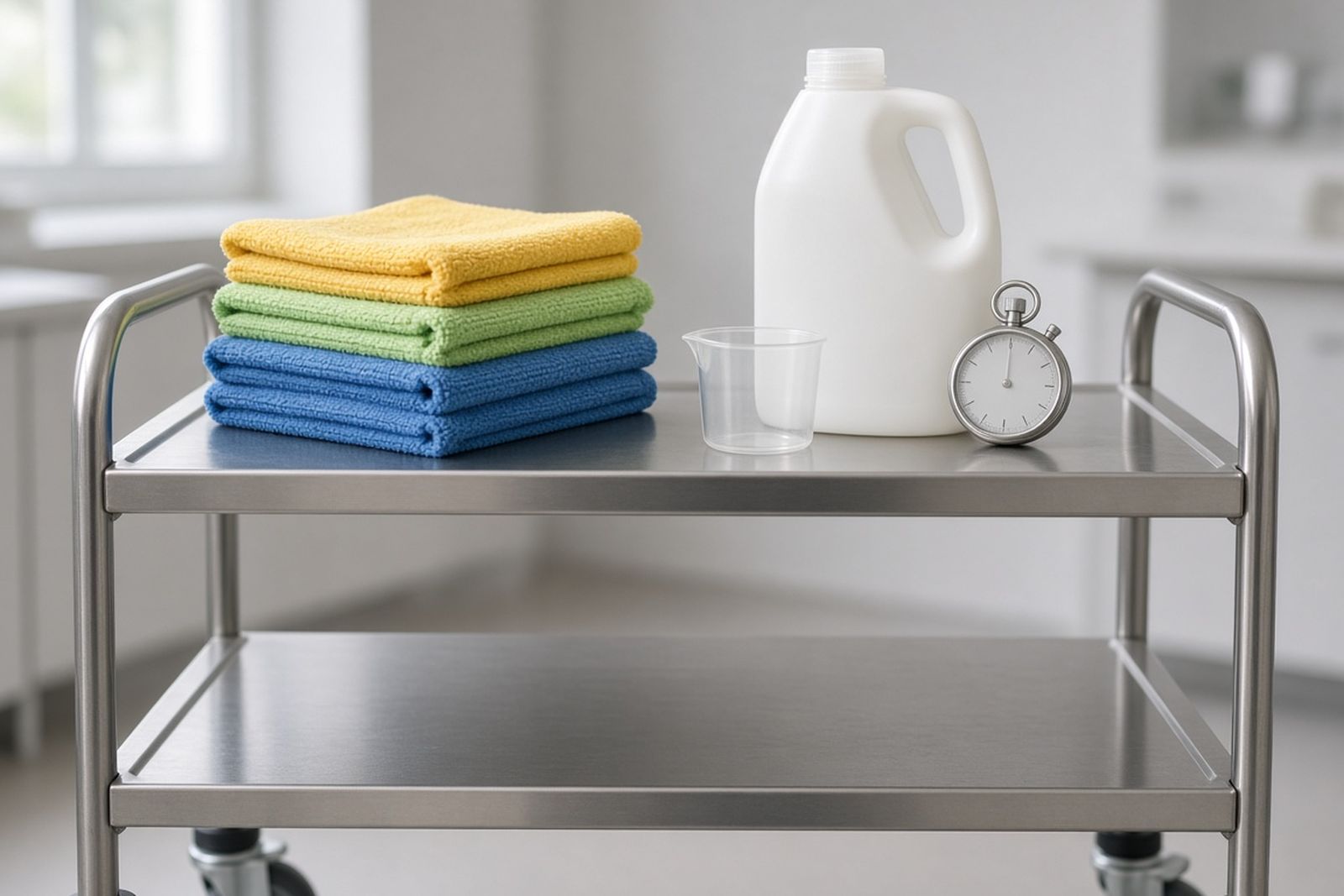
Contact time, sometimes called dwell time, is how long a disinfectant must remain visibly wet on a surface to deliver the kill claims printed on its label. When the liquid evaporates or gets wiped away before that window closes, you can no longer count on the result the manufacturer tested.
This is one of the most common failure points in untrained cleaning. People spray, wait a few seconds and wipe, which feels thorough but may leave the surface only partly treated. Professionals reapply as needed to keep the surface wet for the full labeled period, and they plan the work so that large areas do not dry out before the clock runs out.
Temperature, airflow and surface texture all affect how fast a product evaporates. A heated room with a fan running can shorten wet time dramatically, so crews often control airflow during the disinfection step.
Why do some materials get removed instead of cleaned?
Hard, nonporous surfaces such as sealed stone, glass, metal and many plastics can usually be cleaned and disinfected with confidence. Porous and semi-porous materials are a different story. Carpet pad, mattresses, upholstery foam, unsealed wood and drywall can absorb fluid below the reach of any wipe or spray.
Once fluid wicks into a porous layer, the outer surface may test clean while contamination remains underneath. There is also the question of odor, since organic material trapped inside a material continues to break down. For these reasons, the scientifically sound choice is often to cut out and dispose of the affected section rather than attempt to treat it in place.
That decision is based on the material and the depth of saturation, not on appearance alone. A small stain on a carpet can hide a much larger saturated area in the pad and subfloor beneath.
Some items fall into a gray zone. Sealed hardwood with a worn finish, laminate with open edges, or a leather chair with cracked upholstery may be partly cleanable. In those cases a good technician explains the tradeoff to you: what can reasonably be treated, what the residual uncertainty is, and what replacement would cost in comparison. You make the final call with that information in hand.
How the result is verified
Verification in biohazard work is partly visual and partly procedural. Technicians inspect with strong lighting, check seams, edges, undersides and nearby surfaces, and confirm that every material on the work plan was either cleaned or removed.
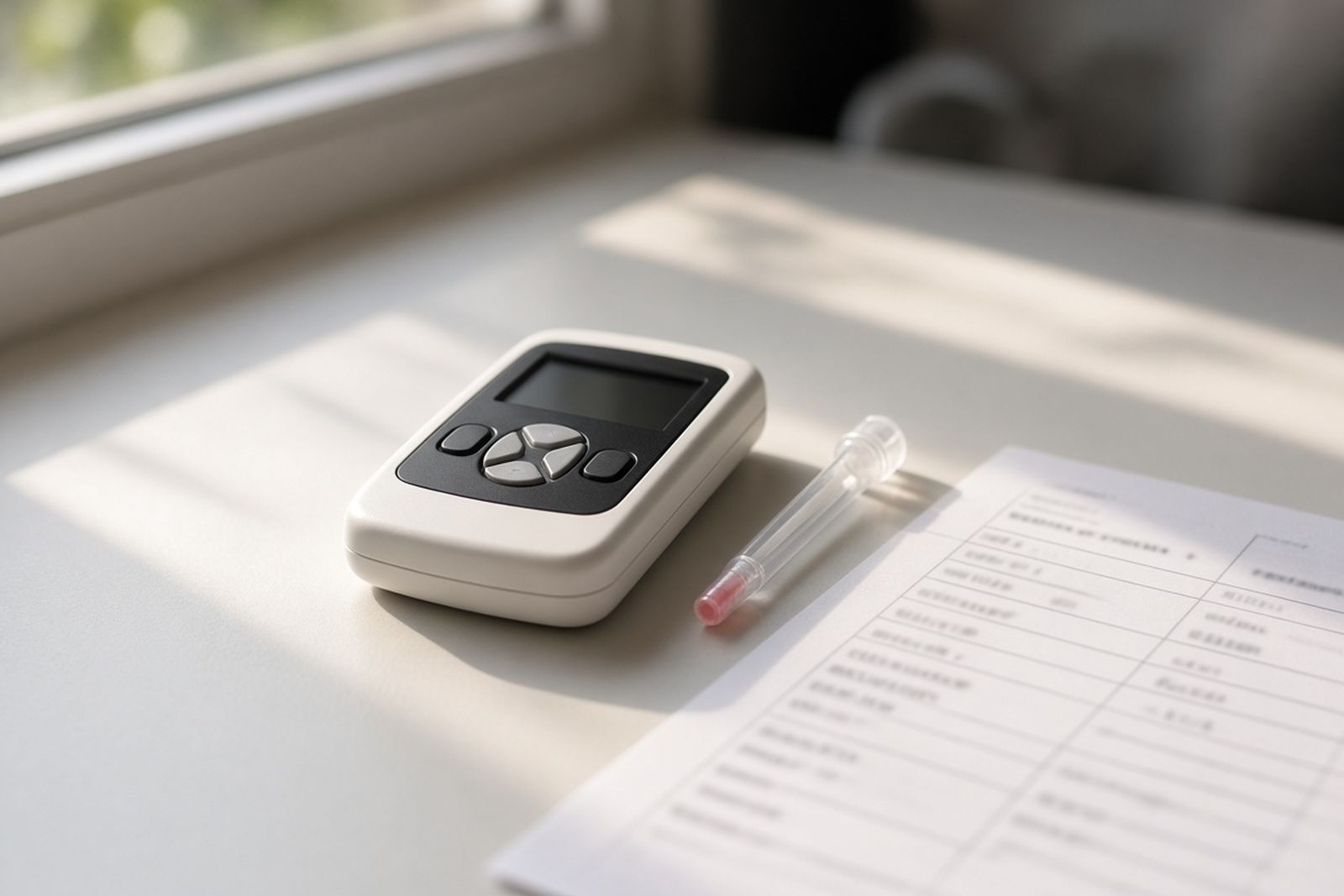
Some companies use ATP testing, which detects organic residue on a surface, as a quick indicator of cleaning quality. ATP readings do not identify specific pathogens, so they are best treated as a check on cleaning thoroughness rather than proof of disinfection. Ask any contractor who mentions testing what the test measures and what it does not.
Documentation is part of verification too. Photographs before and after, the product names and dilutions used, and a record of what was removed give you a trail that a landlord, insurer or future buyer can review.
Your state's medical waste program sets how regulated medical waste from your site must be packaged, transported and documented.
What does this science mean for you right now?
If you are facing a contaminated area, the most useful thing you can do is avoid spreading it. Keep people and pets away, do not run fans or vacuums over the area, and do not try to scrub dried material without protective equipment and proper products.
When you speak with a professional company, listen for the concepts in this article. A knowledgeable technician will talk about removing soil before disinfection, product labels and contact time, porous materials, and how the result will be checked. If a company promises that a single spray or a fogging machine alone will solve the problem, ask how that approach deals with the organic material underneath.
Good science in this field is not complicated, but it is methodical. The steps work because they are done in order, every time.