Short answer
A small, fresh spill of blood or body fluid on a hard, sealed surface can often be handled safely at home with gloves, detergent, a registered disinfectant and careful disposal. Professional decontamination is the safer choice when fluids have soaked into porous materials, spread across rooms, involve sharps, or come from an unknown source, and when regulated waste handling or documentation is needed.
Is it ever reasonable to handle a biohazard cleanup yourself?
Yes, in limited situations. A nosebleed on a kitchen floor, a small cut that dripped onto a bathroom counter or a child's vomit on sealed tile are everyday events that households manage all the time. With basic precautions, you can clean them safely.
The difference between everyday cleanup and a job that needs professionals comes down to a handful of factors: how much material there is, what it has soaked into, how far it has spread, whether anything sharp is involved and whether you know the health status of the person it came from.
This article walks through those factors so you can make a clear decision. When in doubt, a phone consultation with a professional company costs nothing and can help you decide.
A safe DIY cleanup of a small spill, step by step
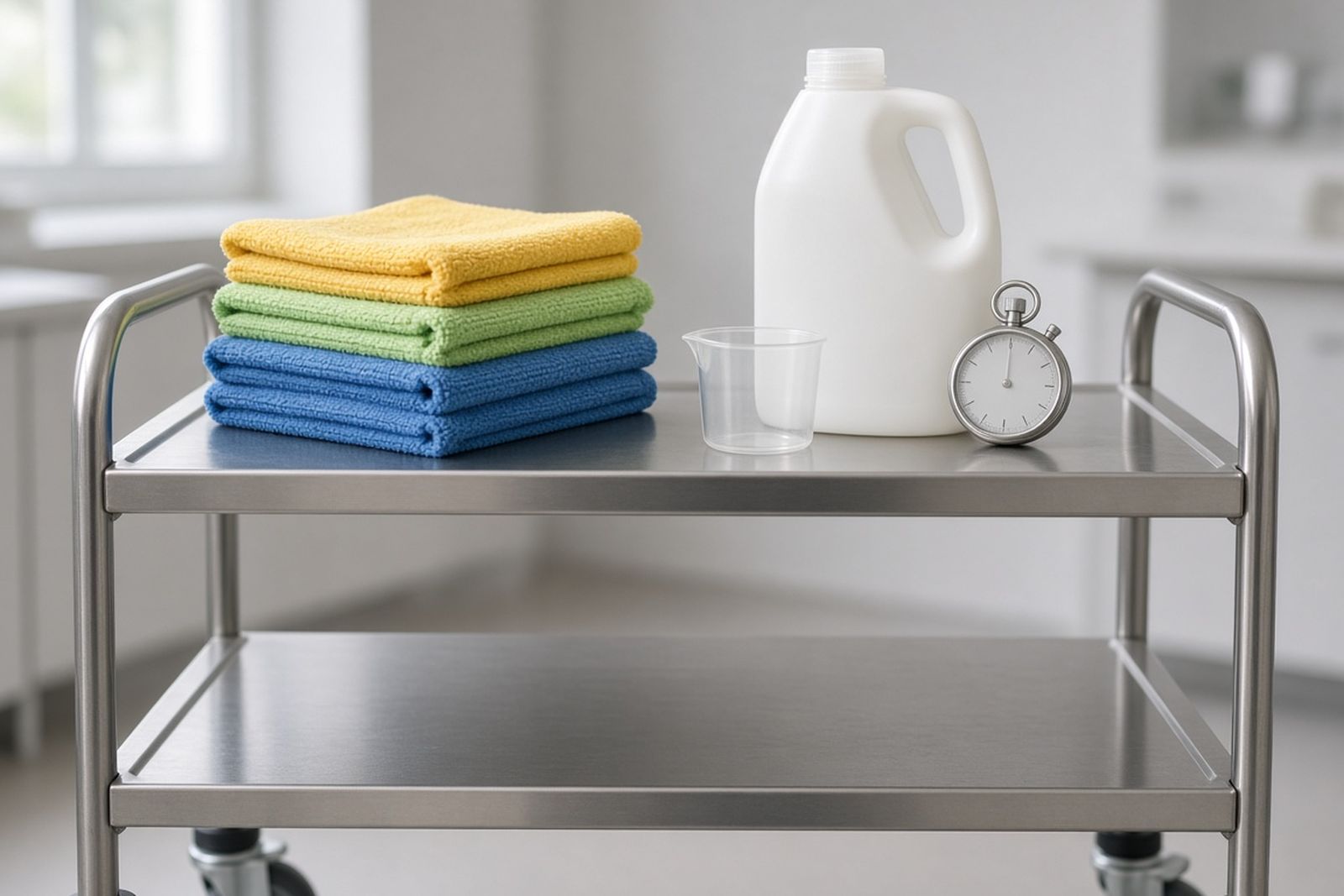
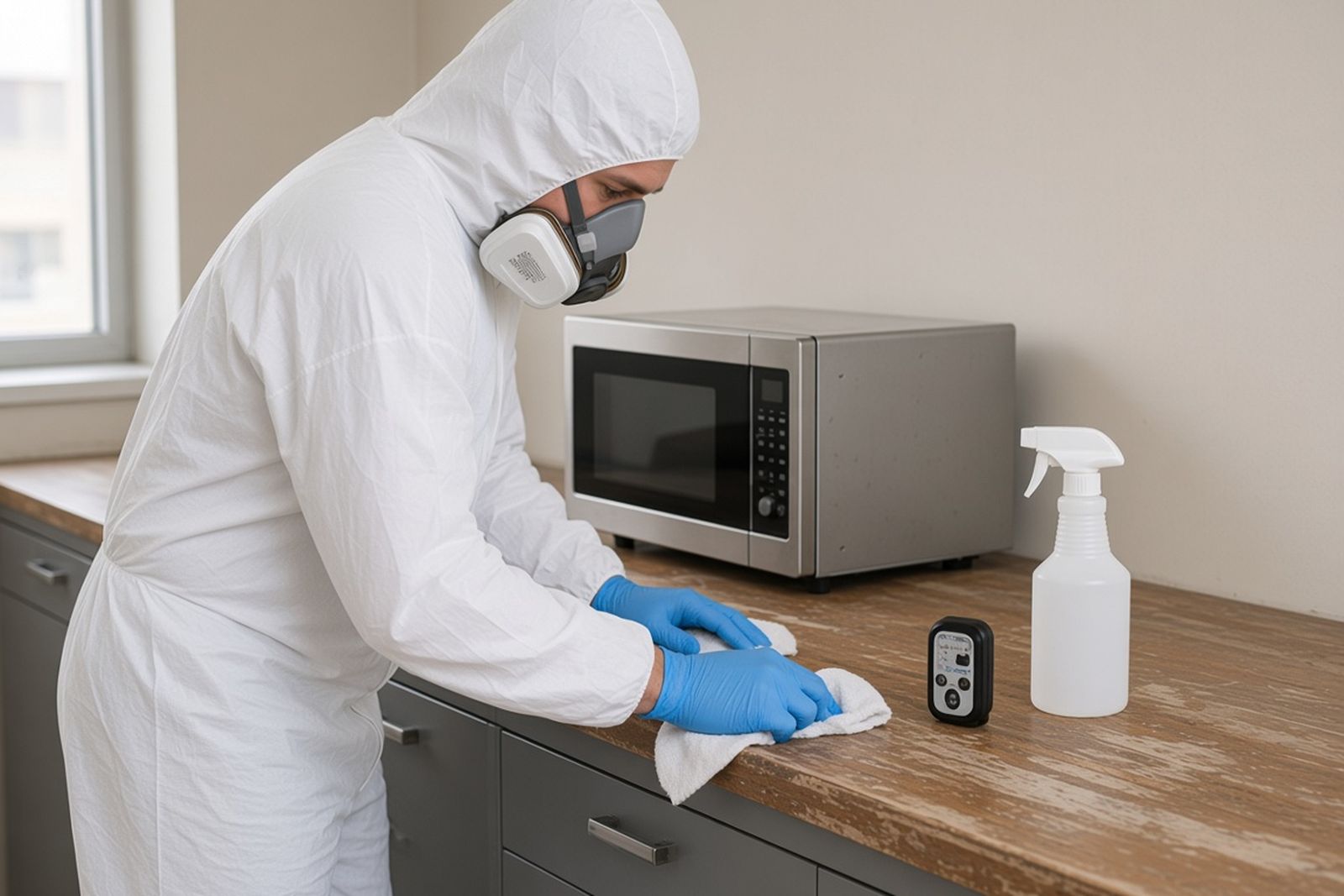
If you decide to clean a small spill on a hard surface yourself, follow the same basic logic professionals use: protect yourself, remove the material, clean the surface, disinfect it and dispose of waste carefully.
Two cautions are worth repeating. Never mix bleach with ammonia-based or acidic cleaners, because the combination can release harmful gases. And resist the urge to spray a disinfectant directly onto a fresh pool of fluid, which can splash droplets onto you and nearby surfaces. Absorb first, then clean, then disinfect.
- Keep children and pets away from the area until you are finished.
- Wear disposable gloves, and add eye protection if there is any chance of splashing.
- Absorb the material with paper towels or disposable cloths and place them directly into a plastic bag.
- Clean the surface with detergent and water to remove visible residue.
- Apply a disinfectant registered for use against bloodborne pathogens and follow the label, including how long the surface must stay wet.
- Bag gloves and cleaning materials, tie the bag securely and follow local rules for household disposal.
- Wash your hands thoroughly with soap and water afterward.
Situations beyond a safe DIY cleanup
Some situations carry risks that household tools and training are not designed to handle. Calling a professional is the safer choice when any of the following apply.
The emotional weight of a situation belongs on this list as much as the physical factors. Cleaning up after someone you love was hurt or died can be traumatic in ways that are hard to predict beforehand. Choosing not to do it yourself is not a failure of nerve. It is a reasonable boundary.
- Blood or body fluids have soaked into carpet, upholstery, mattresses, drywall or unsealed wood.
- Fluids have seeped under flooring, into seams or through to a lower level.
- The contamination covers a large area or has been tracked through several rooms.
- Needles, broken glass or other sharps are present.
- The incident involved a death, a serious injury or a crime scene.
- The source is unknown, such as in a rental unit, vacant building or public space.
- You have a health condition, are pregnant or do not have appropriate protective equipment.
- You need documentation for insurance, a landlord, an employer or a regulator.
Professional protective gear vs household gloves
A pair of household gloves protects your hands from a small amount of material for a short time. Professional decontamination involves longer exposure, heavier material and tasks like cutting out flooring or lifting saturated carpet. Technicians wear fluid-resistant or fluid-proof suits, face shields or full-face respirators, double gloves and boot covers.
Professionals also plan how they remove protective gear so they do not contaminate themselves in the process. That step sounds minor, but it is one of the most common ways exposure happens.
Fumes, ventilation and your lungs
Respiratory protection is often overlooked in DIY cleanups. Disinfectants can irritate the lungs, especially when sprayed in small, closed rooms, and a homeowner using a strong product in a small bathroom is working in exactly those conditions.
Ventilation during a DIY job helps, but it has limits. Opening a window in a small bathroom may not clear fumes from a strong product quickly. If you feel lightheaded, develop a cough or notice your eyes burning, stop, leave the room and let it air out before returning.
Why do professionals remove materials that look clean?
One of the biggest differences between DIY and professional work is what happens below the surface. A homeowner may scrub a carpet until the stain is gone and assume the job is done. A technician will ask what happened to the fluid that soaked through the carpet into the pad and subfloor.
Porous materials cannot be reliably disinfected once saturated. The only dependable fix is to cut out the affected section, clean and disinfect the surface beneath and replace the material. This is more disruptive and costly, but it prevents odor, staining and lingering contamination.
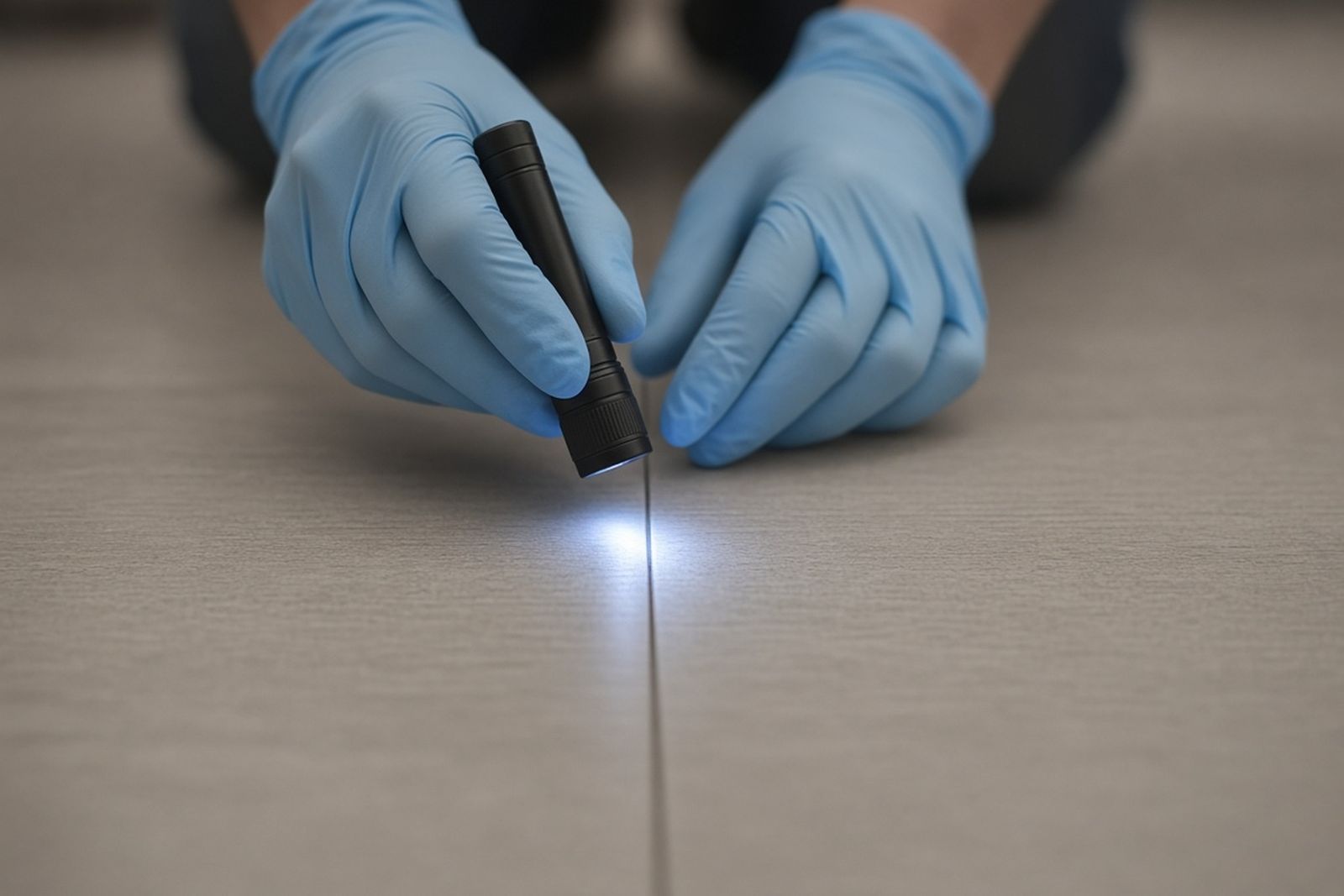
Professionals also check places a homeowner might not think to look: under baseboards, behind toilets, beneath cabinets, inside HVAC returns near the spill and on the underside of furniture.
Homeowners sometimes worry that professionals remove more than necessary to increase the bill. A fair question to ask is how the technician decided where to cut. A good answer points to the edge of the saturation they found, often confirmed by feel, moisture readings or visible staining on the underside, rather than an arbitrary round number of square feet.
Disease risk in perspective
It helps to keep risk in perspective. Not every pathogen survives well outside the body. CDC stated in 2024 that HIV does not survive long outside the human body, such as on surfaces, and cannot reproduce outside a human host. That is reassuring for many household spills.
Other bloodborne viruses, including hepatitis B and hepatitis C, can survive much longer on surfaces, and you usually cannot know what a particular spill contains. That uncertainty is why professionals treat all blood and body fluids as potentially infectious and why DIY cleanups should use the same assumption.
If you are stuck by a needle or get blood in your eyes, mouth or a break in your skin during a cleanup, wash the area and contact a medical provider promptly. Prompt medical advice matters far more than finishing the cleanup.
How waste disposal differs
A few paper towels from a small household spill typically go out with household trash after being bagged. Larger quantities of saturated material, and anything from a commercial or regulated setting, may count as regulated medical waste with specific packaging, labeling, storage and transport requirements.
Professional companies use approved containers and work with authorized waste haulers. They can provide disposal records, which landlords, employers and insurers may ask for.
Rules vary by state and county; verify with the local authority whether the waste from your situation must be handled as regulated medical waste and what documentation is required.
Laundry deserves a note here too. Lightly soiled washable items can often be laundered separately on a hot cycle, following the fabric label, while heavily saturated bedding or clothing is usually better bagged and discarded. If you are unsure, set the items aside in a sealed bag and ask a professional before running them through your machine.
Example: a DIY attempt that became a professional job
Here is an illustrative case, with details made up to show a common pattern. A homeowner's adult brother, visiting for the weekend, has a serious nosebleed during the night. By morning there is blood on the guest bed, the carpet beside it and the hallway leading to the bathroom.
The homeowner puts on kitchen gloves, scrubs the carpet with a household spray and strips the bedding into the washing machine. The stains fade, but over the next few days a faint odor develops in the guest room, and the homeowner notices a stain reappearing on the carpet.
A decontamination company inspects the room and finds that blood soaked through the carpet into the pad and onto the subfloor, and that the mattress absorbed more than was visible. The crew removes the carpet section and pad, cleans and disinfects the subfloor, disposes of the mattress and treats the hallway.
The homeowner handled the bathroom tile correctly and saved some cost there. The porous materials were the part that needed professional attention. Mixing DIY and professional work in this way is common and perfectly reasonable.
How do you decide in the moment?
When you are standing in front of a spill, a few quick questions can guide you. Is the surface hard and sealed? Is the area small? Is the material fresh? Are there no sharps? Do you have gloves, a proper disinfectant and a way to bag waste? If the answer to all of these is yes, a careful DIY cleanup is often reasonable.
If any answer is no, or if the situation is emotionally difficult, call a professional. After a death, a violent event or a serious injury, you do not need to carry the physical cleanup on top of everything else. Letting trained people handle it is a sound safety decision and an act of care for yourself and your household.