Short answer
Evaluate any biohazard decontamination technology by asking what problem it solves, what evidence supports it and whether it replaces or supports the basics. UV-C, electrostatic spraying, fogging and meters can add value, but none substitutes for removing blood and body fluids, discarding saturated porous materials and applying a labeled disinfectant to cleaned surfaces for its full contact time.
Why is technology so prominent in biohazard marketing?
Equipment photographs well. A glowing UV lamp, a sprayer that wraps a chair in mist or a handheld meter with a digital readout looks impressive on a website. It suggests precision and modern science, and it can make one provider appear more capable than another.
Some of that equipment is genuinely useful. Some of it is useful only in narrow circumstances. And some of it is used as a shortcut for work that still has to be done by hand. The challenge for you is telling those apart, especially when you are dealing with a stressful event and want reassurance.
The good news is that a few consistent questions will help you evaluate almost any tool, whether it is new this year or has been around for decades.
It also helps to remember that the underlying hazard has not changed. Bloodborne viruses behave the same way whether a crew arrives with a van full of new devices or a basic kit, so the core work stays constant even as tools evolve.
Questions to ask about any new tool
Before you are persuaded by a device, ask the provider to explain it in plain terms. These questions work for nearly any technology you will encounter.
You will not always get perfect answers, and that is fine. What you are testing is whether the provider understands the tool well enough to explain its limits, not whether they can recite a brochure.
- What specific problem on this job does the tool address?
- Does it replace a step, or does it add to steps that are still being done by hand?
- What does the manufacturer's label or instruction say it can and cannot do?
- For a chemical applied by the tool, is the product registered with EPA and approved on its label for that application method?
- What evidence exists that it works in real conditions, not just in a lab?
- What are the safety precautions for occupants, pets and workers?
- How will its use be documented in my closeout record?
Can UV-C light replace hand cleaning and disinfection?
Ultraviolet-C light can inactivate many microorganisms on surfaces it reaches directly. That makes it an interesting supplement in some settings. But it has real limits: it works by line of sight, so shadows, crevices and the underside of objects receive little or no dose. It also does not remove soil, and organic matter such as dried blood can shield organisms beneath it.
Research reinforces that point. In a 2023 study by Knobling and colleagues, manual wiping met the study's disinfection-success criterion on 98.1% of surfaces versus 75.5% for UV-C without prior cleaning. The comparison was made in a healthcare context, but the lesson carries over. Physically removing contamination and applying a disinfectant by hand reached far more surfaces successfully.
If a provider uses UV-C, ask where it fits in the sequence. A reasonable answer places it after thorough cleaning and disinfection, as an added layer on accessible surfaces. An answer that places it instead of cleaning is a warning sign.
Electrostatic sprayers and foggers after a blood event
Electrostatic sprayers give disinfectant droplets a charge so they are attracted to surfaces, including the sides and backs of objects. Foggers and misters produce very fine droplets that spread through a room. Both became far more common during the COVID-19 pandemic. In a 2023 study of cleaning services personnel by Wilson and colleagues, 53% reported changes in application type, such as fogging, spraying or wiping.
These tools can help distribute product over large areas or complicated shapes, such as a room full of chairs or a vehicle interior. They are less useful for a localized blood event, where the contamination is concentrated in a known area that needs cleaning by hand anyway.
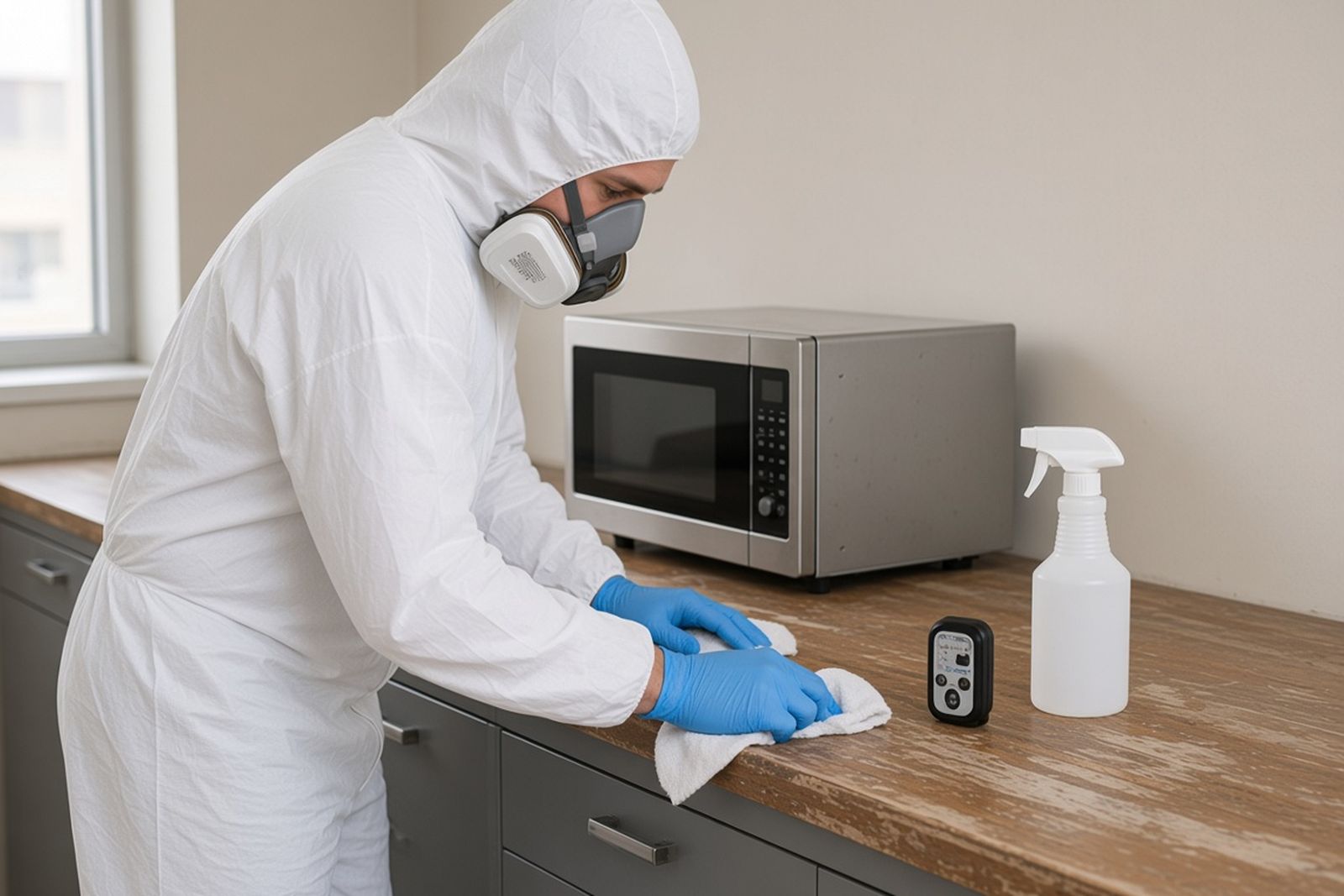
Two conditions matter. First, the disinfectant must be labeled for that application method; not every product can be sprayed or fogged. Second, the surfaces must already be clean, because a mist of disinfectant landing on dried blood does not remove it. Ask to see the product label and confirm the application method is listed.
Meters, cameras and detection tools
Some of the most useful technology in biohazard work is not about killing organisms at all. It is about finding contamination and documenting what was done.
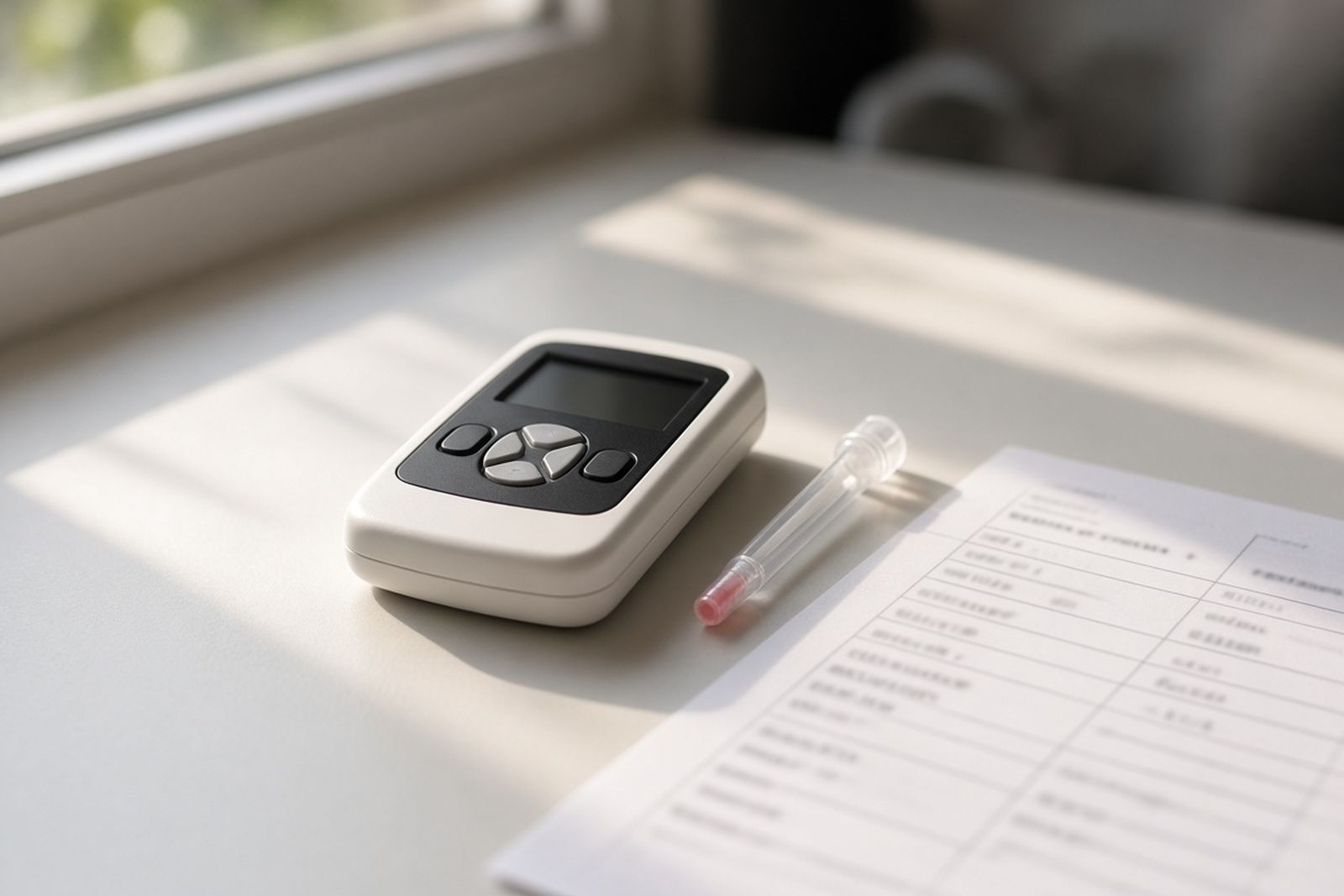
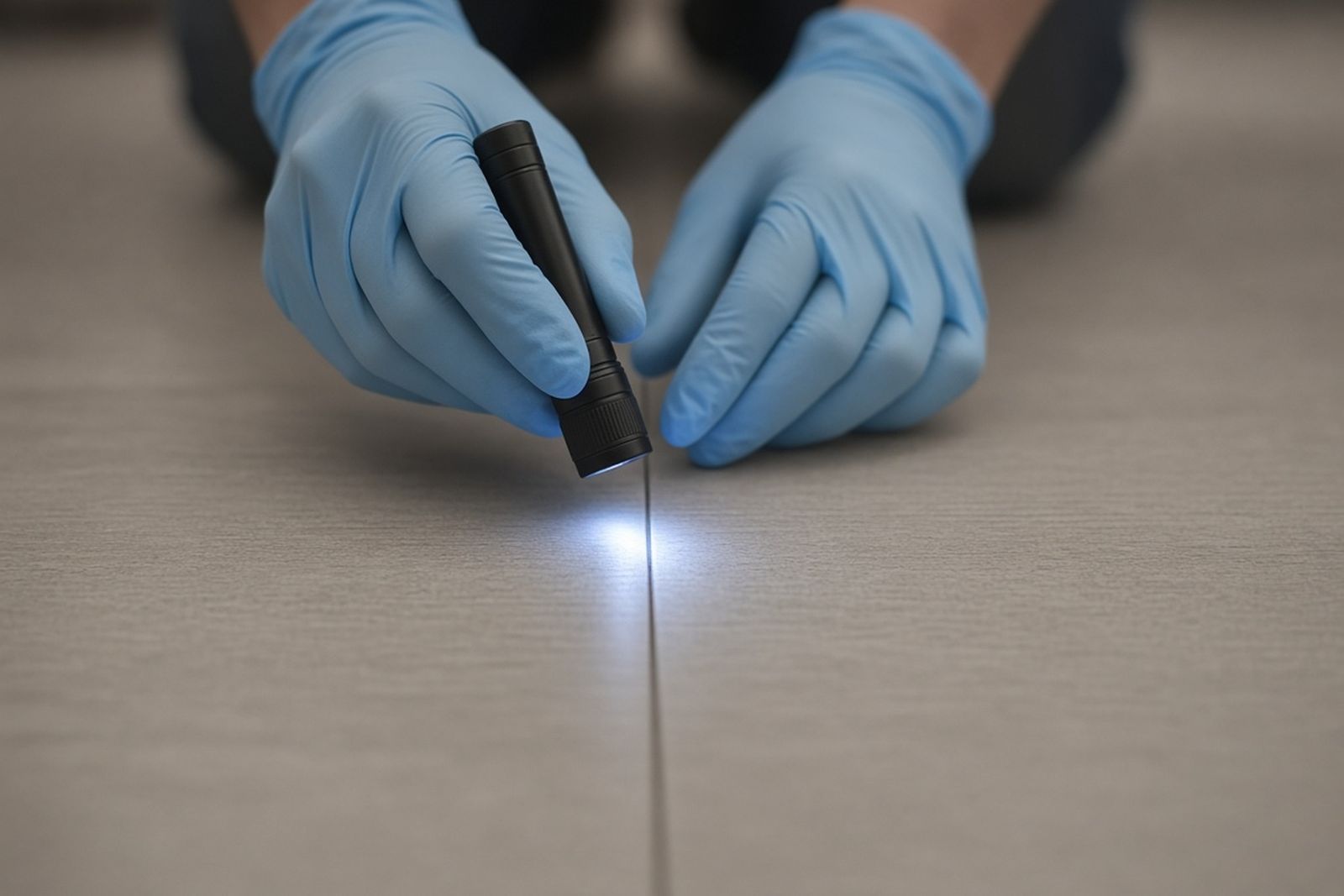
Moisture meters and thermal cameras can help a technician see where fluid has wicked into drywall, under flooring or into a subfloor. High-intensity lights held at a low angle reveal small spatters that are hard to see in normal lighting. ATP meters measure organic residue and can show whether a surface is truly clean before disinfection. Digital photography and simple floor plan sketches tie everything together in a record.
Each of these tools supports human judgment rather than replacing it. The meter does not decide what to remove. The technician does, and the tool gives that decision an evidence base you can see.
Are containment and air-filtration machines worth the added cost?
Portable HEPA air scrubbers and negative air machines pull air from a work area through a filter and, in the case of negative air, exhaust it so the work zone sits at slightly lower pressure than the rest of the building. Combined with plastic sheeting and zipper doors, they help keep dust and aerosols from spreading while crews cut out drywall, pull carpet or scrape dried material.
For a small spill on a hard floor, this equipment is usually unnecessary. For jobs involving demolition, heavy removal of porous materials or occupied neighboring rooms, it can be a sensible investment. An apartment with neighbors on the other side of a shared wall, or an office where staff are working down the hall, are common examples.
Ask the provider why they are recommending containment for your job specifically. A good answer ties it to the activity, such as cutting drywall with dried fluid inside, rather than presenting it as standard on every visit. Also ask how the filters will be handled afterward, since they are contaminated material.
Evaluating the disinfectant chemistry itself
Newer chemistries sometimes promise faster contact times, less odor or better surface compatibility. Those benefits can be real. But the evaluation should always start with the label: what organisms are claimed, what contact time is required and which surfaces the product is suited for.
For blood and body-fluid work, look for claims against bloodborne pathogens. A product being new, green or high-tech does not matter if its label does not fit the job.
Also consider compatibility with your surfaces. A product that performs perfectly against pathogens but etches your countertop or clouds a clear plastic panel creates a new problem. A careful provider will spot test on an inconspicuous area first.
How technology should show up in your records
If a tool was used, the closeout record should say what it was, where it was used, when in the sequence it was used and what product it applied, if any. For measurement tools, the record should list readings and locations. For photographs, it should be clear which images are before and which are after.
If a provider charges separately for a technology, the invoice should connect that line item to a documented use. A charge for UV treatment without a record of where and when the lamp ran, or for fogging without the product name and label method, is worth questioning before you pay.
Be cautious about records that lean on technology to claim more than it can support. A UV cycle log or a list of ATP numbers does not, by itself, show that a space is free of pathogens. The foundation of the record should still be the cleaning, removal and disinfection steps. If your property is licensed or inspected, ask that agency what documentation it expects.
In the end, the best technology on a biohazard job is often the least glamorous: good lighting, sharp eyes, the right disinfectant used correctly and a provider willing to explain every step.