Short answer
To evaluate equipment proposed for biohazard decontamination, ask what each item does and whether it matches the hazard. Protective gear should resist fluids, disinfectants should carry EPA label claims for bloodborne pathogens and be compatible with your surfaces, and devices such as foggers or UV lights should supplement manual cleaning rather than replace it. Waste containers must meet local requirements.
Why should you care what equipment a crew brings?
Most people never think about the tools behind a cleanup. They care about the outcome: a safe room, no odor and no lingering worry. But the equipment list in a proposal tells you a great deal about how a company plans to reach that outcome.
A proposal heavy on impressive machines and light on basic cleaning supplies can be a warning sign. So can one that lists only household products. The right mix depends on the job, and a good company can explain why each item is there.
Evaluating a proposal does not require technical training. It mostly requires you to ask a few clear questions and listen for answers that connect each tool to a specific hazard in your space.
Equipment also shapes cost. Rental of air scrubbers, disposable suits used and discarded at every exit, and specialized containers all show up somewhere in the price. Knowing which items are essential for your site lets you push back on padding without cutting something that protects you.
Two proposals for the same small room can show the difference quickly. A weak one lists a fogging machine, a proprietary disinfectant with no registration number and a single visit, and says nothing about detergent cleaning, fabric items or waste. A strong one lists fluid-resistant suits and face shields, a detergent followed by a registered disinfectant with a bloodborne pathogen claim, a plan to keep surfaces wet for the labeled contact time, removal of absorbent items such as a cloth privacy screen as regulated waste and a closing inspection with photographs. If it mentions a sprayer at all, it is as an optional supplement after the hand work is done.
Protective equipment technicians should wear
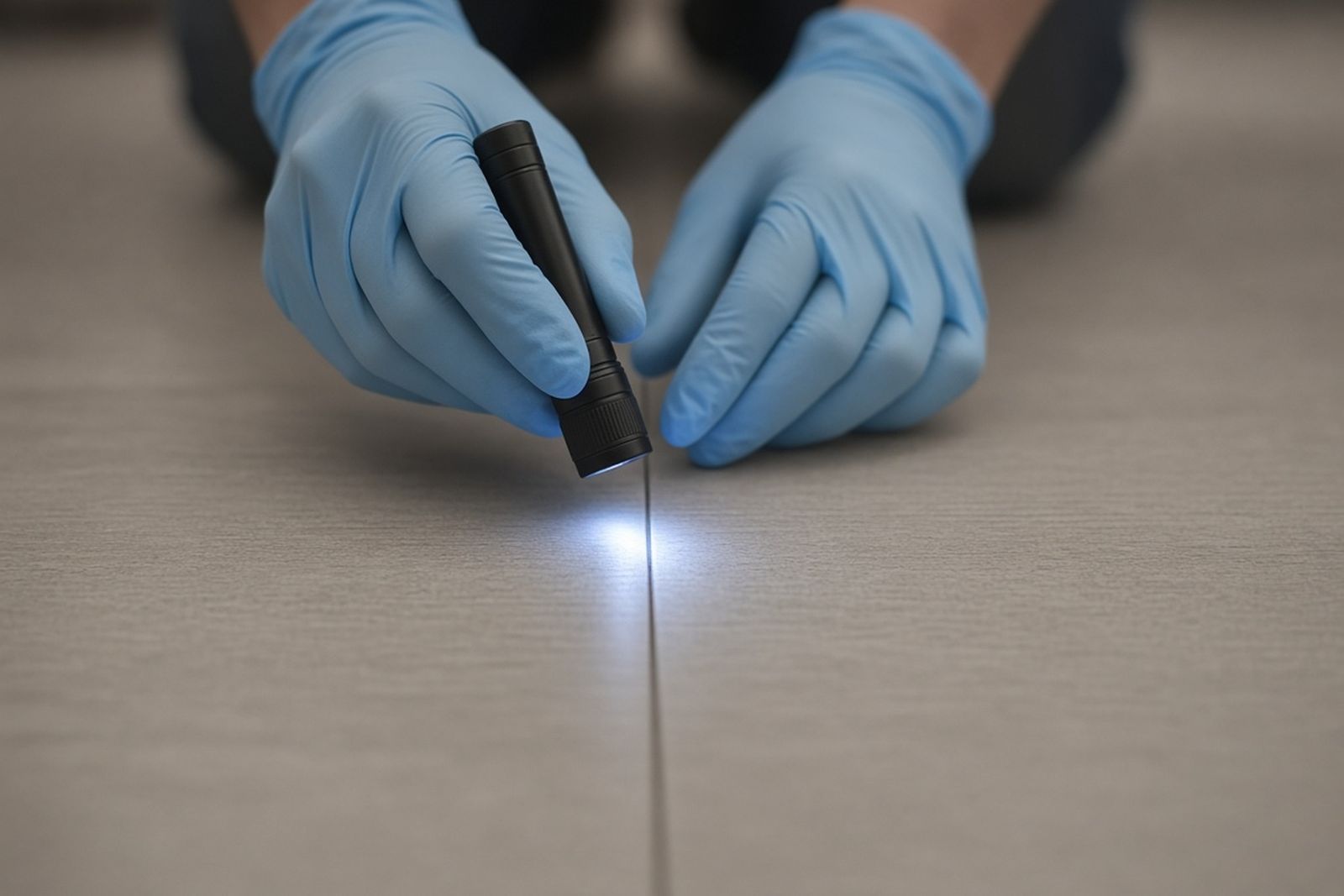
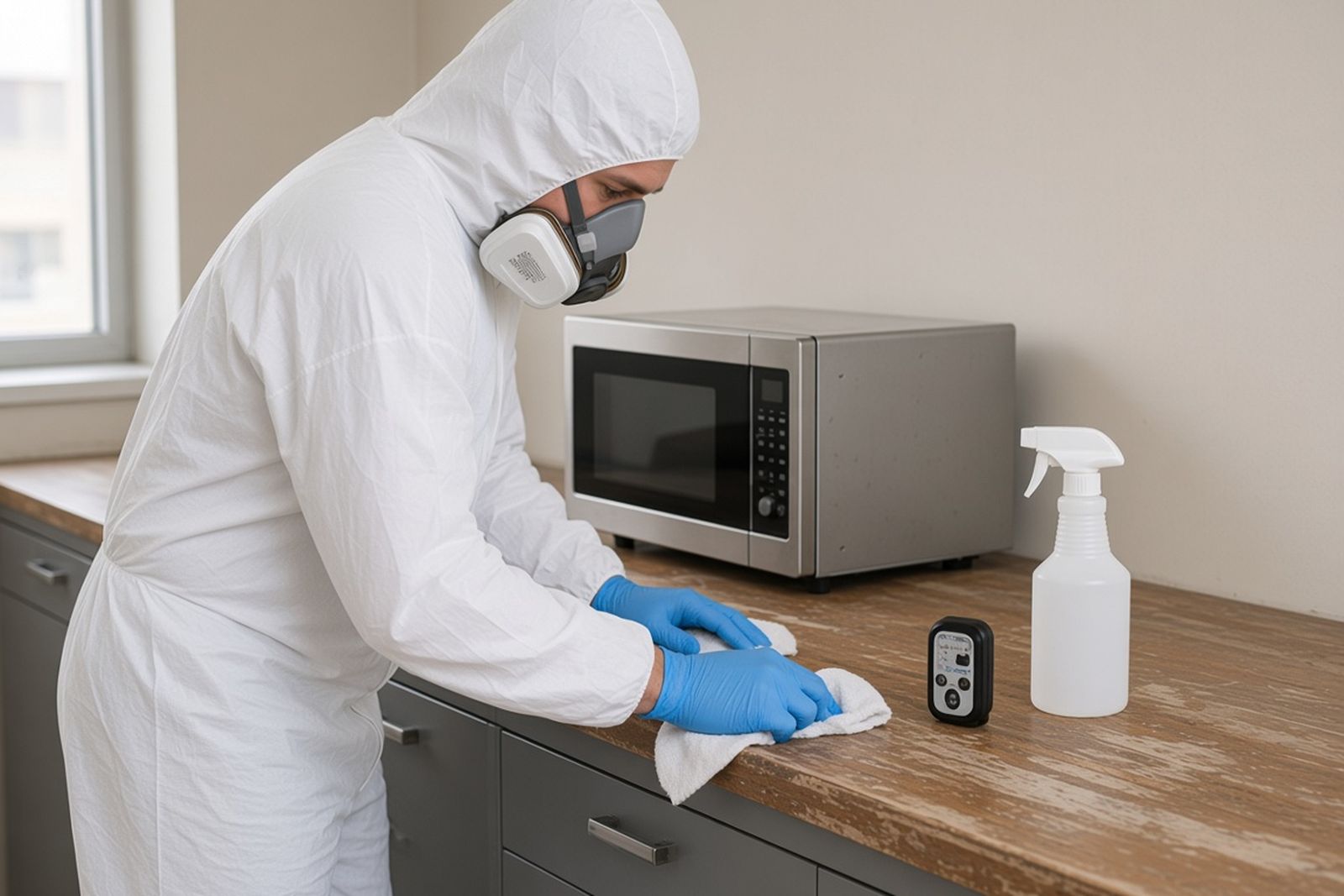
Personal protective equipment protects the crew and prevents them from carrying contamination out of the work area. For blood and other potentially infectious materials, expect to see several layers.
Expect the crew to change gear frequently. Gloves are swapped whenever they tear or become heavily soiled, and suits are replaced if they rip. A technician who wears the same gloves from the contaminated room into your kitchen is spreading the problem, no matter how good the gear looked on arrival.
- Disposable gloves, often doubled, with a sturdier outer glove for handling debris that could puncture.
- Fluid-resistant or fluid-proof coveralls with hoods and boot covers.
- Eye and face protection such as goggles or a full face shield, or a full-face respirator.
- Respiratory protection matched to the task, from filtering facepiece respirators to half- or full-face respirators with appropriate cartridges when chemical disinfectants or aerosols are involved.
- Puncture-resistant tools and containers for any sharps.
How can you tell whether the protective gear is adequate?
Ask what the crew will wear and why. A technician should be able to explain the difference between a fluid-resistant and a fluid-proof garment and when each is appropriate. They should also be able to tell you how they choose respiratory protection for the disinfectants they plan to use.
Training is part of the equipment story. It is fair to ask whether the technicians on your job have current bloodborne pathogen training and whether they have been fit-tested for the respirators they will wear.
Watch for how the crew sets up. Donning and doffing areas, a clear path between clean and contaminated zones and bags for used protective gear are all signs that the equipment is being used as intended rather than worn for show.
Questions about disinfectants and cleaners
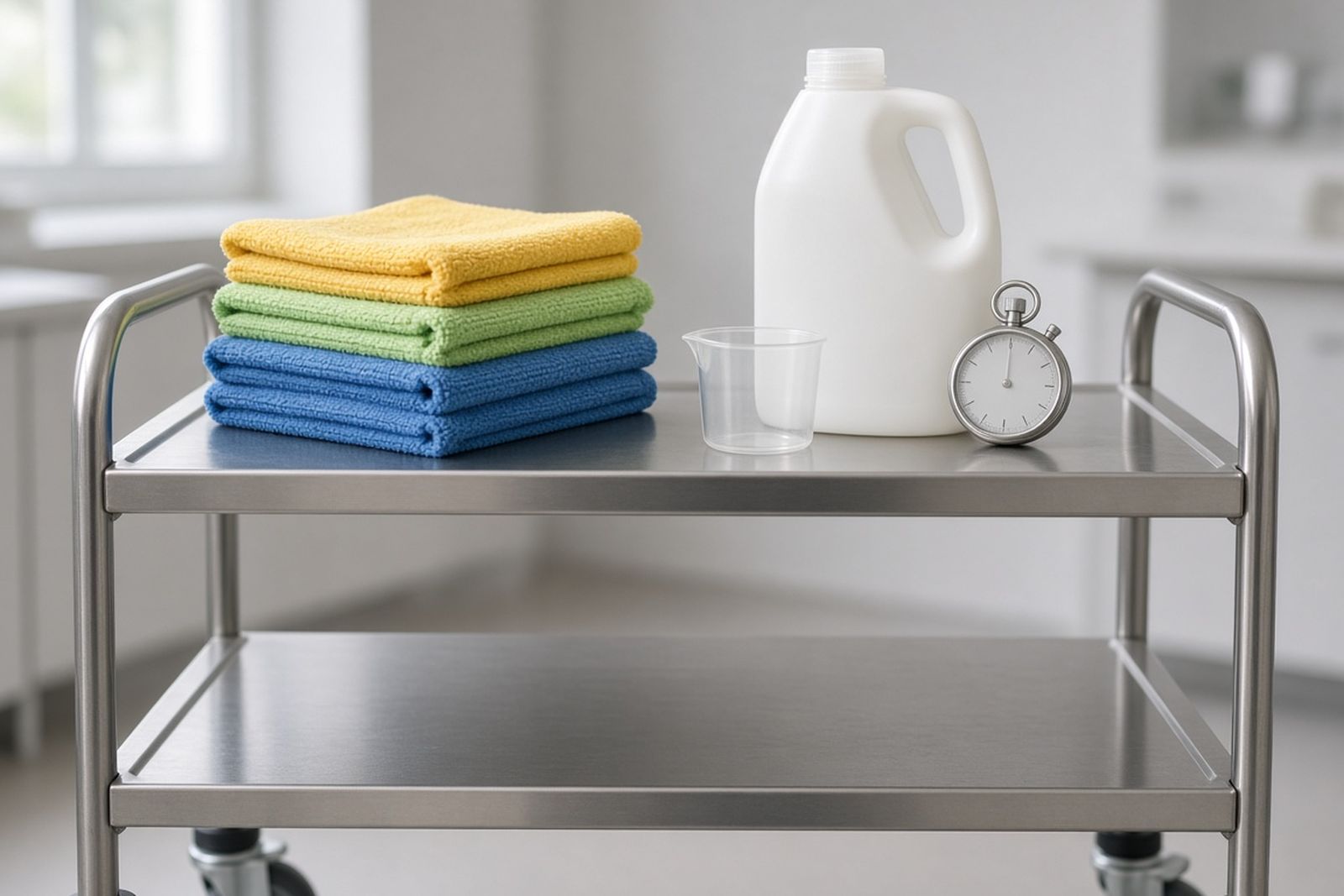
Chemical products are the heart of the job. Start by asking for the names of the disinfectants the crew plans to use. Registered disinfectants carry an EPA registration number on their labels, and the label shows whether the product has claims against bloodborne pathogens.
Next, ask about the cleaner used before disinfection. Organic soil must be removed first or the disinfectant will not work as labeled. A proposal that mentions only disinfectant and no detergent step may be skipping a critical part of the process.
Surface compatibility matters too. Some products can damage finishes, fabrics, stone or plastics. A 2024 study by Jennings and colleagues on chemical resistance testing of plastics found that products above pH 8 accounted for 74% of failures in the experiment. If your space includes medical equipment, electronics, specialty flooring or delicate finishes, ask how the crew will protect them and whether they will spot-test.
Finally, ask about contact time. The crew should know how long each product must stay wet and how they will make sure it does.
Foggers, UV devices and air filtration
Some proposals include devices that disperse disinfectant as a fine mist, charge droplets so they wrap around surfaces or use ultraviolet light to inactivate microorganisms. These tools can have a role, but they are not substitutes for removing contamination and cleaning surfaces by hand.
If a proposal includes one of these devices, ask what it adds after manual cleaning is done, which product it will disperse, whether that product is labeled for that application method and how long the space must stay vacant afterward. Be cautious of any claim that a machine alone will decontaminate a space with visible blood or body fluids.
Air filtration equipment captures airborne particles during work that could stir up dust or dried material, such as removing carpet, cutting drywall or cleaning HVAC components. HEPA filters are designed to trap very fine particles.
A negative air machine goes a step further by exhausting filtered air from a sealed work zone, keeping air pressure slightly lower than in surrounding areas so that particles do not drift out. This is common when crews are working near occupied spaces or in multi-unit buildings.
Ask whether the company plans to use air filtration, where the units will be placed and how the work area will be sealed. A small, fresh spill on a hard floor may not need it, while demolition of saturated materials in an occupied building often does.
Look at the filters, not just the machine. A HEPA unit is only as effective as the condition of its filter and the seal around it. Ask when filters were last changed, how used filters are bagged and disposed of, and whether the unit is cleaned between jobs so it does not bring someone else's contamination into your building.
Handling waste and sharps
Waste containers are part of the equipment list too. Regulated medical waste is generally packaged in labeled, leak-resistant bags inside rigid containers, and sharps go into puncture-resistant containers. The company should also have a relationship with an authorized waste hauler.
Ask how waste will leave your property, how long it will stay on site and what documentation you will receive. Your state's medical waste program defines what counts as regulated medical waste and what records must accompany its transport and disposal.
Non-regulated debris, such as clean construction waste from rebuilding, may go through ordinary channels. The distinction matters for cost as well as compliance, so ask how the crew will separate waste streams.
Pay attention to the small tools as well. Scrapers, brushes, buckets and spray bottles either need to be disposable or cleaned and disinfected before they leave the site. A crew that loads dirty tools straight into a truck with clean supplies has a gap in its process.
Questions to ask before you sign
A short list of equipment questions can reveal a lot about a company's approach.
- Which disinfectants will you use, and can you share the EPA registration numbers?
- What cleaner will you use before disinfection, and how will you remove dried material?
- How will you make sure each product stays wet for its full contact time?
- What protective equipment will technicians wear, and are they trained and fit-tested?
- Will you use air filtration or negative air, and where?
- If you plan to use foggers, sprayers or UV devices, what do they add after manual cleaning?
- How will waste and sharps be packaged, stored and transported?
- What documentation will I receive at the end?