Short answer
Compare biohazard decontamination bids by putting their scopes side by side, not their totals. Check whether each bid removes porous materials or only cleans surfaces, names an EPA-registered disinfectant with a bloodborne pathogen claim, includes regulated waste disposal, describes containment and verification, and carries workers' compensation. A low bid is only a bargain if it covers the same work as the higher one.
Why do biohazard decontamination bids vary so much?
Getting two quotes for the same room and seeing very different totals is common in this field. The gap usually has less to do with one company being greedy and more to do with the two companies planning different jobs. One may intend to wipe visible surfaces and leave. The other may plan to pull carpet and pad, cut out affected drywall, treat the subfloor and haul away regulated waste.
Both bids may be honest. The problem is that you cannot tell which job you are buying unless the bid spells it out. The only fair comparison is scope against scope, line by line, before looking at price.
Published price ranges show why totals alone are misleading. Fixr, in its 2025 cost guide, lists virus and pathogen decontamination projects at $1,500 to $3,500 and sewage backup cleanup at $2,000 to $10,000 per project. Ranges that wide reflect differences in size, materials and scope rather than a single going rate, and your job may fall outside them entirely.
What every biohazard bid should spell out
Ask each company for a written, itemized scope. If a bid is a single number with a sentence of description, request more detail before comparing. These are the elements that most often differ between low and high bids.
- Affected area: rooms and surfaces included, and how the company determined the boundaries.
- Porous material removal: whether carpet, pad, drywall, insulation, upholstery or mattresses will be removed or only cleaned.
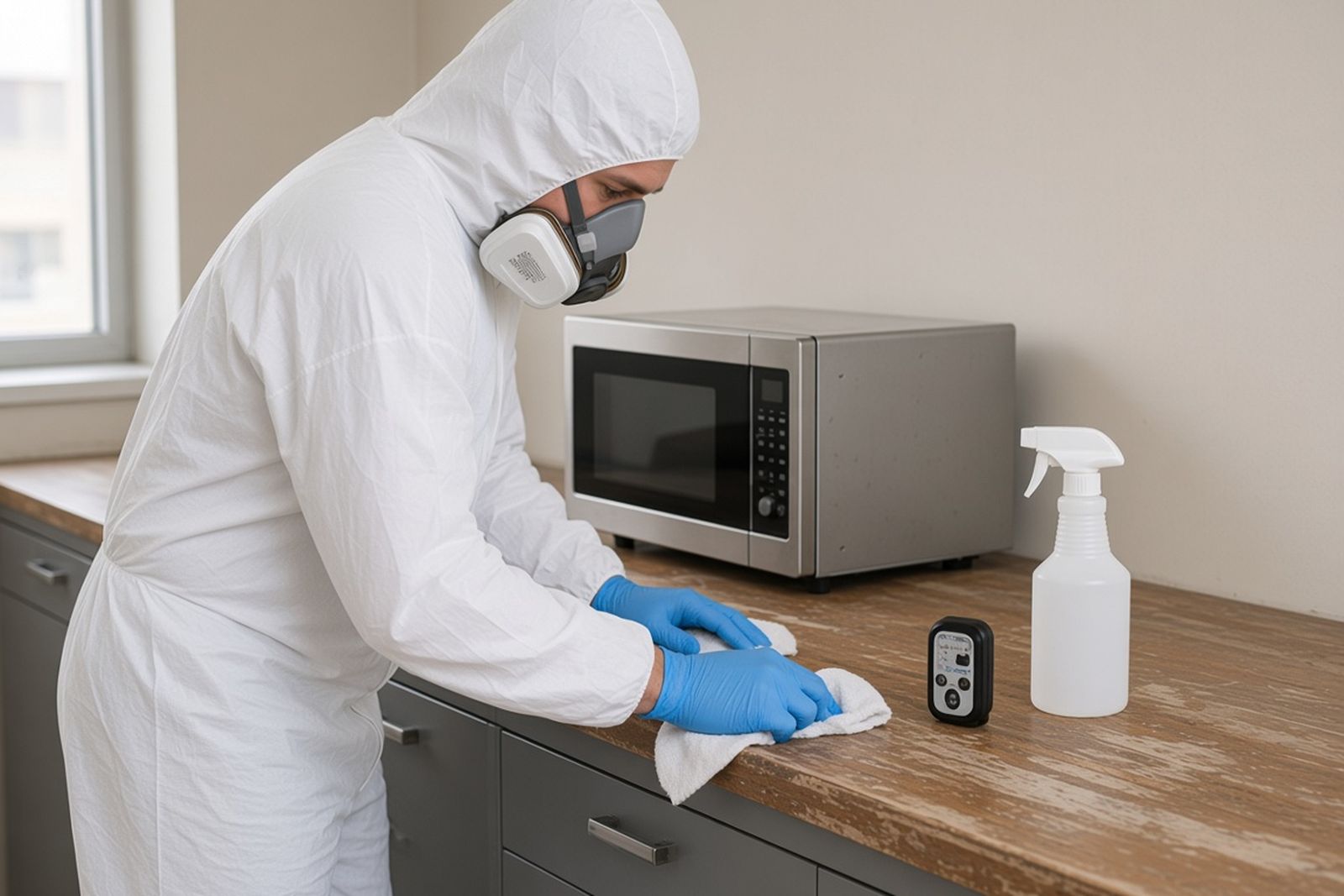
- Disinfectant: the product name and whether it is EPA-registered with a claim against bloodborne pathogens.
- Containment: plastic barriers, negative air or other measures to keep contamination from spreading.
- Waste: how much regulated waste is expected, how it will be packaged and who will transport and treat it.
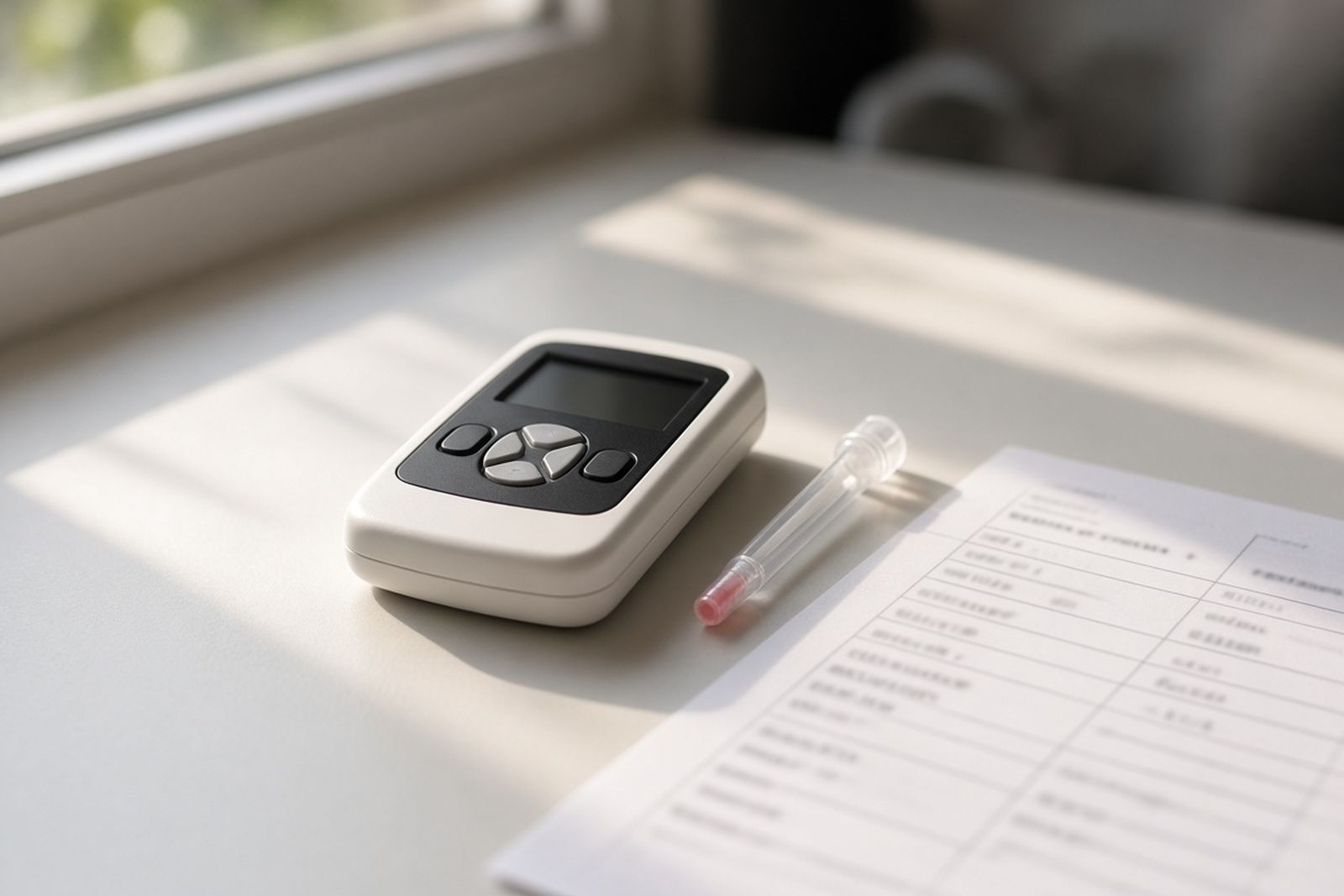
- Verification: visual inspection, ATP testing or other checks, and whether results will be documented.
- Exclusions: what is not included, such as rebuilding, contents cleaning or HVAC work.
Porous materials and the price gap
Hard, sealed surfaces such as tile, sealed stone and laminate can usually be cleaned and disinfected in place. Porous materials behave differently. Blood and other fluids soak into carpet, pad, unsealed wood, drywall and upholstery, and once they penetrate deeply, surface cleaning cannot reach them.
A bid that plans to clean saturated carpet in place is likely to be lower than one that removes it, but it may leave contamination and odor behind. Ask each company to explain how it determined whether materials can be cleaned or must be removed, and whether it checked beneath flooring or behind baseboards.
If one bid includes removal and the other does not, you are comparing two different outcomes. Ask the lower bidder whether it would remove those materials and at what cost, so you can compare like with like.
Why the named disinfectant matters
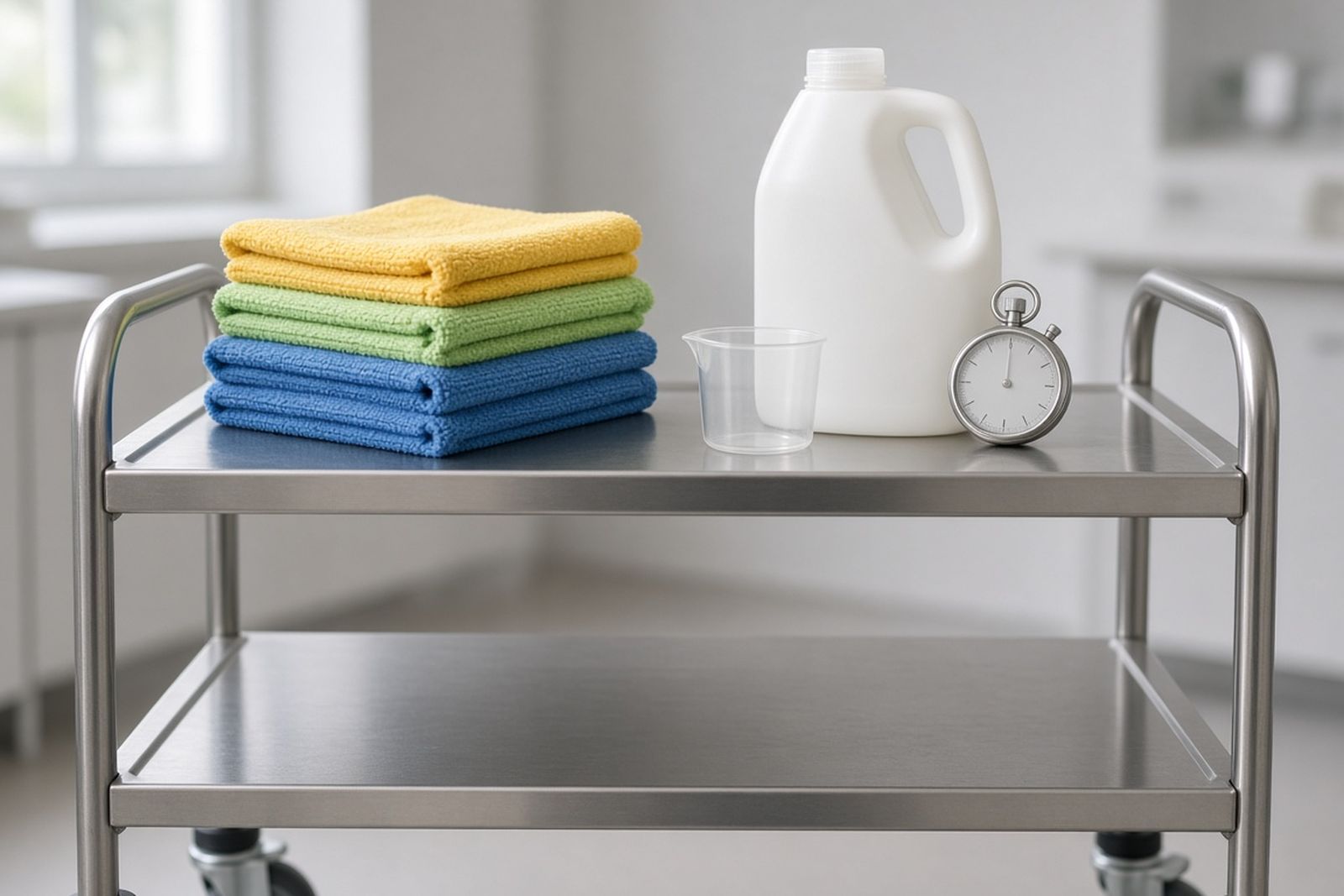
Not all cleaning products are equal against bloodborne pathogens. A bid that names an EPA-registered product with a bloodborne pathogen claim, along with its required contact time, tells you the company has thought about efficacy.
A bid that says only "sanitize" or "deodorize" may be describing a different, less rigorous process. Sanitizers and deodorizers can make a room smell better without disinfecting it.
Ask each contractor for the product name and label contact time. If a lower bid uses a product without a relevant claim, or cannot tell you which product it will use, that difference may explain part of the price gap.
Comparing waste disposal line by line
Regulated medical waste costs money to package, transport and treat, and those costs are real. A job with heavily saturated materials can generate significant regulated waste, so a bid that barely mentions disposal deserves a closer look.
Ask each company how it will classify and package the waste, which licensed transporter it uses and whether it will give you documentation showing the waste was properly handled. Some contractors include these costs in the base price, while others bill them separately after the job.
Waste classification and transport requirements differ from place to place, and a contractor should be able to describe how its process fits the rules where your property is located.
What do low bids sometimes leave out?
Not every low bid is a problem. Some companies have lower overhead, better scheduling or simply a smaller job in mind. But certain omissions appear often enough in low bids that they are worth checking specifically.
The reverse is also worth checking. A high bid is not automatically better. Some bids include removal of materials that could reasonably be cleaned, contents replacement you did not ask for, or rebuilding that a general contractor could do for less once decontamination is complete. Ask the higher bidder to explain why each removal is necessary and whether any item could be cleaned instead. A company that can justify its scope in plain language is usually one that planned it carefully.
- No mention of removing porous materials that are visibly saturated.
- No containment plan for rooms connected to the rest of the building by open doorways or HVAC.
- A generic cleaner in place of a registered disinfectant with a bloodborne pathogen claim.
- Waste disposal missing from the scope, or listed as "extra" without an estimate.
- No workers' compensation or liability insurance, shifting injury risk toward you.
- No verification step or completion documentation.
- Vague language such as "clean affected area" without defining the area.
Worked example: two bids for the same bedroom
Consider an illustrative case that is not drawn from any real job. A homeowner needs decontamination after a relative's medical emergency left blood on a bedroom carpet, a nightstand and part of one wall. She receives two bids. Bid A is noticeably lower and reads, in full, "Biohazard cleaning of bedroom, includes disinfection." Bid B is higher and runs two pages.
Bid B lists removal of carpet and pad in a defined area, inspection and treatment of the subfloor, cleaning and disinfection of the nightstand and wall with a named product and contact time, removal of a section of baseboard to check for seepage, containment with plastic sheeting, packaging and transport of regulated waste with documentation, and ATP testing on treated surfaces.
She calls the first company and asks whether it will remove the carpet and pad. The answer is that removal would be extra, along with waste disposal. Once those items are added, the two bids are much closer, and Bid B also includes containment and verification. Converting a vague bid into a comparable scope is exactly what protects you.
Insurance, credentials and a final checklist
A company without workers' compensation coverage may charge less, but if a technician is hurt on your property, you could face questions about responsibility. Ask each bidder for a certificate of insurance showing workers' compensation and general liability coverage.
Training is another difference that does not show up in the total. Ask whether technicians have current bloodborne pathogen training and whether the company has a written exposure control plan. Those programs cost money to maintain, and their absence is sometimes what makes a bid low.
If you are filing an insurance claim, share both bids with your adjuster. Adjusters often prefer detailed scopes because they can see exactly what is being done and why. A vague bid can slow approval even if its total looks attractive.
Ask each bidder how it handles surprises. Contamination sometimes proves more extensive once flooring is lifted or a wall is opened. A clear change-order process, where the company stops, shows you what it found and gets your written approval before adding work, protects you from a final invoice that bears little resemblance to the bid you accepted.
Use this list to turn several quotes into a fair comparison. When you finish, you should be able to explain what each company will do, not just what it will charge.
- Request an itemized scope from every bidder and compare area, materials and methods line by line.
- Confirm the disinfectant product and contact time in each bid.
- Ask how porous materials will be handled and why.
- Compare containment, waste handling and documentation.
- Ask for a certificate showing workers' compensation and general liability coverage.
- Ask about verification testing and what you will receive at completion.
- Ask each bidder to quote any items missing from its scope so totals cover the same work.
- Choose the company whose scope matches the actual contamination, then weigh price.