Short answer
Enzyme and microbial products break down organic matter such as blood proteins, fats and the residues that cause odor. In biohazard decontamination they can help clean stubborn soil from surfaces and reduce lingering odors, but they do not replace an EPA-registered disinfectant with bloodborne pathogen claims. The right sequence is clean, disinfect as labeled and use biological products only where they fit.
What bioremediation means in a biohazard job
In environmental science, bioremediation usually means using microorganisms to break down pollutants in soil or water. In the cleaning trade, the term is used more loosely. It often refers to enzyme-based cleaners or products containing beneficial bacteria that digest organic residues on surfaces, in drains or in porous materials.
Those products can be useful. Enzymes such as proteases, lipases and amylases break down proteins, fats and starches. Blood is rich in proteins, and body fluids and decomposition residues contain fats and other organic compounds. Breaking those down can make cleaning easier and reduce odors that come from leftover organic matter.
The problem comes when the term is used as if it means the same thing as disinfection. It does not. Understanding the difference helps you judge any proposal that mentions enzymes or microbes.
You may also see these products described as green, natural or biological. Those words describe how a product works or how it is marketed, not whether it addresses the specific hazards in blood and body fluids. Keep that distinction in mind as you read proposals.
Enzymes do not disinfect, but they do help
Enzyme cleaners and microbial products are designed to digest organic material. They are not designed or registered to kill or inactivate pathogens such as hepatitis B, hepatitis C or HIV. Some microbial products deliberately add live bacteria to a surface, which is the opposite of what disinfection does.
For blood and other potentially infectious materials, the product that addresses pathogens is a disinfectant with an appropriate label claim. Those products must be used according to their label on a surface that has been cleaned first.
A provider who says an enzyme treatment makes disinfection unnecessary is describing something the product cannot do. It is reasonable to ask them to show you the label claims for each product they plan to use.
Used in the right place and order, biological cleaners can make a job more thorough. These are some of the situations where a provider might reasonably use them.
Each of these uses supports cleaning or odor control. None of them is a pathogen claim, and a provider should describe them that way in the scope and the invoice.
- Loosening dried or aged blood from textured hard surfaces such as grout, sealed concrete or rough tile before cleaning.
- Pre-treating washable textiles that will be laundered, where protein stains resist ordinary detergents.
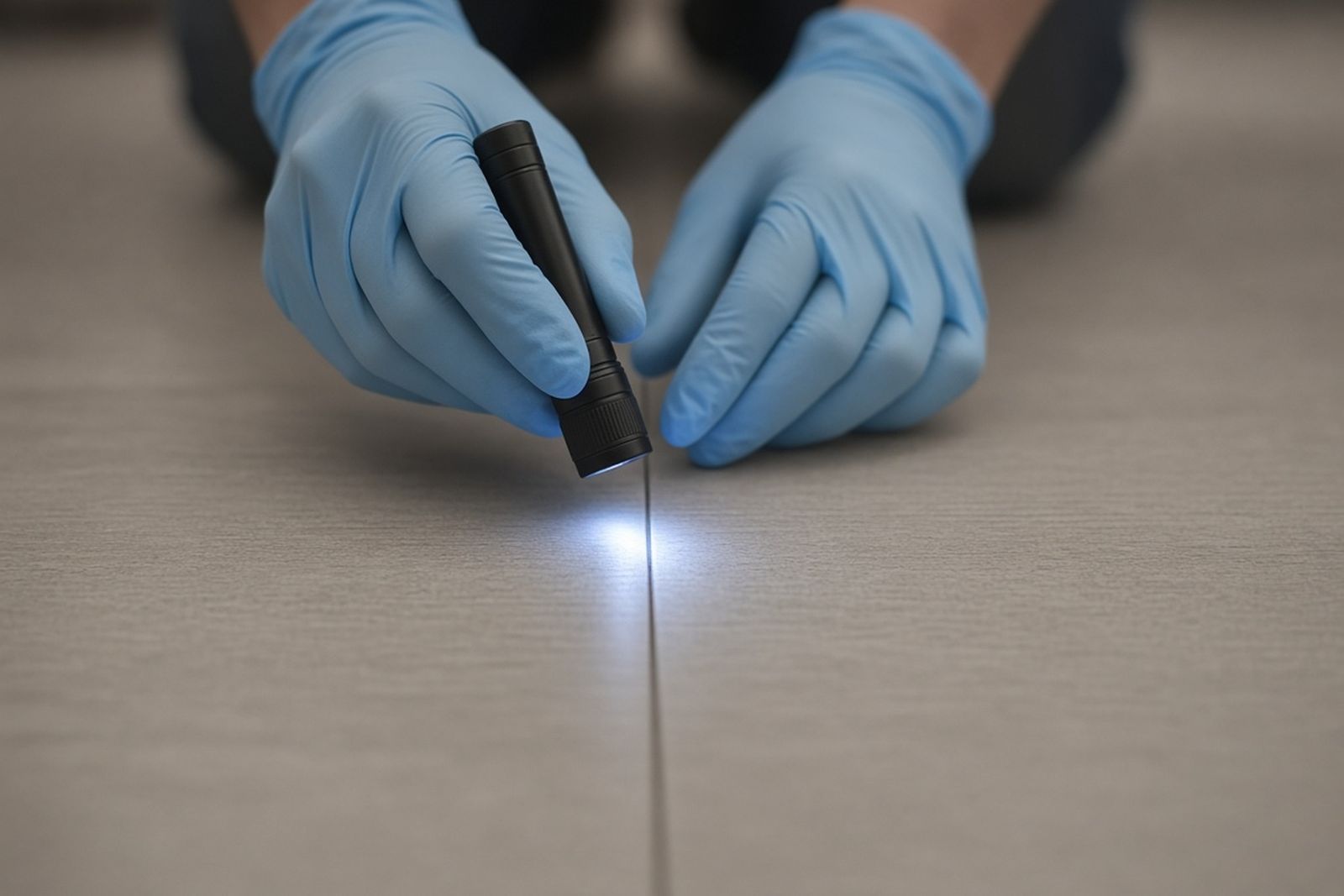
- Reducing odor from organic residues that remain in hard-to-reach cracks after contaminated materials have been removed.
- Maintaining drains and traps where organic material may have entered, following the product label.
- Treating subfloor or framing surfaces after removal and disinfection, where lingering odor is a concern before sealing or rebuilding.
Order of use, and why biofilms come up
Sequence matters because the products can interfere with each other. Many disinfectants will inactivate enzymes and kill beneficial microbes. Some enzyme products, in turn, leave residues that could affect how a disinfectant performs if applied on top of them without rinsing.
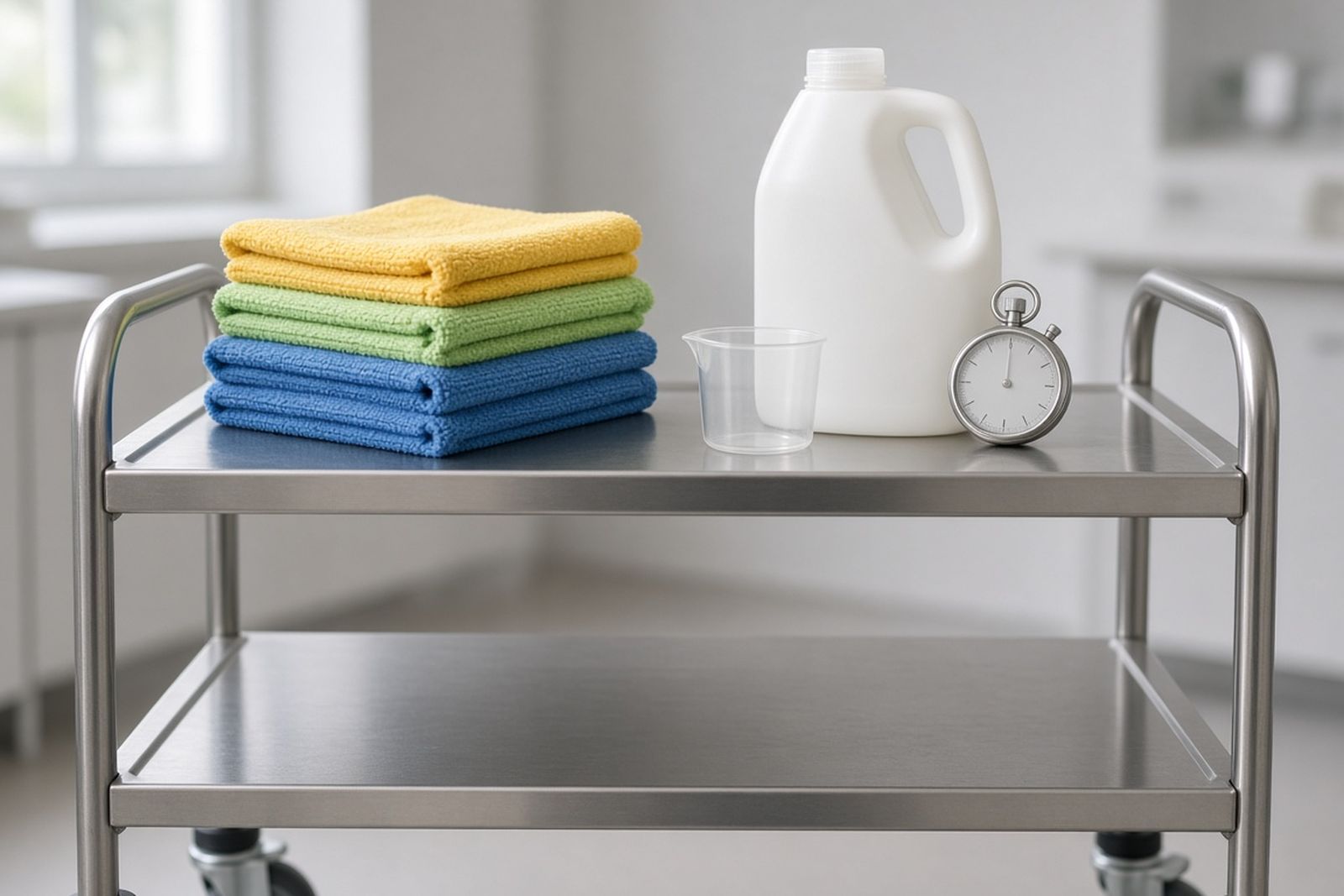
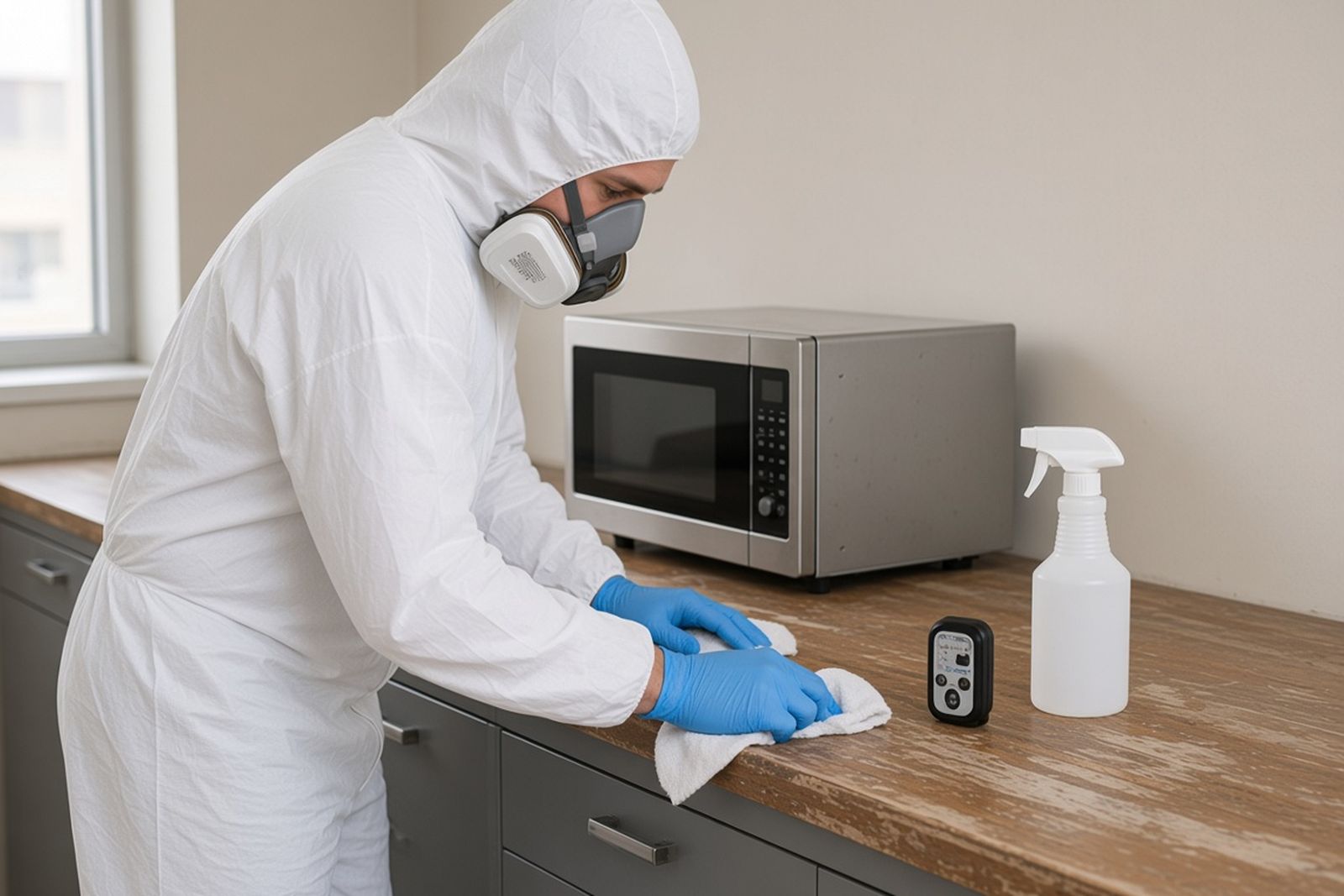
A common, sensible pattern looks like this: remove visible soil and any materials that cannot be decontaminated; clean the remaining surfaces, possibly with an enzyme pre-treatment where protein residue is stubborn; rinse if the product label calls for it; apply a disinfectant with appropriate claims and keep the surface wet for the labeled contact time; then, only if odor remains and the surface allows, use an enzyme or microbial product afterward to address residual organic matter.
Combining approaches is common in infection prevention. In a 2024 survey of healthcare professionals by Centeleghe and colleagues, 70.8% favored combining methods for cleaning and disinfection. The key is that each method is used for what it does well, in an order that does not undercut the others.
The same order applies when odor comes back after a job. Returning odor usually means fluid reached a spot the first pass missed, such as a narrow gap where the subfloor meets a wall's bottom plate. The right response is to clean and disinfect that spot again first, then apply an enzyme product labeled for odor-causing organic residue, allow its full dwell time and let the area dry before anything is sealed or rebuilt.
Biofilms are communities of microorganisms that stick to surfaces and protect themselves with a slimy matrix. They can form in drains, on wet surfaces and even on surfaces that look dry. They can make microbes harder to reach with disinfectants.
Awareness of dry-surface biofilms is still limited even among professionals. The same 2024 Centeleghe survey found that 87.6% had heard of biofilms, but only 39.1% knew of dry-surface biofilms. Enzyme products are sometimes promoted as a way to break down the biofilm matrix so that cleaning and disinfection can reach the organisms inside.
That can be a reasonable use, particularly in drains or areas with persistent moisture. It still does not remove the need for a disinfectant. Think of enzymes as helping to open the door so the disinfectant and cleaning can do their job.
Can enzymes save porous materials that absorbed blood?
Usually not. When blood soaks into carpet pad, mattress foam, upholstery cushions or unsealed wood, it reaches places that cleaning, enzymes and disinfectants cannot reliably penetrate or verify. Treating the surface may improve appearance and odor while contamination remains deeper inside.
That is why providers generally remove porous materials that were saturated and clean or disinfect only what they can reach and verify. Some washable textiles, such as clothing or linens with limited contamination, may be laundered with an enzyme pre-treatment and a suitable wash, but decisions should be made item by item.
If a provider proposes saving a saturated mattress or carpet pad with an enzyme spray, ask how they will know the treatment reached every affected area. A clear answer is rarely possible, which is why removal is the norm.
Hard, sealed surfaces are a different story. Sealed tile, finished stone, metal and glass can usually be cleaned thoroughly, and an enzyme pre-treatment may help release protein residue from textured finishes or grout before the disinfection step.
Safety around your family and pets
Many enzyme cleaners are marketed as gentle, and some are milder to handle than strong oxidizers or solvents. That does not make them harmless in every situation. Some people are sensitive to enzyme dusts or fragrances, and products containing live microbes may not be appropriate around people with weakened immune systems, in healthcare settings or on food-contact surfaces unless the label says otherwise.
Ask the provider for the product's safety data sheet and label. Those documents describe the ingredients, any precautions and whether the product is meant for occupied spaces. If a household member has asthma, allergies or a medical condition that affects immunity, mention it before work begins so the provider can choose accordingly.
Pets deserve the same consideration. Animals spend time close to floors and may lick treated surfaces. A provider should tell you how long to keep pets away from treated areas and whether any rinse is needed afterward.
Finally, remember that the disinfectant used earlier in the process has its own precautions. A safe job is one where every product's label is followed, not just the ones that sound the most natural.
Questions to ask a provider who mentions bioremediation
It is fair to ask what the product is, what it does, whether it is registered or labeled for any claims and where in the sequence it will be used. Ask which disinfectant they will use for pathogen control and how they will make sure the enzyme or microbial product does not interfere with it.
Also ask how they will judge success. For odor, that might be a walkthrough after the product's dwell time. For stain removal, it might be visual inspection. For pathogen control, it should be the documented use of a disinfectant according to its label.
If the property is rental housing, a healthcare space or a food business, ask the agency that licenses or inspects it whether any product or process requirements apply.
A provider who welcomes these questions and answers them plainly is usually one who uses biological products thoughtfully, as one tool among several, rather than as a shortcut.