Short answer
A defensible biohazard decontamination scope ties every line item to something observed: where fluid went, which materials absorbed it, which disinfectant fits the surface and how waste will leave the property. This illustrative example follows one invented job from intake through closeout so you can see how each decision is made, recorded and explained to an owner, insurer or tenant.
Why this walkthrough uses a fictional job
Real biohazard jobs involve real families, often on the worst day of their lives. Publishing details of those events would be unkind and, in many cases, a breach of privacy. An invented case lets you see the full decision path without exposing anyone.
Everything in the example below is hypothetical. The home, the people, the materials and the choices were created to show how a careful provider reasons through a scope. Your own situation will differ, and a qualified provider should assess it in person.
The goal is not to teach you to perform the work. It is to help you recognize a well-built plan when you see one, and to ask sharper questions when a plan feels thin.
What the provider knew before arriving
In the hypothetical, an adult living alone in a one-story house suffers a medical emergency in the evening. Before paramedics arrive, there is significant bleeding in a hallway and a bedroom. The person is transported and later recovers. A sibling who holds a key calls a provider three days afterward.
The sibling reports what they can see: dark stains on bedroom carpet near the bed, marks on a painted wall and door frame, drips down the hallway laminate and a bloodied towel in the bathroom. No one has tried to clean. The heating system has been running on its normal schedule.
Those facts already suggest several questions. How far did fluid travel under the carpet? Did anything seep between laminate planks? Did the mattress or bedding absorb blood? What other surfaces were touched with bloody hands during the emergency?
The provider also asks practical intake questions over the phone: whether pets live in the home, whether anyone has entered since the emergency, whether a medical examiner or police were involved and who has authority to approve work. The answers shape the crew size, the protective equipment they bring and whose signature the scope will need.
Mapping where contamination actually went
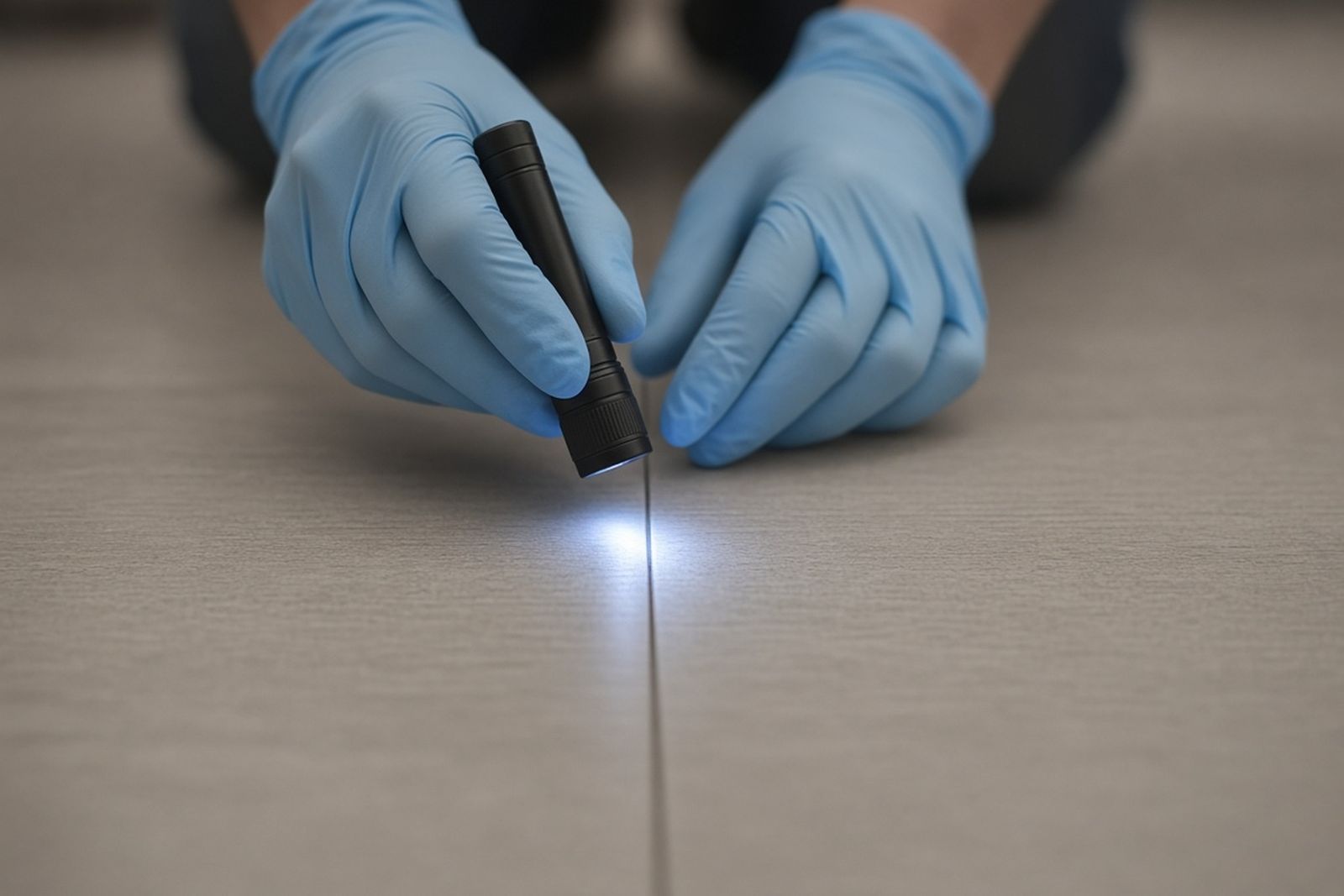
The lead technician starts at the front door and works inward, photographing each room before stepping into it. Using a bright handheld light at a low angle, they find small spatters the sibling had not noticed on a light switch, the bathroom sink edge and the inside of the front door handle.
In the bedroom, they lift a corner of carpet at the edge of the stain and find that the pad beneath is saturated over a wider area than the surface stain suggests. The subfloor below shows a darkened patch. In the hallway, blood has worked into the seams between two laminate planks.
Each finding is photographed, measured and marked on a simple floor sketch. That sketch becomes the map for the written scope. It also becomes a record the family and insurer can understand without being present.
The technician also checks the heating registers nearest the affected rooms. Blood does not travel through ductwork the way airborne contaminants can, but a register cover in the bedroom floor sits near the stain and is included in the inspection because fluid could have dripped into the boot below.
Which materials stayed and which were removed, and why?
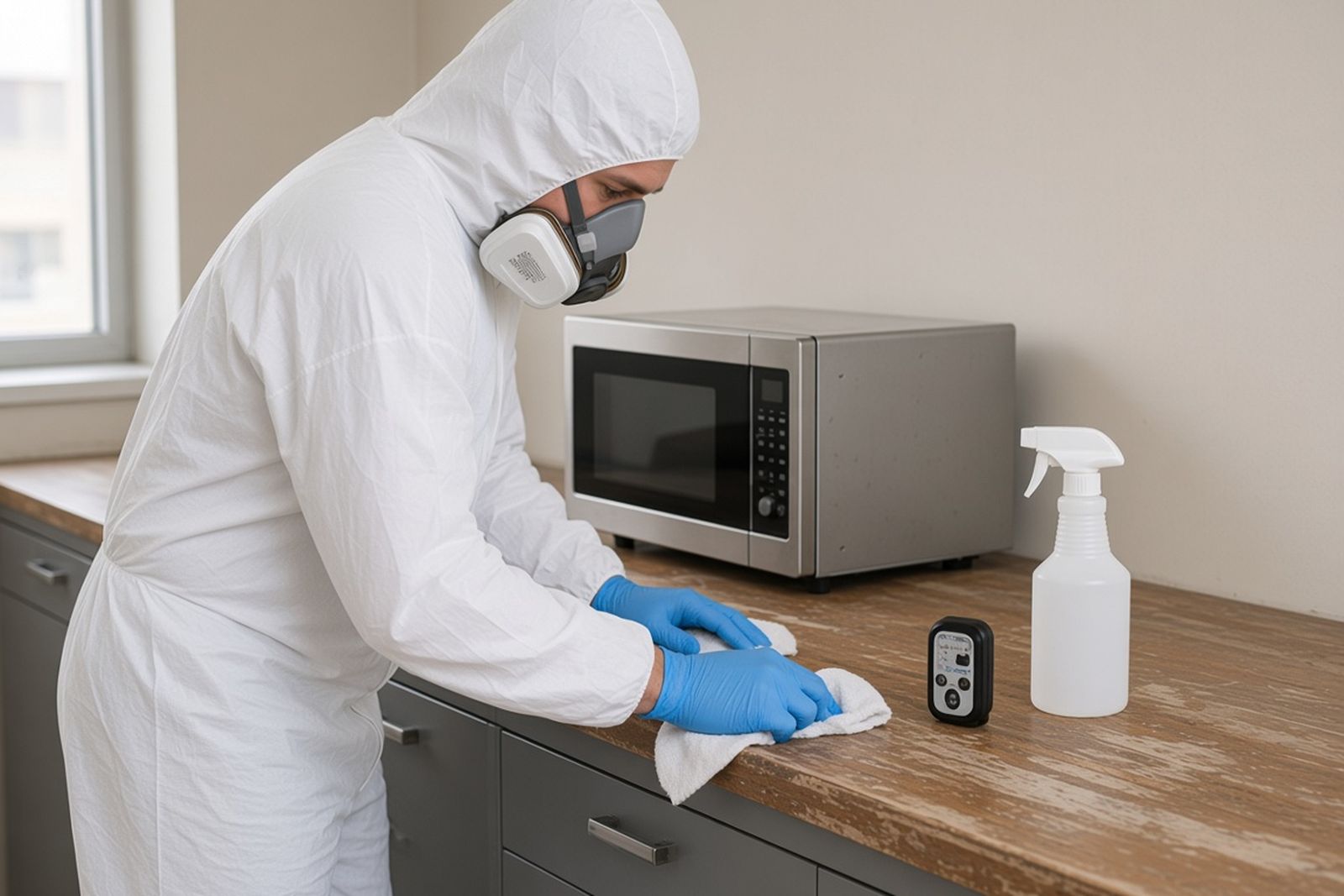
Decisions follow a consistent logic. Hard, non-porous surfaces that can be cleaned and then kept wet with disinfectant for the labeled contact time are cleaned in place. Porous materials that absorbed fluid deeply, where cleaning cannot reach, are removed. The provider writes down the reason for each choice.
- Bedroom carpet and pad in the affected zone: removed, because fluid penetrated through to the pad and subfloor.
- Subfloor stain: cleaned, disinfected and sealed after assessment showed the plywood was intact; the scope notes that a structural repair contractor could replace it if the owner prefers.
- Mattress: removed, because blood soaked into the interior layers.
- Hallway laminate: two affected planks removed so the underlayment could be inspected; underlayment beneath one plank also removed.
- Painted wall and door frame: cleaned and disinfected in place, since the paint film was intact and non-porous.
- Light switch, sink edge and door handle: cleaned and disinfected in place.
- Bath towel and bedding: bagged as regulated waste after the sibling declined laundering.
Choosing and documenting the disinfectant
The provider selects a product that appears on EPA's List S, which the agency describes in 2024 as registered disinfectants with label claims against bloodborne pathogens HIV, hepatitis B and hepatitis C. The product's EPA registration number, dilution and contact time are copied into the job record.
The provider also notes surface compatibility. Some disinfectants can dull finishes or damage certain plastics, so the technician tests the product on an inconspicuous area of the laminate and door frame first. The results of that spot test are noted.
Why so much attention to the label? Because a disinfectant only performs as tested when it is applied to a surface that has been cleaned first and kept wet for the full contact time. Age alone is not treated as making a stain safe, so the three-day-old blood in this case gets the same precautions as a fresh spill.
The written scope, before any work began
Before starting, the provider gives the sibling a written scope in plain language. It lists each room and surface, the action planned for each, the reasons, the disinfectant, the waste handling plan and the documentation the family will receive.
Just as important, it lists assumptions and change triggers. The scope assumes the subfloor damage is limited to the visible stain. If more contamination is found when the carpet is fully pulled, the provider will stop, photograph and ask for approval before expanding the work.
The scope also states what is excluded: replacement flooring, a new mattress and repainting. Those are restoration items for a separate contractor or the owner. Separating decontamination from rebuild keeps the invoice clear and avoids confusion with the insurer.
Before signing, the sibling asks two questions. Who owns the decision if the subfloor turns out worse than expected, and will the provider speak directly to the insurer? The provider answers both in writing and adds the insurer's claim number to the scope.
What happened when the work uncovered something new?
When the full carpet section is pulled, the crew finds a second, smaller stained area on the subfloor near the bedroom closet, apparently from blood that tracked under the closet door. It was not visible before removal.
The crew stops, photographs the area and calls the sibling. They explain the finding, the proposed treatment and the added cost range they can commit to in writing. The sibling approves by text, and the approval is saved to the job file as a change order.
This is exactly how a defensible scope is supposed to behave. The discovery is documented at the moment it is found, the client makes an informed decision and the final invoice matches the approved changes.
Had the crew simply treated the new area and added it to the bill without a call, the work might have been correct, but the family would have had no chance to weigh in and the insurer would have had no contemporaneous record. The pause took a few minutes and prevented a dispute later.
Waste and closeout
Removed materials are packaged at the point of removal in containers appropriate for regulated waste and carried out along a protected path. The provider arranges transport and disposal through a permitted channel and gives the sibling a copy of the disposal documentation once it is available. If you want to confirm how waste from a residence is treated where you live, the state agency that oversees medical waste is the office to ask.
The closeout package includes the floor sketch, before and after photographs, the signed scope and change order, the disinfectant record with registration number and contact time, the list of removed materials with reasons and the waste paperwork. The sibling shares it with the insurer and keeps a copy with the homeowner's documents.
Because the person is recovering at home soon, the provider also suggests the family walk the space before their return so the first time they see it is not alone.
What can you take from this example into your own situation?
The specific choices in the example matter less than the pattern. Every removal has a reason. Every product has a label on file. Every surprise becomes a documented decision. Every exclusion is named.
When you read a proposal, look for that pattern. If a scope simply says full biohazard cleanup with a single number, ask the provider to break it down by room, surface, action and reason. A professional who does this work carefully will not find the request unusual.
It is also worth noticing what the provider in the example did not do. They did not promise that insurance would pay, did not claim the home was sterile and did not remove materials without explaining why. Restraint in those areas is as much a sign of professionalism as thoroughness in the cleaning itself. If a provider you are considering makes sweeping guarantees, ask them to put the basis for each promise in writing.