Short answer
As a property manager, your job during a biohazard event is to control access, protect tenants and staff, hire a qualified decontamination provider with a written scope, and keep a clean paper trail. You do not need to become a technician, but you do need to know which areas are shared, who authorizes work, what records prove the job was done, and when a unit can be released.
The first hour after staff report blood or body fluids
Start with people, not surfaces. Make sure anyone injured has medical help and that emergency responders have what they need. If police or a medical examiner are involved, the area is theirs until they release it, and your team should not touch anything inside the tape.
Once the scene is yours to manage, restrict access. Lock the unit, close off a stairwell with signage, or shut down an elevator car if that is where the contamination is. Tell maintenance staff plainly that they should not wipe, mop or bag anything, even if it looks minor.
Then document. Take wide and close photographs from outside the affected area, note the time, and write down who has entered since the event. That short record becomes the backbone of your insurance file and your vendor scope.
Finally, call a biohazard decontamination provider and your insurance contact. Calling both early lets the carrier weigh in on mitigation before materials are removed, which can matter later when the claim is reviewed.
Can my maintenance team handle a small cleanup themselves?
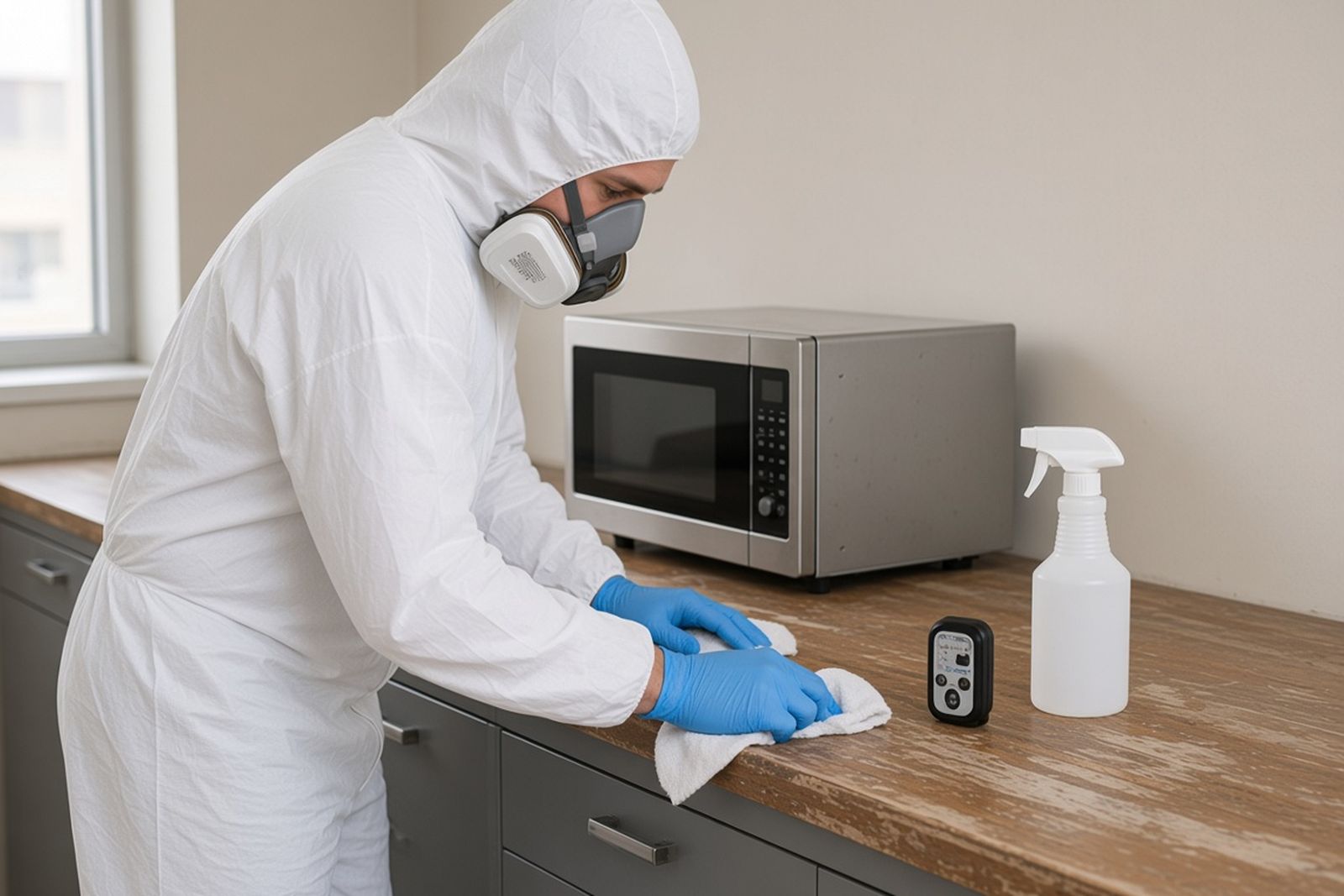
Sometimes, but only when your organization has prepared them. Employees who can reasonably be expected to contact blood need an exposure control plan, protective equipment, a hepatitis B vaccination offer and bloodborne pathogen training before they are asked to clean it up.
If your maintenance staff have not been trained and equipped under that framework, asking them to clean up blood puts them and your company at risk. A small spot on a hard hallway floor may be within a trained employee's scope. Blood that soaked into carpet, ran under baseboards or reached a mattress usually is not.
A useful internal rule is to decide in advance which incidents staff may handle and which trigger an outside call. Write that line down in your procedures so a night manager does not have to guess.
If an employee is exposed during any cleanup, such as a needlestick or a splash to the eyes, follow your post-exposure procedure right away. That typically means washing the area, reporting it and getting a prompt medical evaluation.
Who pays, and who signs the work order
Responsibility usually depends on the lease, the cause of the event and the insurance policies in play. The owner generally controls building systems, common areas and structural materials. A tenant's personal belongings may fall under a renters policy. A commercial tenant's lease may assign cleanup duties differently.
Before you sign a work order, confirm that you have authority to approve the spend. Many management agreements set approval limits, and an ownership group may want to see the scope first. In an urgent case, get written approval for emergency mitigation and hold the rest of the scope until the owner and carrier respond.
Consult counsel when a lease or a death in a unit raises questions about notice, access or tenant rights. Do not promise a tenant that insurance will pay. Only the carrier can make that determination.
It helps to keep a standing vendor agreement with at least one decontamination provider before you ever need one. Pre-negotiated terms, a known contact and an agreed documentation package mean the late-night call goes faster, and you are not comparing unfamiliar bids while a hallway is closed and tenants are asking questions.
How do I talk to tenants and neighbors without saying too much?
Tenants deserve enough information to stay safe and to understand why a hallway is closed. They do not need details of what happened, and sharing them can harm a grieving family or compromise an investigation.
A short, calm notice works well. Say that a cleaning and disinfection project is underway in a specific area, that the area is closed until the work is finished, and who to contact with questions. Avoid words that suggest a crime or a cause unless the facts are public and confirmed.
If the event involved a death or a suicide, be especially careful. If a tenant or staff member seems to be struggling, you can share that the 988 Suicide and Crisis Lifeline is available by call or text at 988. Offering that resource quietly can matter more than any other part of your notice.
For the affected household, assign one point of contact. Families often need access to retrieve belongings, and a single person who knows the schedule prevents confusion and repeated painful conversations.
What belongs in a vendor's written scope
A scope protects you, the owner and the tenant. It should describe what the provider will do in terms you can verify later, not just a price and a phrase like full biohazard cleanup.
Ask the provider to list the following items so you can compare bids and audit the finished job.
- The exact rooms, surfaces and building systems included, and anything excluded.
- Which porous materials they expect to remove, such as carpet, pad, drywall or furniture, and the reason for each.
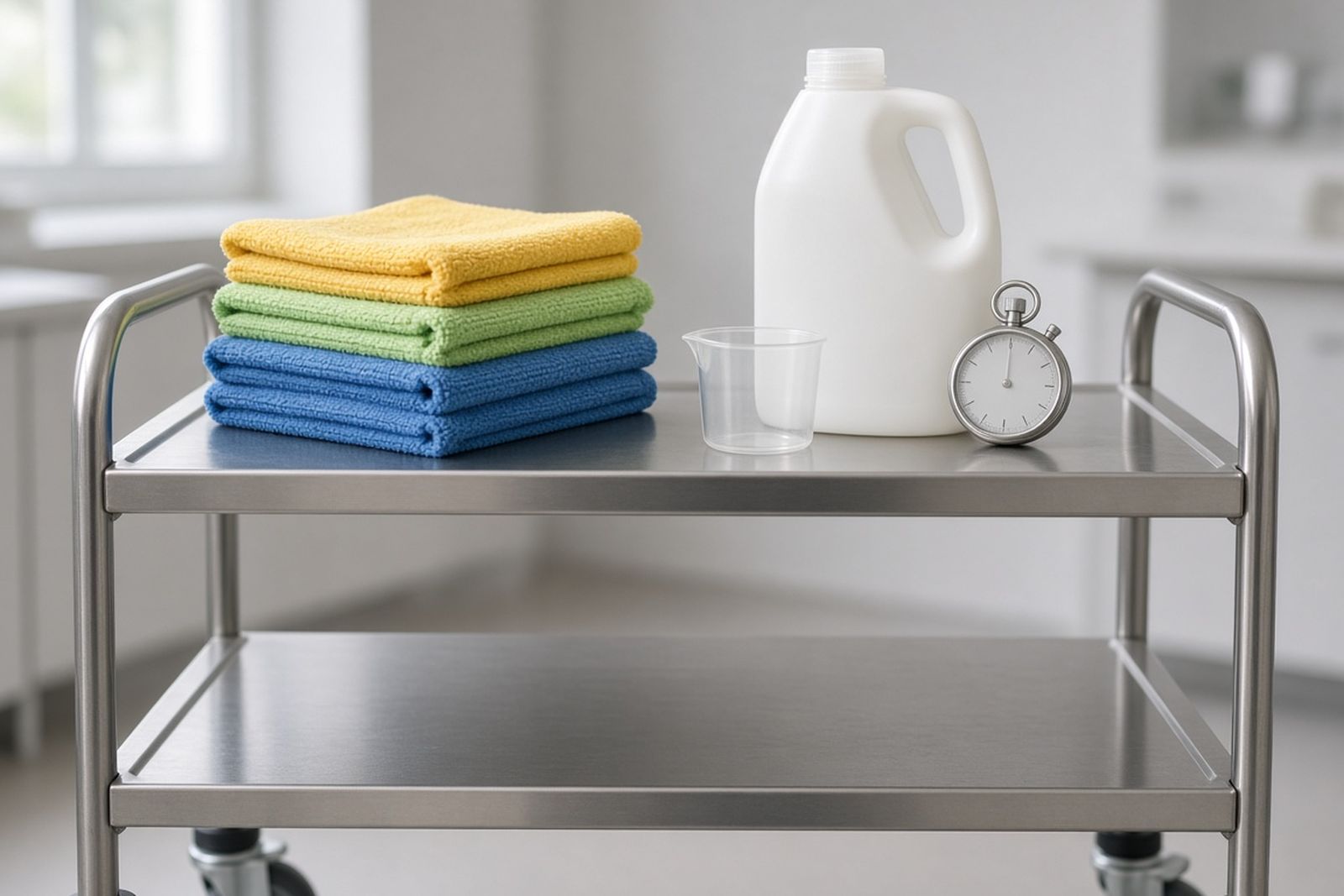
- The disinfectant product they plan to use, its EPA registration number and the contact time on the label.
- How regulated waste will be packaged and transported, and what disposal documentation you will receive.
- Protective measures for occupied neighboring units, such as containment or negative air.
- Change triggers, such as fluid found under subfloor, that would require a revised estimate.
- What the closeout report will contain, including photographs and a completion statement.
Why disinfectant records matter to you
A disinfectant only does what its label claims when it is used as directed on a surface that was cleaned first. That is why the product name, its EPA registration number and the label contact time belong in your file.
The reason this matters to you is practical. If a future tenant raises a health concern, or an insurer questions the invoice, you can show which product was used, that it carried the relevant claim and that the crew followed the label. Without those records, you have only a vendor's word.
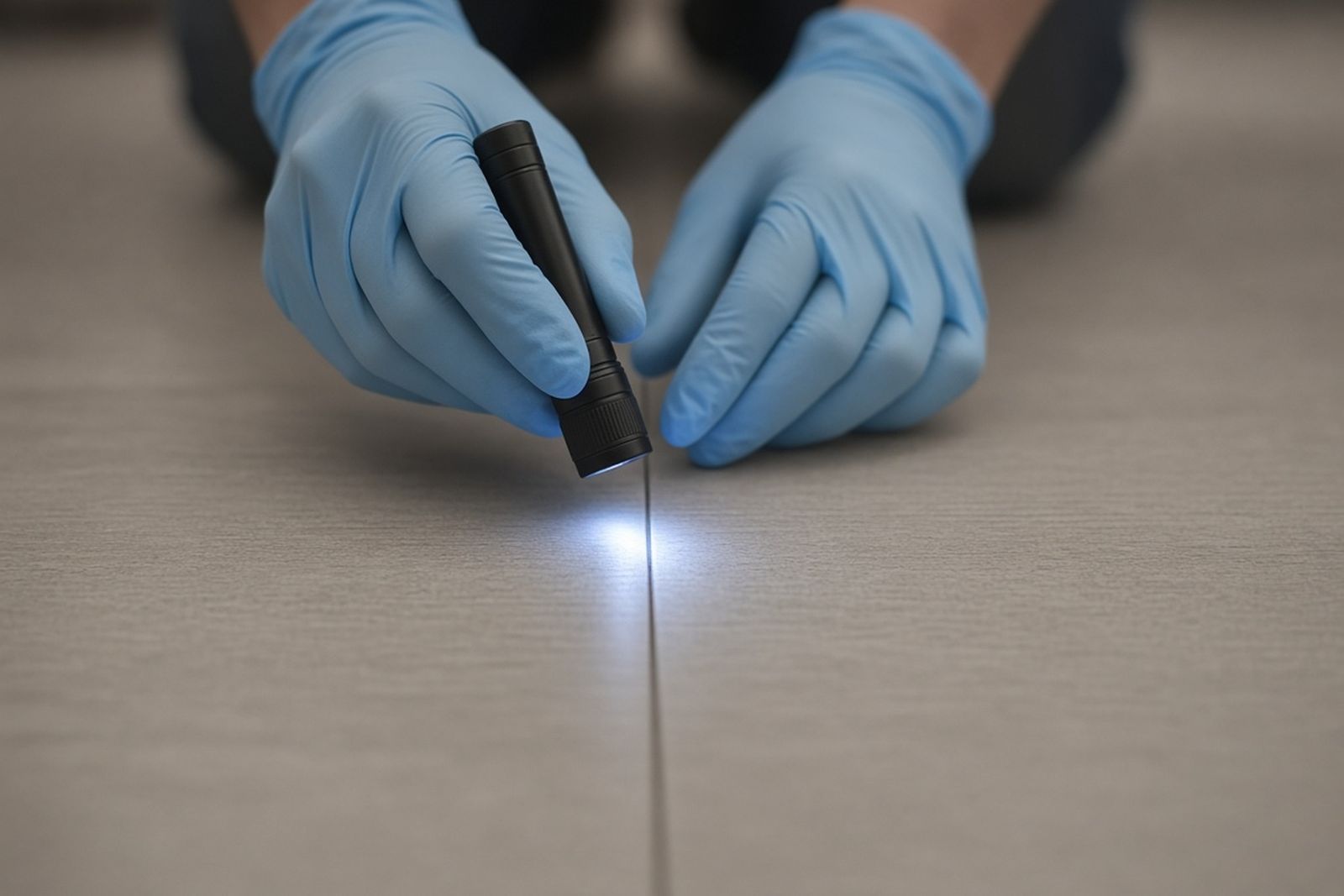
Dried blood is not automatically safe, and time alone does not resolve the hazard. A unit that was closed for a week before anyone noticed a stain still warrants proper decontamination.
Shared spaces: stairwells, landings and fire doors
Common areas raise problems of their own. When blood is found on stairs, a handrail, a fire door or the carpet of a landing, closing the space affects everyone who uses that route, and residents will notice before you have answers.
Close the affected stairwell, post signs directing residents to another exit and confirm with the fire marshal that the temporary route is acceptable. Tell maintenance not to clean, photograph the area and call the owner, the carrier and at least two decontamination providers.
When bids come back, compare what they actually say. A lump sum tells you very little. A usable scope describes cleaning and disinfecting concrete steps and a painted handrail in place, removing and replacing any landing carpet and pad that absorbed fluid, naming the disinfectant and its contact time and providing waste documentation. It should also include a change trigger for fluid that may have seeped beneath the carpet tack strip.
Before you reopen the space, collect the before and after photographs, the product record and the disposal paperwork. If the injured resident's family asks, it is enough to tell them the area has been professionally cleaned.
Releasing the area and building the closeout file
Release the area when the provider confirms the work is complete, you have walked it yourself and any required agency sign-off is in hand. If replacement materials such as carpet or drywall are part of a separate repair, the area may be decontaminated but not yet ready for occupancy.
If the affected unit will be leased again, think about disclosure before you advertise it. Some jurisdictions have rules about what must be shared with prospective tenants after certain events, and others are silent. Ask counsel what applies to your property, and keep your decontamination records ready in case an applicant or their advocate asks what was done.
Keep a closeout file for each event. It should include your incident notes, the photographs, the signed scope and any change orders, the disinfectant record, waste disposal documentation, the invoice and copies of tenant notices. Store it with the unit or building record so a future manager can find it.
After the dust settles, review the event with your team. Ask whether staff knew what to do, whether the vendor was easy to reach and whether your procedures need an update. A short debrief turns one difficult day into a better plan for the next one.