Biohazard Decontamination: Education
Science and technology used in some biohazard decontamination scopes, with explicit limits for ATP, disinfectants, enzymes, fogging, air equipment, and moisture tools.
Education posts explain the science and words behind biohazard cleanup. They describe how germs survive on different surfaces and why dirt and body matter shield germs from disinfectant. They explain the real difference between cleaning and disinfecting. Other articles look at a quick swab test that shows leftover organic residue. It does not detect germs, and the posts explain when it helps and where it falls short. They also cover how to judge equipment and newer technology a provider offers. And they explain when enzyme or microbe-based products fit a job and when they just hide a problem that still needs removal. Other posts explain the term for blood and other body fluids that can carry disease. They cover why sewage water is handled differently from clean water, and how the label's wet time changes with the germ and the surface.
Get an email reply about biohazard decontamination
Send a short message to the follow-up inbox. A coordinator can reply by email. This form does not send emergency help; call 911 first if anyone is in danger.
This knowledge lets you read a proposal with a critical eye. Some work plans list fogging but no cleaning first. Some treat a sewage-soaked carpet the same as a wiped countertop. Either one should prompt questions. Learn what a disinfectant label really promises. Learn what a residue swab reading can and cannot tell you. Then you will not pay for impressive steps that do not deal with the mess in your building. It also helps you notice when a proposal leaves something out. Examples include checking that things are dry after a sewage loss, or packing regulated waste after a blood event. A little background turns a confusing estimate into a document you can question line by line.
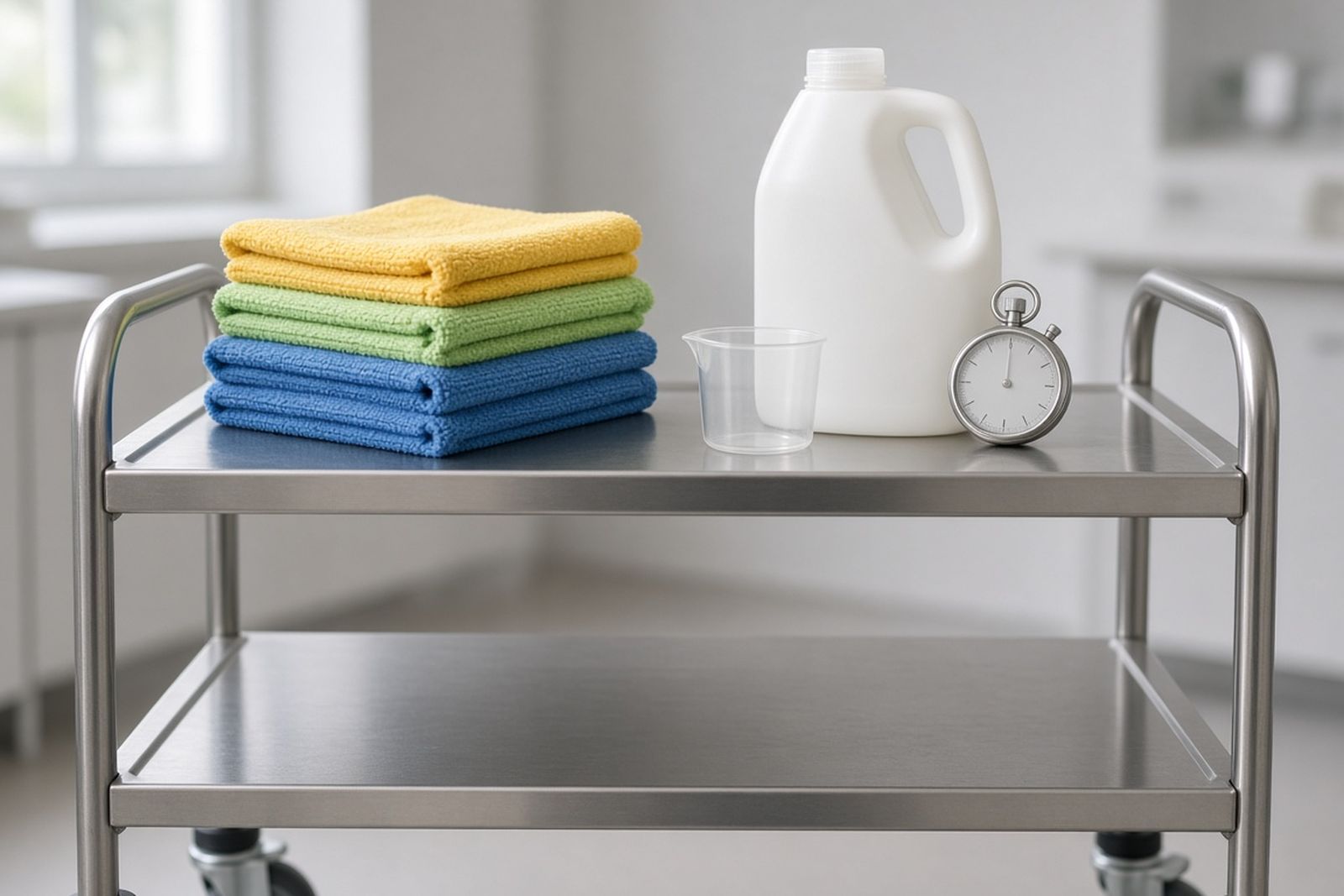
The Science Behind Biohazard Decontamination
Why cleaning comes before disinfecting, how contact time and soil load decide results, and what dried blood teaches about pathogen survival on surfaces.
Biohazard decontamination works by first removing visible soil so a disinfectant can reach the surface, then applying a registered product for its full labeled contact time, then verifying the result. Pathogens differ in how long they survive outside the body, and organic matter such as dried blood shields them. Porous materials that cannot be cleaned are removed rather than treated.
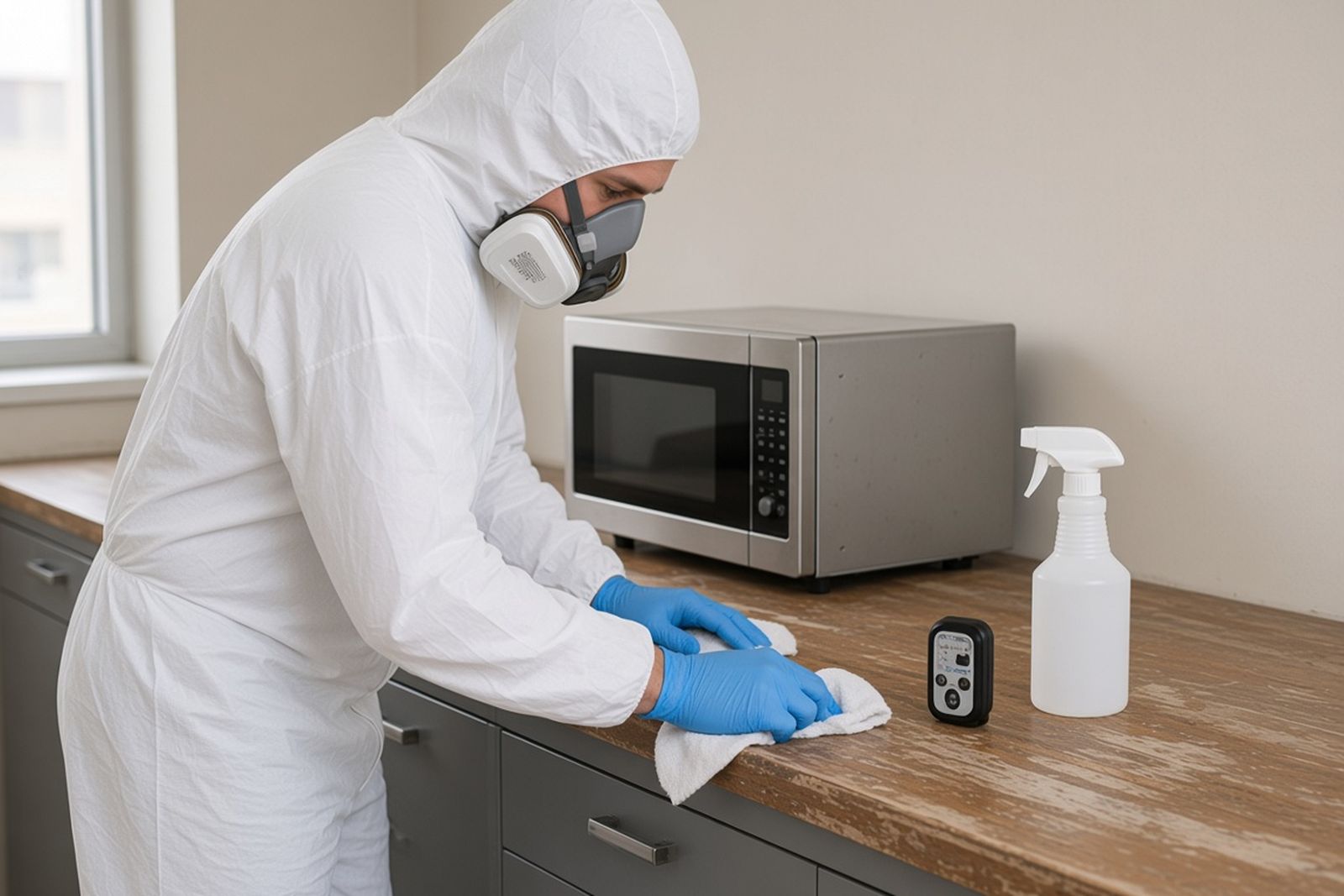
How to Evaluate Equipment Proposed for Biohazard Decontamination
Respirators, fluid-resistant suits, List S disinfectants, HEPA units, foggers and ATP meters: how to judge whether proposed biohazard equipment fits your job.
To evaluate equipment proposed for biohazard decontamination, ask what each item does and whether it matches the hazard. Protective gear should resist fluids, disinfectants should carry EPA label claims for bloodborne pathogens and be compatible with your surfaces, and devices such as foggers or UV lights should supplement manual cleaning rather than replace it. Waste containers must meet local requirements.
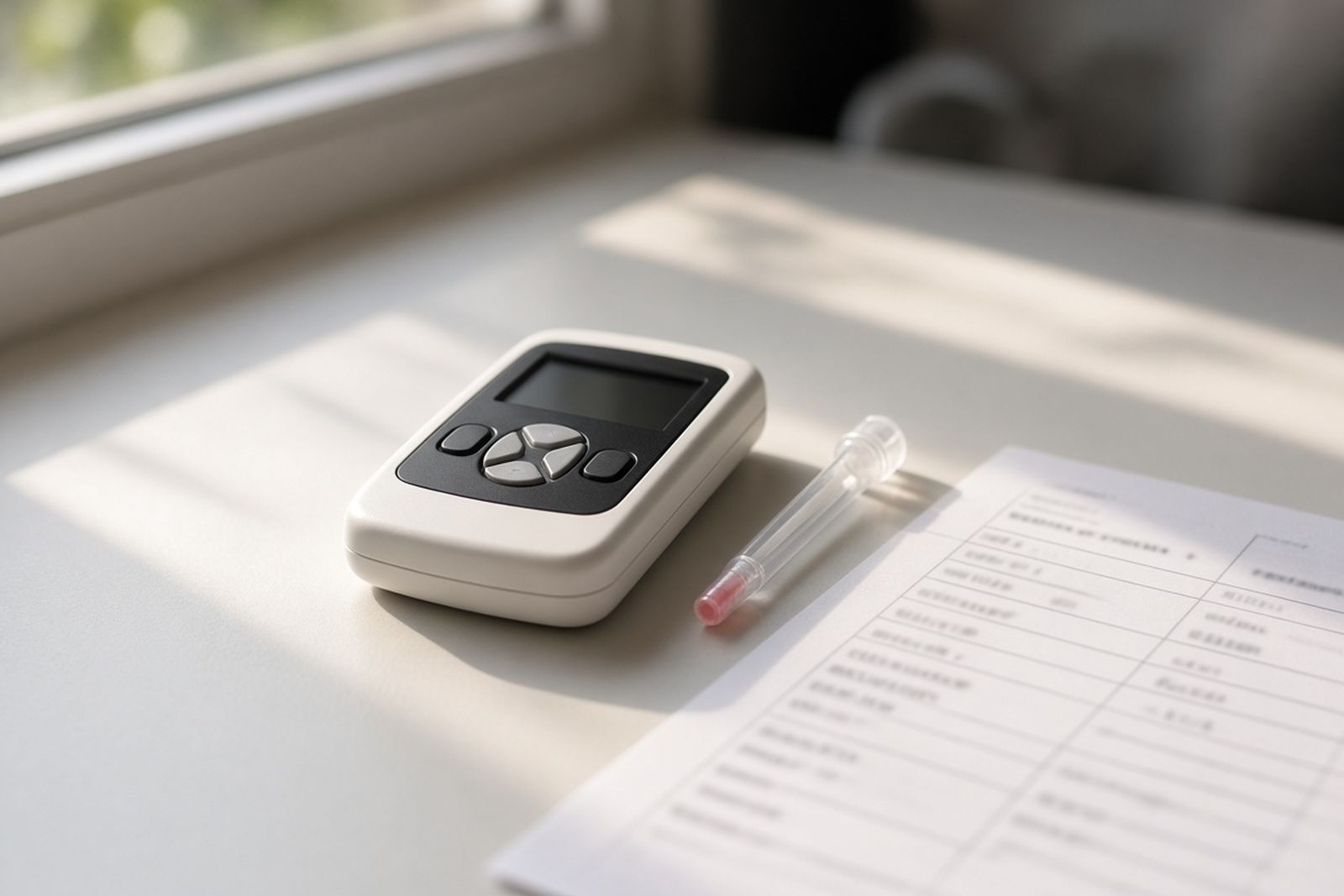
The Difference Between Cleaning and Disinfection in Biohazard Decontamination
Cleaning removes blood and soil; disinfection kills what remains. Why biohazard decontamination needs both, in order, with the right product and contact time.
In biohazard decontamination, cleaning physically removes blood, fluids and organic soil from a surface, while disinfection uses a registered product to kill pathogens left behind. Cleaning must come first, because organic material can shield microorganisms and weaken disinfectants. Disinfection then works only if the product is listed for the relevant organisms and stays wet for its full label contact time.
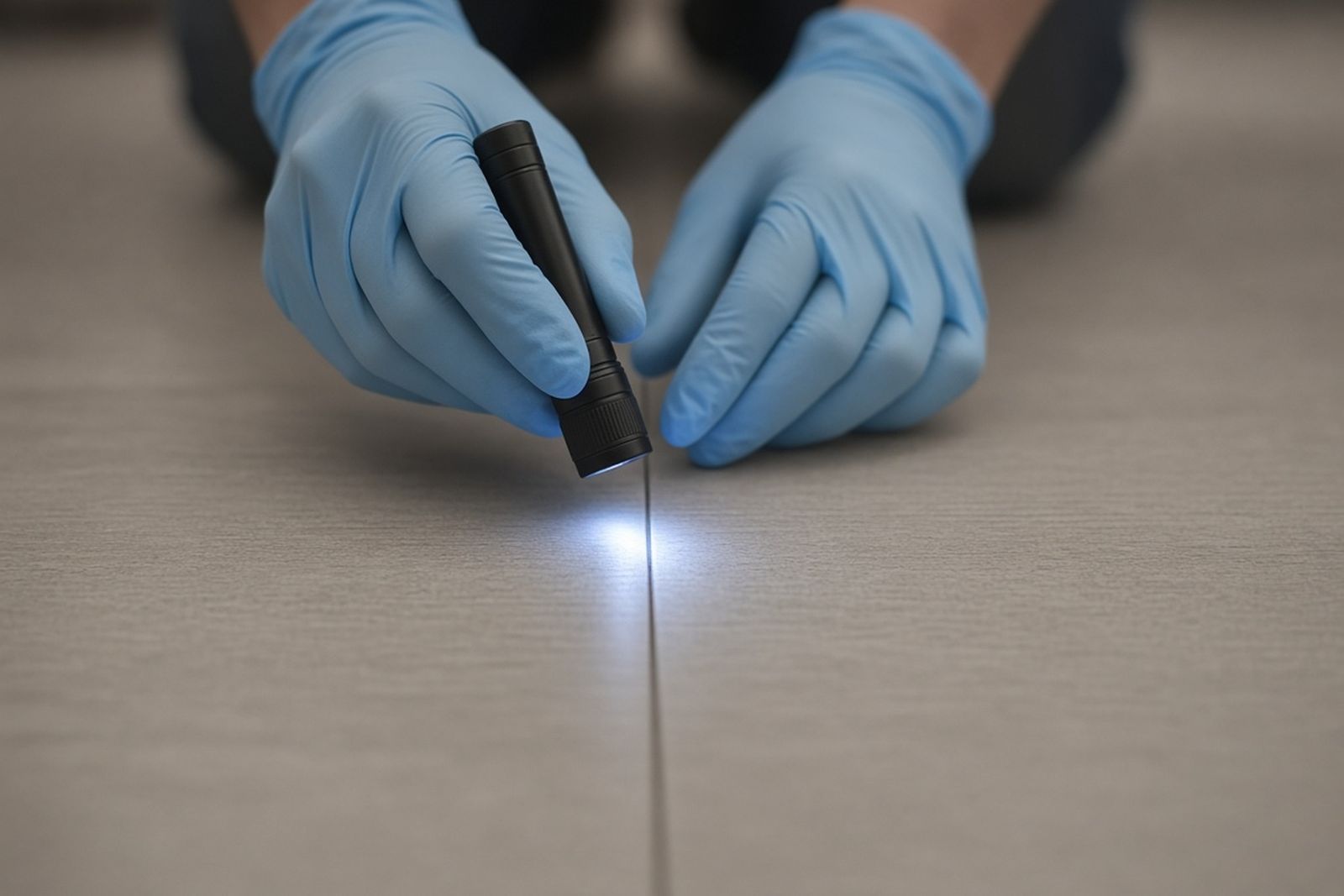
When ATP Testing Helps—and When It Does Not—in Biohazard Decontamination
ATP swabs measure leftover organic soil, not germs. Learn where they help after blood or body-fluid cleanup and where the numbers can mislead you.
ATP testing measures adenosine triphosphate, a molecule found in living cells and many organic residues, including blood and body fluids. After biohazard decontamination, a low reading suggests a surface is physically clean. It does not prove pathogens are gone, it does not identify organisms and it can be skewed by some chemicals. Treat it as one cleanliness check alongside visual inspection and a documented disinfection process.
How to Evaluate Technology Used in Biohazard Decontamination
UV-C robots, electrostatic sprayers, foggers, ATP meters and more: a practical way to judge which technologies actually help a biohazard decontamination job.
Evaluate any biohazard decontamination technology by asking what problem it solves, what evidence supports it and whether it replaces or supports the basics. UV-C, electrostatic spraying, fogging and meters can add value, but none substitutes for removing blood and body fluids, discarding saturated porous materials and applying a labeled disinfectant to cleaned surfaces for its full contact time.
When Enzymes or Microbial Products Fit Biohazard Decontamination
Enzyme cleaners and microbial products can lift blood and odor residue, but they are not disinfectants. Learn where they fit in biohazard decontamination.
Enzyme and microbial products break down organic matter such as blood proteins, fats and the residues that cause odor. In biohazard decontamination they can help clean stubborn soil from surfaces and reduce lingering odors, but they do not replace an EPA-registered disinfectant with bloodborne pathogen claims. The right sequence is clean, disinfect as labeled and use biological products only where they fit.
Sourced figures on education
- 640,000
CDC estimates about 640,000 adults in the United States have chronic hepatitis B.
Read with care: Many infections are undiagnosed, so the source of any blood spill is unknown.
Source: CDC (2023)United States, adults, CDC estimate
- 14,400
In 2023, 2,214 acute hepatitis B cases were reported in the United States, but CDC estimates about 14,400 infections actually occurred.
Read with care: Estimated infections are modeled from reported cases.
Source: CDC (2023)United States, 2023 surveillance with underreporting adjustment
- 2.4-4 million
An estimated 2.4 million to 4 million people in the United States had hepatitis C during 2017-2020.
Read with care: Range reflects survey undercount adjustments.
Source: CDC (2020)United States, 2017-2020 estimate
These figures are public research and agency data, not this network's own job records. Keep each number with its population, year and limits; none of them predicts cost, timing or outcome at a specific property.
What research has found
Findings from published studies of people and properties in situations like this one. They describe what researchers observed in a specific group; they are not predictions for your case.
The cleaning protocols reduced surface nicotine by about half.
Air quality improved immediately after the smoking ban.
Education: common questions
Is fogging alone enough to decontaminate a room?
Usually not. Fogging or electrostatic spraying can help spread disinfectant across many surfaces. But it does not remove visible dirt, and body matter shields germs from the product. Label directions usually require cleaning first and a set time the surface must stay wet. Use fogging as an extra step after cleaning, not as a replacement for it.
Can a residue swab reading prove a surface is free of germs?
No. The quick swab meters detect organic residue as a general sign of how clean a hard surface is. They do not detect germs. A low reading suggests little organic matter remains. But it does not identify specific germs or confirm disinfecting worked. It also cannot check soft materials or hidden spaces. Treat it as one piece of proof, along with a visual check and a record of the products used.
Do enzyme cleaners replace disinfectants in biohazard work?
They serve a different purpose. Enzyme products break down body matter and can help with odor sources in materials that suit them. But most are not registered to kill germs. A sound plan may use them to break down residue and then apply a registered disinfectant. Ask the provider to explain which product does which job.
Why do these articles keep saying cleaning must come before disinfecting?
Because it is the most common point where cleanups go wrong. Body matter shields germs and weakens many disinfectants. So spraying a product over visible dirt can leave germs alive. Repeating the point helps readers notice when a provider or product claim skips this step. Once you understand it, many other tips in the field make more sense.
What does porous mean in practical terms?
A porous material has tiny openings that let liquid soak in. Examples are carpet, padding, drywall, cushions, mattresses, and bare wood. Once fluid gets in, cleaning and disinfectants cannot reliably reach it. Non-porous surfaces, such as sealed countertops, glass, and metal, keep liquid on top where it can be cleaned. This difference shapes most choices about what to remove.
Is there a simple way to judge a product claim I read online?
Ask three questions. What exactly does the product claim to do? What proof supports it? Does the label back up the claim? For disinfectants, the label lists the germs and surfaces it is registered for, and how long it must stay wet. Claims that go beyond the label, or that promise complete safety, deserve doubt.
Why do some articles use invented examples instead of real cases?
Made-up examples let us show how choices are made without sharing anyone's private situation. They also let us point out common issues clearly, without the details that make every real case unique. When you read them, focus on the reasoning at each step, not the specifics. Your own situation will differ.
Related community polls
Every count is a real visitor vote; nothing is seeded or padded. One vote per poll per device, and you can change your answer.
When you found a biohazard mess, what was your first instinct?
What would most likely make you hire a provider instead of cleaning up yourself?
More on biohazard decontamination
Biohazard Decontamination services
Learn how pro cleanup handles blood, body fluids, and germs in homes, workplaces, and schools. See each step, from the first visit to checked disinfecting and recorded waste removal.
Costs explained
What drives the price, published cost ranges, and how to read a written quote line by line.
Insurance and payment
Which policies may respond, how to document a claim, and what to do if coverage is denied.
Planning tools
Use checklists and planners that help you judge the hazard, plan the first day, sort waste types, and get ready to talk with providers and insurers.
Community polls
See how other owners and managers made choices about body-fluid messes. Compare their instincts with the sourced advice elsewhere on the site.
Knowledge quiz
Test what you know about spotting hazards, scene release, containing a mess, disinfecting, waste, and records. A short quiz and study guide explain each idea.