Short answer
PPE for biohazard decontamination should be chosen after a written hazard assessment, not pulled from a standard kit. The assessment looks at what fluid or material is present, how much, where it has soaked in, which disinfectants will be used and how the work will be done. Those answers decide the gloves, body coverage, eye and face protection and any respirator a technician wears.
Start with a written hazard assessment, not the gear
It is tempting to picture every biohazard technician in the same white suit and mask. In practice, the right protective equipment depends on the job in front of the crew. A few dried drops of blood on a sealed countertop and a large release of fluids that has run under baseboards and into subflooring present very different exposures.
Federal workplace safety rules expect employers to assess the hazards of a task and certify that assessment in writing before selecting equipment, and to choose protective equipment that prevents blood or other potentially infectious materials from reaching a worker's clothing, skin, eyes or mouth under normal conditions of use.
Starting with the assessment rather than the gear protects technicians from both under- and over-protection. Too little leaves them exposed. Too much, such as heavy impermeable suits for a brief task in a hot room, can create heat stress and clumsy movement that leads to spills or sharps injuries.
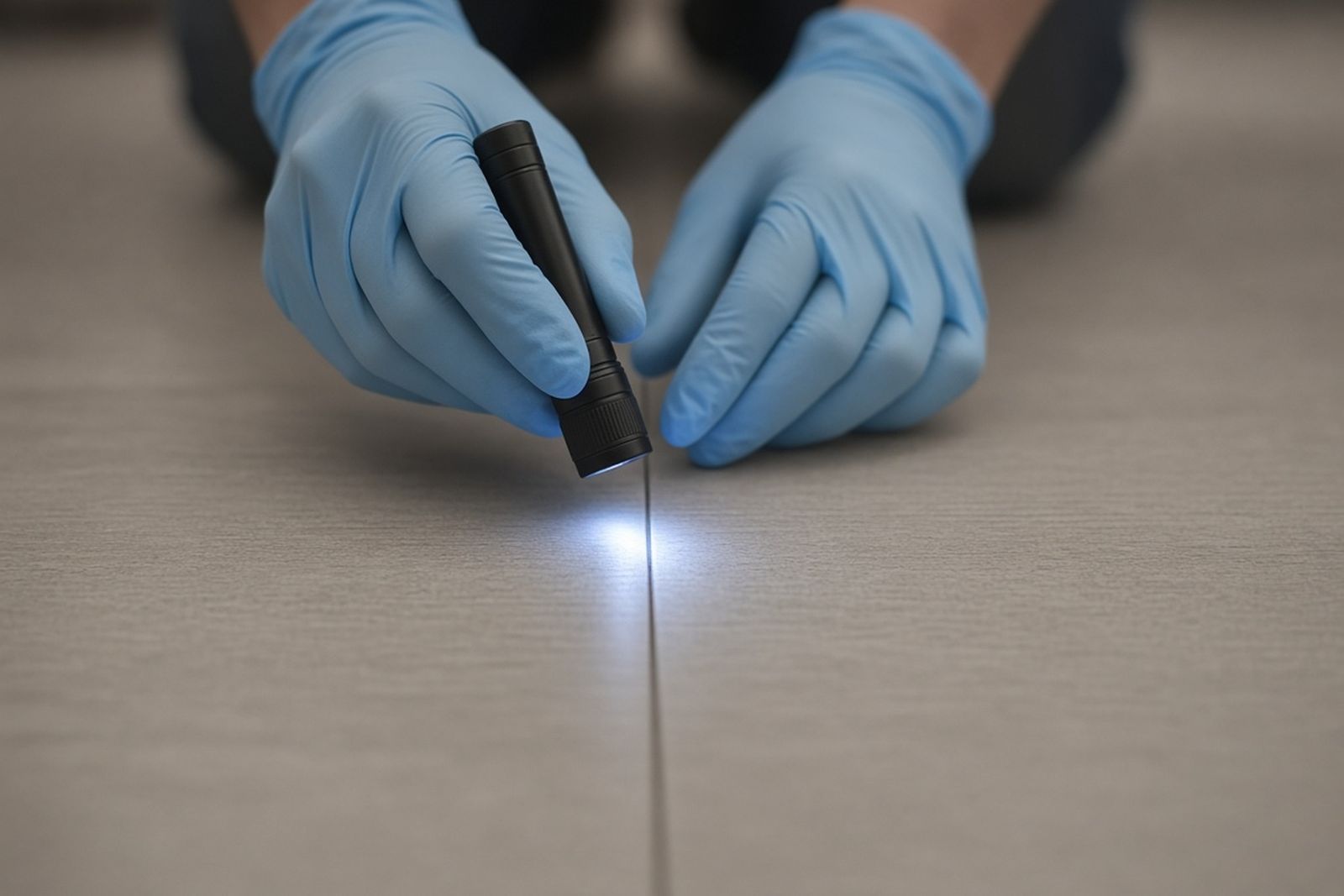
A thorough assessment usually starts with a walkthrough by a supervisor wearing baseline protection. They note the type of material, its extent and the surfaces it has contacted, and they ask what happened so they can anticipate hidden contamination.
Dried material is not automatically safe material. That is why an assessment treats old stains, crusted bedding and dried spatter as potentially infectious and plans protection for scraping, cutting and removing them rather than relaxing because the scene looks settled.
The assessment also considers the people wearing the gear. Technicians with latex allergies need alternatives, anyone with a beard may not achieve a seal with a tight-fitting respirator, and workers who have not received or declined the hepatitis B vaccine offer should be identified so supervisors know their protection status before assigning tasks.
- Type of material: blood, vomit, feces, urine, sewage, tissue or mixed fluids.
- Volume and spread: surface spotting, pooling, splatter patterns or saturation into porous materials.
- Age of the contamination: fresh and wet versus dried, which changes splash and aerosol risk.
- Sharps: needles, broken glass, razor blades or bone fragments hidden in bedding, carpet or debris.
- Disinfectants planned: their safety data sheets, contact times and any inhalation or skin hazards.
- Work methods: wiping, scrubbing, pressure spraying, cutting out drywall or pulling carpet and pad.
- Environment: ventilation, heat, lighting, working space and whether the HVAC system is involved.
Matching gloves, suits, eyewear and respirators to the task
Gloves are the most-used piece of protection on any decontamination job. Many crews double glove with nitrile, changing the outer pair frequently and whenever it tears or becomes heavily soiled. When sharps are possible, a cut- or puncture-resistant glove may go under or over the nitrile layer, and handling tools such as tongs and dustpans replace fingers wherever possible.
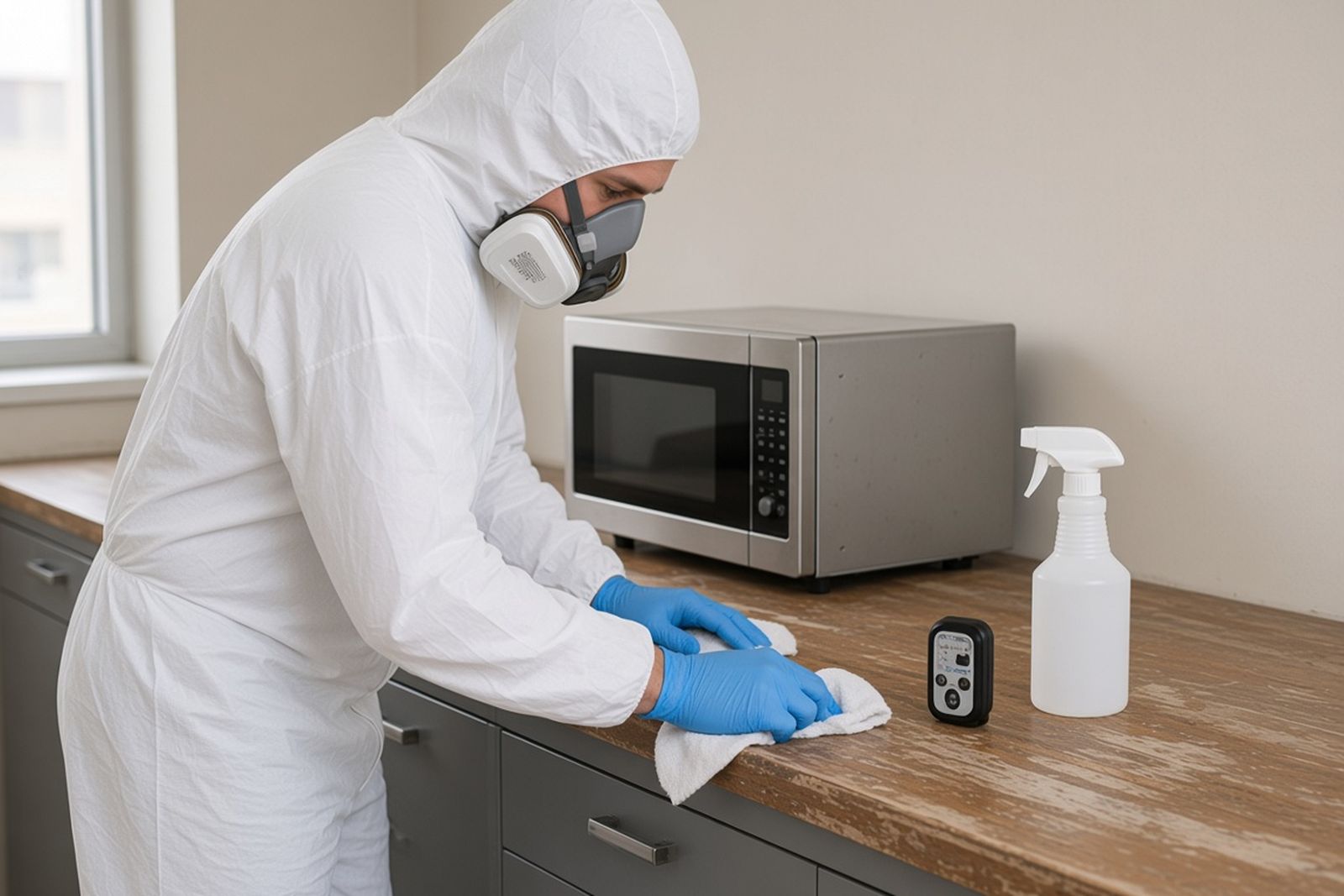
Body protection ranges from fluid-resistant disposable coveralls for light work to more fluid-resistant suits with taped seams when technicians will be kneeling in saturated carpet or cutting out soaked materials. Boot covers or dedicated washable boots keep contamination from tracking out of the work area.
Glove and suit materials also need to stand up to the chemicals in use. Some disinfectants and detergents degrade certain plastics and elastomers over time, so crews should check compatibility rather than assume any glove will do.
Eye and face protection becomes important any time splashing is possible. Safety goggles protect against droplets reaching the eyes, and a face shield adds coverage for the nose and mouth. Full-face respirators combine eye and respiratory protection for jobs with heavier exposure.
Respirators are selected based on what is in the air. Aerosols from scrubbing or spraying contaminated surfaces, dust from dried material, odors from decomposition and vapors from disinfectants can each call for different filters or cartridges. When respirators are required, workplace safety rules call for medical clearance, fit testing and training for each wearer.
Chemical exposure is sometimes overlooked. A 2023 study by Wilson and colleagues found that eight of 11 interviewees were unaware of asthma risk associated with cleaning work. Decontamination crews use strong disinfectants in enclosed spaces, so ventilation and appropriate respiratory protection belong in the plan even when the biological hazard seems modest.
Donning and doffing matter as much as the gear
Even excellent equipment fails if it is removed carelessly. Most self-contamination happens when a technician pulls off a soiled glove with a bare hand, touches their face while removing goggles or carries a contaminated suit through a clean hallway.
Well-run crews set up a doffing area at the edge of the work zone, often with a lined container, disinfectant wipes and a clean mat. They remove equipment in a set order, typically outer gloves and suit first, then eye and face protection, then respirator and inner gloves, with hand hygiene at the end. A partner may watch the process and call out mistakes.
This discipline protects people outside the job site too. Contaminated gear that makes it into a vehicle or a technician's home extends the exposure far beyond the room that was cleaned.
Two jobs, two PPE plans: an illustration
As an illustration, follow one supervisor through two made-up jobs. On Monday, a decontamination supervisor responds to an office where an employee had a nosebleed at his desk. A small amount of dried blood is on a laminate desktop and a rolling chair. Her assessment calls for double nitrile gloves, safety goggles and a disposable apron. The crew disinfects the desk with a registered product, bags the chair's removable fabric cover and finishes within a short visit.
On Thursday, the same supervisor visits a home where a resident experienced a medical emergency and a large volume of fluid soaked through a bedroom carpet into the pad and subfloor. The room is warm and poorly ventilated. Her written assessment now calls for fluid-resistant coveralls with hoods, boot covers, puncture-resistant gloves under nitrile, a full-face respirator with appropriate cartridges and scheduled rest breaks outside the room to manage heat.
The two jobs share a company, a crew and a type of hazard, but the PPE plans differ because the assessments differ.
Does the hazard assessment change once work starts?
Often it does. Pulling up flooring may reveal contamination deeper than expected. Opening a closet may expose sharps. A disinfectant that seemed mild may produce stronger fumes in a small space. The assessment should be treated as a working document that the supervisor updates when conditions change.
Technicians should feel free to stop and ask for more protection when something looks different from the briefing. A culture that rewards that pause keeps people safe and usually prevents mistakes that would have to be undone later.
Waste from the job, including used PPE, may need to be handled as regulated medical waste depending on how saturated it is. Contractors should know how their state defines and handles that waste stream.
Questions to ask a contractor about PPE planning
You do not need to judge the technical details yourself. A few straightforward questions reveal whether the company plans PPE thoughtfully.
- Will you complete a written hazard assessment for this job before choosing equipment?
- How will you protect technicians from sharps you cannot see yet?
- Which disinfectants will you use, and does your PPE hold up against them?
- Are technicians fit tested and medically cleared for the respirators they will wear?
- Where will crews put on and remove gear, and how will used PPE leave my property?
- What happens if conditions change once flooring or walls are opened?
Why does thoughtful PPE planning benefit you as the property owner?
Protective equipment is about the crew, but its effects reach you. Technicians who are properly protected work more steadily and carefully, which means fewer spills, better containment and more complete cleaning. A doffing plan keeps contamination inside the work zone rather than spreading it to hallways, stairwells or your driveway.
Good PPE planning also shows up in the paperwork. A written assessment, product list and waste summary give you a clear record of what was found and how it was handled. Keep those documents with your property or insurance files. If questions come up later from a tenant, buyer, employer or adjuster, you will have evidence that the work was planned around the actual hazard rather than guesswork.