Short answer
The clearest red flags when hiring a biohazard decontamination company are an inability to name the registered disinfectant and its contact time, no proof of bloodborne pathogen training, no plan for regulated waste, a price given without seeing the site, pressure to sign quickly, and reluctance to put scope, exclusions and documentation in writing. Even a single one is worth pressing on before you agree to anything.
Why is it so hard to judge a biohazard decontamination company from the outside?
Most people call a biohazard decontamination company on one of the worst days they have had in years. There may be blood on a floor, fluid soaked into a mattress, or a room that a health department has told you not to use. You want it handled, and you want it handled now.
That urgency is exactly what makes it hard to evaluate the company on the other end of the phone. Good disinfection leaves nothing to see. A room that was wiped with a household spray and a room that was properly decontaminated can look identical the next morning.
Because you cannot inspect the result with your eyes, you have to judge the process instead. The warning signs below are mostly about process: what a company says, what it will not say, and what it refuses to write down.
It also helps to know that you are allowed to ask questions, even in a crisis. A company that is used to this work expects them and will not treat your caution as an insult.
The disinfectant: what a company should be able to tell you
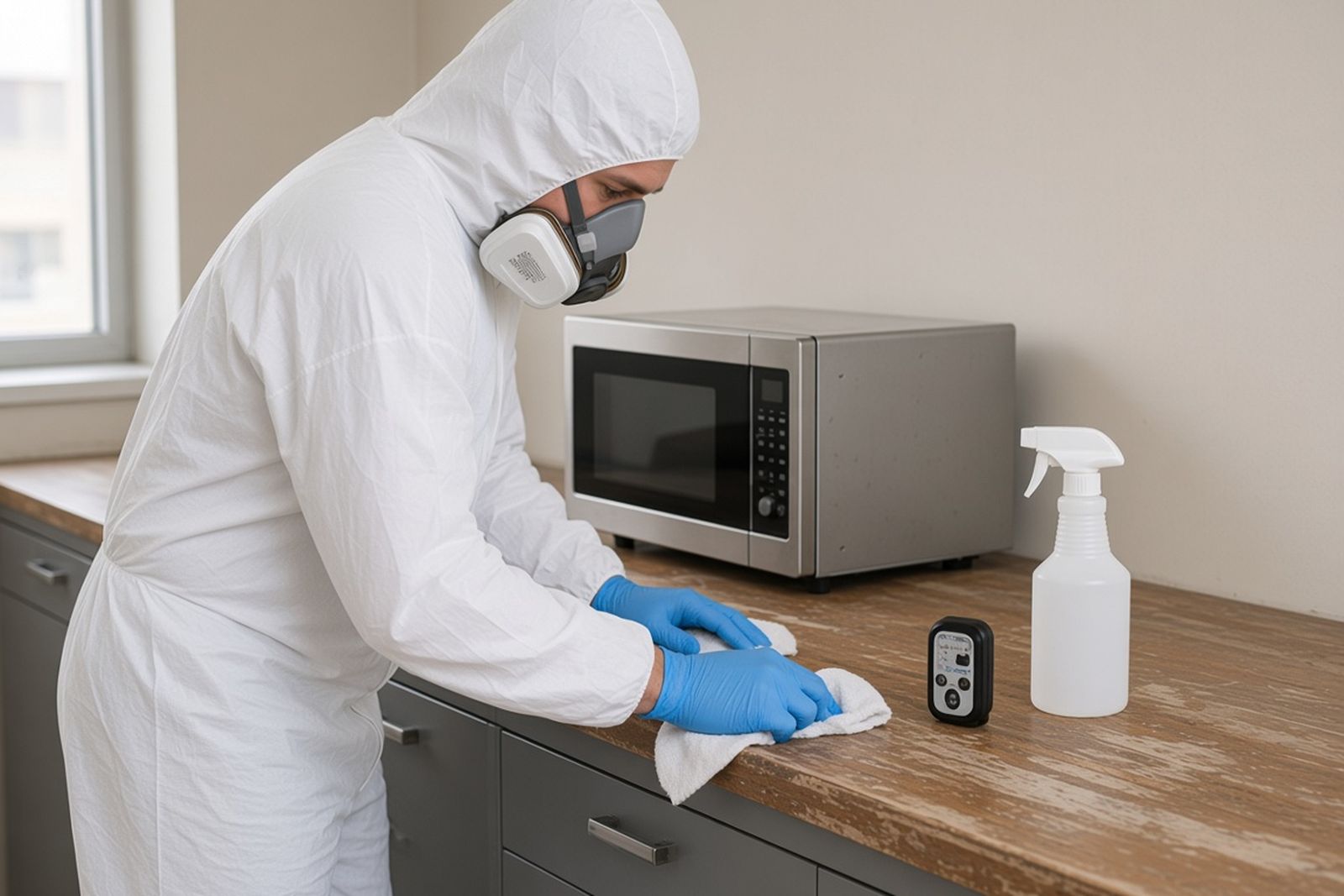
A qualified crew should be able to name the product it intends to use, confirm that it is registered with the EPA, and explain which organisms the label covers. In 2024 the EPA described List S, its list of registered disinfectants whose labels include claims against HIV, hepatitis B and hepatitis C. A company working with blood should know that list exists.
Just as important is dwell time, sometimes called contact time. Every registered disinfectant label states how long the surface must stay visibly wet for the product to work. A technician who sprays and immediately wipes has not followed the label, no matter how strong the chemical is.
Treat it as a red flag if the answer to your question is simply that they use hospital grade products, with no product name, no label and no mention of contact time. That phrase is marketing, not a method.
You can also ask whether the product is compatible with the surfaces in your home. Some disinfectants can discolor fabrics, etch stone or damage finishes, and a careful crew will mention that before it starts rather than after.
Signs that technicians are trained for bloodborne pathogen work
Training is not something you can see on a uniform, so you have to ask about it. A company whose staff face exposure to blood should be able to tell you when its technicians were first trained for bloodborne pathogen work and how often that training is refreshed.
Ask whether the company has a written exposure control plan, whether technicians have been offered the hepatitis B vaccine, and what personal protective equipment they wear for your kind of job. You do not need to audit their files. You are listening for whether the answers come easily or whether the person seems to be hearing the questions for the first time.
Be wary of a company that relies entirely on day laborers or subcontractors it cannot describe. Ask who will actually be in your home and who employs them.
What happens to the contaminated materials, and why does it matter to you?
Decontamination produces waste: saturated carpet pad, used protective suits, wipes, sometimes sections of drywall or subfloor. Some of that material may be classified as regulated medical waste, depending on what it contains and on state rules.
A reputable company can explain how it separates regulated waste from ordinary debris, how it packages it, and who transports it for treatment or disposal. Many states require specific containers, labels and a tracking document for regulated waste. Your state's medical waste program can tell you what applies at your address.
The red flag is a vague answer, or a suggestion that everything can go in your household trash or a dumpster. Waste that leaves your property improperly can create problems for sanitation workers and, potentially, for you as the generator. Ask whether you will receive a copy of any disposal paperwork.
Also ask what happens to items you want to keep. A good crew will set aside belongings that can be cleaned, ask before discarding anything personal, and explain why a particular object cannot be saved.
Pricing and sales tactics that should make you slow down
Honest pricing for biohazard decontamination usually requires someone to see the site, either in person or through detailed photos and a conversation. The extent of absorption into porous materials is the biggest variable, and it cannot be judged from a single sentence on the phone.
Watch for these patterns, each of which deserves a direct question before you sign:
- A firm total quoted before anyone has seen the space or asked about flooring, furniture and how long the material has been there.
- A very low starting figure paired with open-ended hourly or per-item charges that are not explained.
- Pressure to sign immediately, including claims that the offer expires within the hour.
- Requests for full payment up front, especially by cash, gift card or wire.
- A promise that insurance will definitely pay, made before anyone has spoken to your insurer.
- Refusal to itemize what is included and what is excluded.
What the written agreement should include
A written scope protects both you and the contractor. It should describe the affected areas, the materials to be removed, the materials to be cleaned and disinfected, the product or class of product, and how waste will be handled.
It should also list what is not included. Rebuilding, painting, replacing flooring and cleaning or replacing personal belongings are common exclusions. Knowing that in advance prevents surprises when the crew leaves and a section of floor is missing.
Finally, the agreement should describe what documentation you will receive at the end. For a biohazard job, that often means a written summary of work performed, photographs before and after, product information, and waste disposal records. If a company resists putting any of this in writing, consider that a significant warning sign.
Read the agreement before the crew begins, not after. If a line is unclear, ask for it to be rewritten in plain language. A small delay at this stage is far easier than a dispute once materials have been torn out.
Claims about results worth questioning
No honest company can promise a sterile home. Sterilization is a specific laboratory outcome that is not realistic in a living space with carpet, furniture and air moving through it. The goal of decontamination is to remove contaminated material and disinfect remaining surfaces according to label directions.
Be cautious about claims that a single fogging or ozone treatment replaces physical removal and surface disinfection. Fogging can be a supporting step in some situations, but it does not lift dried blood out of fibers or disinfect a surface still covered in organic soil.
Also question a company that tells you a room is safe for a child or an immunocompromised family member without explaining what it did and why. Ask what the basis for that statement is.
What should you do if you spot a red flag?
One red flag does not always mean a company is dishonest. Sometimes a dispatcher simply does not know the answer and a supervisor does. Ask to speak with the person who will manage the job and repeat your question.
If the answers stay vague, it is reasonable to keep looking, even under time pressure. In most situations, closing the door to the affected room, keeping people and pets out, and waiting a few more hours for a better company is safer than rushing into a poor one.
Keep notes of each call, including names and what was promised. If you later file an insurance claim or need to explain the work to a landlord or buyer, those notes and the final documentation package will matter.
Remember that you can end a conversation politely at any point. You owe no company a signature simply because it answered the phone first.